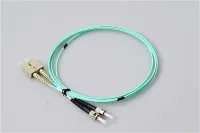
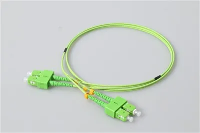
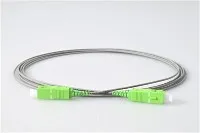
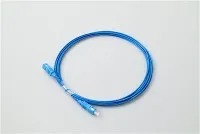
If you are comparing LC vs SC vs MU connectors, the practical answer comes down to your deployment context. LC is the default for modern high-density builds where transceiver compatibility and panel space matter most. SC remains a strong choice in telecom, access networks, and any environment where the installed base already runs on SC hardware. MU is a specialized connector - technically capable, but far less common outside specific applications in Japan and certain legacy systems.
Most people searching this topic are not just learning connector names. They are trying to avoid ordering the wrong fiber optic patch cord, choosing the wrong transceiver interface, or locking into a connector family that limits future expansion. This guide focuses on the selection decisions that matter - not just definitions, but where each connector fits, why, and how to avoid the most common ordering mistakes.

LC vs SC vs MU at a Glance: Quick Comparison Table
Before diving into detail, here is a side-by-side summary of the three connectors across the specifications that most often drive purchasing and design decisions.

| Feature | LC | SC | MU |
|---|---|---|---|
| Ferrule diameter | 1.25 mm | 2.5 mm | 1.25 mm |
| Mating mechanism | Latch (push-and-latch) | Push-pull | Push-pull |
| Relative connector size | Small (SFF) | Standard | Small (SFF) |
| Port density per panel unit | High | Moderate | High |
| Industry standard | TIA-604-10 (FOCIS 10) | TIA-604-3 (FOCIS 3) | IEC 61754-6 / JIS C 5983 |
| Common transceiver fit | SFP, SFP+, most modern modules | Some GPON ONTs, older modules | Rare in standard transceivers |
| Typical deployment | Data centers, enterprise LAN, backbone | Telecom, FTTH, access networks, legacy | Japanese telecom, backplane, niche systems |
| Ecosystem availability | Very broad globally | Broad globally | Limited outside Japan |
| Polish options | UPC, APC | UPC, APC | UPC, APC |
| Fiber modes supported | Single-mode, multimode | Single-mode, multimode | Single-mode, multimode |
All three connectors support both single-mode and multimode fiber, and all three are available in UPC and APC polish types. The differences that drive real purchasing decisions are ferrule size, ecosystem depth, and transceiver compatibility - which the sections below explain in detail.
What Is an LC Connector and Why Is It the Modern Default?
The LC (Lucent Connector) is a small-form-factor fiber optic connector built around a 1.25 mm ceramic ferrule. It was originally developed by Lucent Technologies in the late 1990s to meet growing demand for higher-density fiber connections in telecom and enterprise networks. The LC connector is standardized under TIA-604-10 (FOCIS 10), the intermateability standard maintained by the Telecommunications Industry Association.

The LC's latch-style mechanism - similar in feel to an RJ-45 copper connector - provides a secure, pull-proof connection that is easy to engage and release even in tight rack spaces. Because the 1.25 mm ferrule is half the size of the SC's 2.5 mm ferrule, LC connectors allow roughly twice the port density on the same panel or adapter plate. In a 48-port patch panel, that density difference is not abstract - it determines whether you need one rack unit or two.
Where LC really dominates is in transceiver compatibility. The SFP Multi-Source Agreement (MSA), which defines the mechanical and electrical specifications for small form-factor pluggable transceivers, specifies duplex LC as a standard optical interface. That means virtually every mainstream SFP and SFP+ module shipping today - whether for Gigabit Ethernet, 10GbE, or Fibre Channel - uses an LC receptacle. If you buy a switch from Cisco, Juniper, Arista, or any other major vendor and populate it with SFP-based optical modules, you will almost certainly need LC fiber patch cords.
This combination of high density and broad transceiver support is why LC has become the default choice for new data center, enterprise backbone, and high-density fiber installations. It is not that LC is inherently superior in every optical parameter - insertion loss and return loss performance are comparable across well-made connectors of any type - but its ecosystem advantages make it the lowest-friction choice for most modern builds.
What Is an SC Connector and When Does It Still Make Sense?
The SC (Subscriber Connector) was developed by Nippon Telegraph and Telephone (NTT) and became widely adopted in the early 1990s. It features a 2.5 mm ceramic ferrule in a square-shaped housing with a straightforward push-pull mating mechanism. The SC connector is standardized under TIA-604-3 (FOCIS 3).

For years, SC connectors were the dominant fiber connector type across both telecom and enterprise networks, thanks to their low insertion loss, reliable push-pull action, and simple handling. The larger housing makes SC easy to grip and manipulate, which still matters in field installations, outdoor cabinets, and environments where technicians wear gloves.
SC remains especially common in three areas. First, in FTTH and passive optical networking, where SC/APC connectors are widely used on PLC splitters and ONT equipment. Second, in legacy enterprise and campus networks where the existing cabling plant is already SC-terminated - ripping out and re-terminating hundreds of SC patch panels just to switch to LC rarely makes economic sense. Third, in certain test and measurement setups where the larger 2.5 mm ferrule provides a more convenient interface.
The practical takeaway: SC is not obsolete. If your patch panels, adapters, and field equipment already use SC, staying with SC for extensions and maintenance is often the smarter decision. The connector itself is still manufactured widely, SC patch cords are readily available, and the optical performance is not meaningfully different from LC in the same fiber and polish grade.
What Is an MU Connector and Why Is It Rarely the First Choice?
The MU (Miniature Unit) connector was also developed by NTT in the early 1990s, with the first deployments in NTT's own communication network around 1993. It uses a 1.25 mm zirconia ferrule - the same diameter as the LC - and a push-pull mechanism similar to the SC. The MU connector is standardized under IEC 61754-6 and JIS C 5983, and is also referenced under TIA-604-17 (FOCIS 17). NTT originally designed the MU system for backplane-to-fiber connections where both compactness and a self-retentive mechanism were needed.

On paper, the MU connector seems competitive with the LC: same ferrule diameter, compact housing, push-pull operation. In practice, though, the LC overtook MU in global adoption for several reasons. The LC's latch mechanism proved popular among installers, Lucent's aggressive licensing and marketing drove SFP integration, and major active equipment manufacturers - particularly Cisco - standardized on LC for their transceiver ports. The result is that while MU patch cords and MU adapters remain available, the ecosystem is narrower: fewer transceiver options, fewer off-the-shelf patch panel configurations, and fewer field technicians who are familiar with MU termination.
MU remains relevant in Japanese telecom infrastructure, certain DWDM and WDM systems, and legacy backplane applications where MU was originally specified. If your equipment datasheet calls for MU, use MU. But if you are choosing a connector family for a new build and your hardware does not specifically require MU, LC is the more practical path in almost every scenario.
The Differences That Actually Drive Connector Selection
Many comparison pages list ferrule size and housing shape as the main differences and stop there. In real purchasing decisions, the differences that matter most go deeper.
Ferrule Size and Port Density

LC and MU both use 1.25 mm ferrules, while SC uses a 2.5 mm ferrule. This directly translates to port density. On a standard 1U fiber patch panel, LC duplex ports can pack roughly twice the connections that SC duplex ports can. In a 42U rack running hundreds of fiber links, that difference means the difference between one cabinet and two. For organizations planning high-density data center deployments, LC's space efficiency is a tangible operational advantage.
Mating Mechanism and Handling
LC uses a latch-style connection: push in to engage, press the tab to release. SC and MU both use push-pull mechanisms: push in to mate, pull straight back to disconnect. For technicians, the difference is mostly one of preference and familiarity. The LC latch does provide mechanical retention that resists accidental disconnection from cable pulls - a useful feature in dense patch environments where cables are routed tightly.
Transceiver and Active Equipment Alignment
This is where the decision often makes itself. If your switches, routers, or media converters use SFP, SFP+, or SFP28 modules, those modules almost universally have LC receptacles. Some GPON ONTs and legacy equipment still ship with SC ports. Very few mainstream transceivers use MU. Before selecting a connector type, check the port on every active device in the link - that single step eliminates most decision uncertainty.
Ecosystem Depth and Supply Chain
LC and SC both have deep global supply chains. You can source connectors, patch cords, pigtails, adapters, and pre-terminated cassettes from dozens of manufacturers in either type. MU has a more constrained supply chain, particularly outside Japan. If you are building infrastructure that other teams or contractors will maintain over a 10–15 year lifecycle, ecosystem depth matters more than any single connector specification.
LC vs SC for SFP and Optical Transceivers
The relationship between connector type and transceiver type deserves its own section because it is the single most common driver of connector selection in practice.

The SFP MSA - the multi-source agreement that governs the mechanical and electrical design of SFP transceivers - specifies duplex LC as a standard optical interface option. In practice, nearly all SFP and SFP+ optical modules for Gigabit Ethernet, 10G Ethernet, and Fibre Channel use duplex LC. This is not a coincidence: the SFP form factor was designed to be compact, and the LC connector's 1.25 mm ferrule is the only mainstream option that fits the SFP's narrow front-panel footprint.
SC still appears in some BiDi (bidirectional) SFP modules and in certain PON-related optical network units, but these are specific use cases rather than the general default. If you are ordering patch cords for a rack of SFP-equipped switches, order LC unless the equipment datasheet explicitly says otherwise.
For higher-speed parallel optics (40G, 100G, 400G), the connector picture shifts to MPO/MTP connectors, which is a separate topic. But for duplex fiber links up to 10G and many 25G applications, LC remains the dominant transceiver interface.
SC vs MU: A Less Common but Still Relevant Comparison
Because most comparison pages focus on LC vs SC, the SC vs MU comparison often goes unaddressed. Both connectors share NTT origins and a push-pull mating style, but they differ significantly in ferrule size (SC at 2.5 mm, MU at 1.25 mm) and in deployment footprint.
MU was designed as a miniaturized SC - sometimes called "mini-SC" - with the goal of fitting more connections into the same panel space while keeping the familiar push-pull mechanism. In that sense, MU is to SC what LC is to the broader connector landscape: a compact alternative. But where LC succeeded in building massive ecosystem momentum, MU remained concentrated in NTT's own network and in Japanese telecom deployments.
If you are choosing between SC and MU for a new link that is not tied to existing MU infrastructure, SC generally offers better global availability and broader technician familiarity. If density is the concern driving you away from SC, LC is usually the better target than MU.
Connector Selection Checklist: How to Choose Before You Order
Rather than relying on general rules, use this step-by-step checklist before purchasing any fiber patch cable or pigtail. This process catches the majority of avoidable connector mismatches.

-
Check the active device port.
- Look at the transceiver or fixed port on your switch, router, ONT, or media converter. The port type dictates the connector. If it is an SFP slot, you will almost certainly need LC.
-
-
Check the passive infrastructure.
- Look at the patch panel, wall outlet, or fiber terminal box on the other end of the link. Confirm the connector family installed there.
-
-
Confirm simplex or duplex.
- Most standard Ethernet links use duplex (two-fiber) connections. Some BiDi and PON links use simplex (single-fiber). Ordering duplex when you need simplex - or vice versa - is a common and frustrating mistake.
-
-
Verify the polish type.
- UPC (Ultra Physical Contact) and APC (Angled Physical Contact) are not interchangeable. Mating a UPC connector with an APC adapter will produce poor return loss and can damage the fiber end face. UPC connectors typically have a blue or beige housing; APC connectors are green.
-
-
Confirm the fiber mode.
- Single-mode (OS2, 9/125 μm) and multimode (OM1 through OM5, 50/125 or 62.5/125 μm) patch cords are not interchangeable for the same link. The fiber mode must match the installed cable plant and the transceiver wavelength.
-
-
Check if a hybrid solution is needed.
- If the two ends of your link use different connector types - for example, LC on the switch and SC on the patch panel - you can use a hybrid patch cable (LC-to-SC) or a fiber optic adapter. But always verify that the polish type and fiber mode match on both ends before ordering.
This six-step process takes less than a minute per link and prevents the most common ordering errors: wrong connector, wrong polish, wrong fiber count, wrong mode.
Common Mistakes When Choosing Between LC, SC, and MU
Beyond the checklist, a few recurring mistakes are worth calling out specifically.

Assuming connector type is the only variable.
Connector type is one of at least four variables you need to match: connector family, polish type, simplex/duplex, and fiber mode. Getting the connector right but the polish wrong still means a failed or degraded link.
Switching connector families mid-project without checking adapters.
If part of your cabling plant uses SC and you are expanding with new LC-equipped switches, you can bridge the gap with hybrid LC-SC patch cables. But do not assume all hybrid cables are available in every polish and fiber combination - confirm before ordering, especially for APC-to-UPC combinations, which are generally not recommended.
Choosing MU for density when LC is available.
MU and LC offer comparable density due to the same 1.25 mm ferrule. But LC's vastly larger ecosystem means more product options, faster delivery, lower unit cost, and wider technician familiarity. Unless your equipment specifically requires MU, choosing LC gives you the same density advantage with far less sourcing friction.
Ignoring the installed base.
For brownfield deployments - expanding or maintaining an existing network - the connector already deployed in your infrastructure is usually the right connector to keep using. Migration from SC to LC can make sense during a major upgrade cycle, but doing it piecemeal creates a mixed-connector environment that increases inventory complexity and troubleshooting difficulty.
Migrating from SC to LC: When and How
Many networks that were built on SC infrastructure eventually face the question of whether to migrate to LC, typically during a switch or patch panel refresh. A few guidelines help frame that decision.

Migration makes the most sense when you are already replacing active equipment (switches, routers, transceivers) that shifts the port interface from SC to LC. In that case, the connector migration happens naturally - you order LC patch cords for the new hardware and phase out SC as the old equipment is decommissioned.
Migration makes less sense when your active equipment still uses SC ports and the only motivation is "LC is newer." Connector age alone is not a technical problem. SC-terminated links that are performing within specification do not gain optical performance by switching to LC.
For mixed environments during a transition period, hybrid SC-to-LC patch cables and adapter panels can bridge the gap. Keep clear labeling on patch panels to indicate which ports are SC and which are LC, and standardize on LC for all new runs.
Final Recommendation
For most new fiber deployments in 2026, LC is the practical default. It aligns with current SFP and SFP+ transceiver standards, supports the highest port density among commonly available connectors, and has the deepest global ecosystem for sourcing parts and finding skilled installers.
SC remains the right choice when your infrastructure already uses it, when your application is in access or passive optical networking where SC/APC is the standard interface, or when the larger housing is a genuine advantage for field handling.
MU is the right choice when - and only when - your specific equipment or application requires it. Do not select MU based on its specifications alone; select it based on the hardware you are actually deploying.
Regardless of which connector you choose, always verify the full link: connector family, polish type, simplex or duplex, and fiber mode. That four-point check is the simplest way to avoid the expensive cycle of ordering, returning, and reordering fiber patch cables.
Frequently Asked Questions
Is LC better than SC?
Not universally. LC offers higher port density and better alignment with modern SFP-based transceivers, which makes it the preferred choice for new high-density builds. SC performs equally well optically and remains the better fit in installed-base, telecom access, and FTTH environments where SC/APC is the established standard. The right choice depends on your network context, not connector size alone.
Can you connect LC to SC?
Yes. You can bridge LC and SC using a hybrid patch cable with an LC connector on one end and an SC connector on the other, or by using an appropriate fiber adapter. However, you still need to ensure that the polish type (UPC or APC), fiber mode (single-mode or multimode), and fiber count (simplex or duplex) match across the link.
Is MU still used?
Yes, but in a limited capacity compared to LC and SC. MU remains active in Japanese telecom networks, certain DWDM systems, and backplane applications where it was originally specified. For most new deployments outside these contexts, LC provides a more broadly supported alternative with the same 1.25 mm ferrule size.
Which connector is best for high-density fiber panels?
LC is typically the strongest choice. Its 1.25 mm ferrule and compact latch-style housing allow the highest duplex port count per panel unit among the three connectors compared here. For even higher density using parallel optics, MPO/MTP connectors offer multi-fiber connections in a single ferrule.
What is the difference between connector type and polish type?
Connector type (LC, SC, MU) defines the physical housing, ferrule size, and mating mechanism. Polish type (PC, UPC, or APC) defines the geometry of the fiber end face, which affects return loss performance. You must specify both when ordering a patch cable - getting the connector right but the polish wrong will result in a degraded or non-functional link.
Can LC, SC, and MU all be used with single-mode and multimode fiber?
Yes. All three connector types are available in both single-mode and multimode versions. The connector type does not determine fiber mode - that is determined by the cable plant, transceiver wavelength, and the fiber core diameter (9/125 μm for single-mode, 50/125 or 62.5/125 μm for multimode).
Why do most modern transceivers use LC instead of SC?
Because the SFP form factor - which is the dominant transceiver package for Gigabit and 10G Ethernet - was designed to be more compact than its GBIC predecessor. The LC connector's 1.25 mm ferrule fits the SFP's narrow front-panel opening, while the SC's 2.5 mm ferrule does not. As SFP modules became the industry standard, LC became the standard transceiver interface by extension.
Which connector is more common in passive optical networks?
SC, and specifically SC/APC. In GPON, XG-PON, and other passive optical network architectures, SC/APC connectors are widely used on PLC splitters, optical distribution frames, and subscriber-side equipment. The angled polish reduces back-reflection, which is critical in these long-reach, high-split-ratio network designs.