


Evolux Fiber: Your Professional Fiber Optic Terminal Box Manufacturer!
Shenzhen Evolux Fiber Co., Ltd is a leading provider of cutting-edge optical fiber solutions, specializing in the research, development, manufacturing, and distribution of high-quality fiber optic products. Established in 2013 year, and headquartered in Shen Zhen, China, we have emerged as a trusted name in the field of fiber optics. With a strong focus on innovation and reliability, we strive to meet the evolving demands of the global telecommunications industry.

Our Advantages
Diverse Product Portfolio
We provide a comprehensive range of optical fiber products, from single-mode and multi-mode optical fibers to specialty optical fibers for specific applications, including optical fiber cables, connectors, transceivers, adapters, and related accessories to meet the diverse needs of our customers.
Excellent Customer Support
We have assembled a team of experts who are ready to support our customers. They assist customers in selecting the right fiber optic solution and guide the implementation process, allowing customers to enjoy comprehensive pre-sales consultation to post-sales support and technical assistance.
Advanced R&D Facilities
State-of-the-art R&D facilities, equipment, and specialized laboratories provide an ideal environment for conducting cutting-edge research, experimentation, and testing of fiber optic materials, design, and manufacturing processes.
Professional Customization Services
We offer customization options that allow customers to tailor fiber optic products to their specific needs. Fiber diameter, coating material, or connector type can all be customized flexibly.


Product Categories
Latest Products
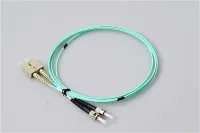
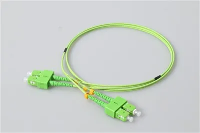
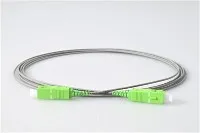
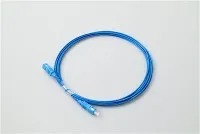


Fiber Optic Terminal Box Manufacturer for FTTH and FTTx Projects

EVOLUX supplies fiber optic terminal boxes for FTTH, FTTx, telecom access networks, residential broadband, building distribution systems and subscriber-side fiber installations.
Our product range includes indoor and outdoor terminal boxes, wall-mounted and pole-mounted enclosures, compact subscriber boxes, multi-core fiber distribution boxes and pre-connectorized solutions.
In addition to standard models, we support project-specific configurations, pre-loaded assemblies and OEM/ODM fiber optic terminal box services. Products can be supplied as empty enclosures or assembled with adapters, pigtails, splice trays, PLC splitters and mounting accessories according to your project requirements.
Whether you are a telecom operator, FTTH contractor, network integrator, distributor or private-label brand, our team can help you select or develop a fiber termination solution that fits your installation environment, network structure and budget.
How Fiber Optic Terminal Boxes Are Manufactured?
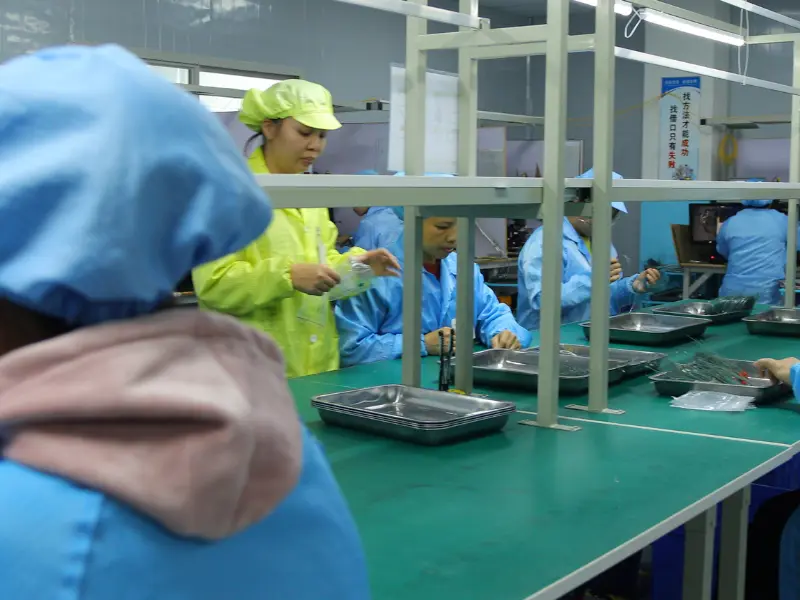
A reliable fiber optic terminal box requires a coordinated enclosure and internal structure.
The enclosure material, cable entry design, sealing system, splice tray, adapter panel, fiber routing space and mounting structure must work together to support efficient installation and long-term network operation.
The manufacturing method depends on the selected enclosure material and product structure.
Plastic Fiber Optic Terminal Box Manufacturing
Plastic terminal boxes commonly involve the following stages:
Product Structure Review
The enclosure dimensions, cable entry positions, splice tray, adapter panel, mounting structure and sealing method are reviewed before production.
Material Selection
The enclosure material is selected according to the product design, installation environment, mechanical requirements and weather-resistance requirements.
Available material options depend on the terminal box model and may include ABS, PC, PC+ABS, PP or other evaluated materials.
Injection Molding
The enclosure cover, base, splice trays and related molded parts are produced using the confirmed tooling and material.
Trimming and Appearance Inspection
Molded parts are checked for burrs, deformation, cracks, incomplete molding, surface defects and dimensional consistency.
Internal Component Preparation
Splice trays, adapter panels, cable clamps, sealing components, locks, fasteners and mounting accessories are prepared according to the confirmed BOM.
Product Assembly
The enclosure, splice trays, seals, locks, cable-entry components and internal accessories are assembled.
Optional Component Loading
Adapters, pigtails, PLC splitters and protective sleeves can be installed according to the required product configuration.
Inspection and Packaging
Finished terminal boxes are inspected against the confirmed product configuration before packaging.

The optical fiber terminal box is a box that protects the fiber optic cable and the fiber pigtail welding at the terminal of the fiber optic cable. It is mainly used for the straight-through welding and branch splicing of the indoor and outdoor fiber optic cables and the fixing of the fiber optic cable terminal, which plays the role of fiber pigtail storage and protection of the joint. It can split an optical cable into a single optical fiber, which is equivalent to a connector, which plays the role of connecting the optical cable and the pigtail. After an optical cable arrives at the user end, it is fixed in the terminal box, and the core and pigtail in the optical cable are welded in the terminal box.
Types of Fiber Optic Terminal Boxes
Wall-mounted and Rack-mounted
Fiber Termination Boxes can be categorized into rack-mounted and wall-mounted boxes based on their designs. The latter is generally sealed and hangs on the wall, while the former has a rear and front door with a side rail attached directly to the rack of the server. Wall-mounted FTB is largely meant for direct connections. Procedures like fusion, splicing, and termination have to be done prior to the installation of an FTB. A wall-mounted fiber termination box is well-suited for applications like teleconferencing, building entrance terminals, and so on. These FTBs can be further subcategorized into outdoor and indoor boxes. On the other hand, rack-mounted enclosures are ideal for interconnect or cross-connect architecture. Such FTBs are ideal for building interfaces between the transmission device and external plant cable, with enough space for management, termination, distribution, and fusion. Rack-mounted FTBs, however, are only for indoor deployments.
Indoor and Outdoor
Based on their applications in varied settings, FTBs can be divided into the categories of outdoor and indoor termination boxes. The key difference between them will be the materials used for manufacturing. The materials used in a unit must be comparable to those used in other elements, and even the cable/pigtail sheaths. In case an FTB is meant for outdoor deployment, its chemical and physical properties have to be stable enough with good resistance to water and dust. The melting temperature of the materials also must not be less than 120°C. The FTB components must operate over an expansive temperature range of at least -25°C to 45°C to survive major temperature fluctuations. Its outer casing is typically well-sealed to protect the inner components from damage and has high impact resistance. The indoor FTB, on the other hand, is known to be the transition point between horizontal and upstream cables. They are commonly used as a storage location for fiber distribution and termination in more of a controlled setting and hence do not have any special requirements in terms of the materials. To select the perfect fiber termination box for your network, you need to assess your requirements competently and opt for the option that effectively aligns with your needs. FTBs can be found in a variety of materials, shapes, and sizes. You need to take into account the number of fibers used and space available, among other things, to identify the one that would work the best for your assembly.
The function of the optical fiber terminal box is to provide the fusion splicing of the optical fiber and the optical fiber, the fusion splicing of the optical fiber and the pigtail, and the handover of the optical connector. It also provides mechanical protection and environmental protection for the optical fiber and its components, and allows proper inspections to maintain the highest standards of optical fiber management. A good fiber optic terminal box needs to have the following functions.
Fixing Function
After the optical cable enters the rack, its outer sheath and reinforcing core should be mechanically fixed, ground wire protection components should be installed, end protection processing, and optical fiber grouping and protection.
Splicing Function
After the optical fiber drawn from the optical cable is spliced with the tail cable, the excess optical fiber is coiled and stored, and the spliced joint is protected.
Allocation Function
plug the connector attached to the tail cable to the adapter, and realize the optical connection with the optical connector on the other side of the adapter. Adapters and connectors should be able to be flexibly inserted and removed; the optical path can be freely deployed and tested.
Storage Function
Provide space for storage of various cross-connected optical cables between racks, so that they can be placed in a regular and orderly manner. There should be an appropriate space and method in the optical fiber terminal box to make the wiring of this part of the optical connection line clear, easy to adjust, and meet the minimum bending radius requirements.

Fiber Optic Distribution
Terminal boxes are used for distributing and organizing fiber optic cables within a building or a specific area. They provide a structured and easily accessible point for connecting various fiber optic cables.
Indoor Fiber Optic Termination
In indoor environments such as data centers, offices, or residential buildings, Fiber Optic Terminal Boxes are used to terminate and organize fiber optic cables. They often come with pre-configured adapters for easy plug-and-play connectivity.
Fiber to the Home (FTTH) Installations
In FTTH deployments, Fiber Optic Terminal Boxes are used to terminate the fiber optic cables at the customer's premises. These boxes can house connectors or adapters for connecting to customer equipment, such as routers or optical network terminals (ONTs).
Subscriber Connection Points
Terminal boxes serve as subscriber connection points, providing a location for splicing, connecting, and managing fiber optic cables for individual users or subscribers in a network.
Fiber Termination Box Installation Procedure
Mounting
The optical fiber termination box is mounted on the wall or on the 19 inches (483 mm) wide standard rack. The front panel should be easily accessible as the cable enters from the bottom.
Cable End Preparation
Any fiber cable’s end has to be prepared before starting the cable entry in the optical fiber termination box. The cable end preparation procedure is available from the supplier. It is crucial to protect the bare fibers at this stage. This is because they get exposed after following the cable end preparation.
Cable Entry
Once the cable ends are prepared, a rubber diaphragm at the box’s cable entry hole needs to be pierced. This is to be done before inserting the cable in the box, as this opening is blocked in new boxes.
Cable End Clamping
The fiber termination box has several plastic fiber guide posts mounted in it. The fiber in the sleeves or transport tube of the cable is routed through them. Through these guideposts, all the excess length of the cable is brought into the selected splice tray. Then, using a plastic clamping strap, it is clamped at the splice tray’s entry point.
Splicing
The most important part of the installation process is splicing the optical fiber from the cable to the pigtails. A splicing machine is used for this purpose. It is kept close to the termination box on a table. A stainless steel wire mechanism is released from its spring catch to open a particular splice tray. A splicing machine is used to splice the pigtail fibers so that the fiber ends come out of the cable. They are then pushed to fit into the fused splice. The process is carried on for all the splices to be stored in splice trays. These splice trays are then placed in a stack inside the termination box. The stainless steel wire closing mechanism is then closed with the box.
Factors to Consider Before Choosing a Fiber Optic Terminal Box


Capacity
The capacity of the fiber optic terminal box is one of the most important factors to consider. It determines the number of fiber optic cables that can be accommodated in the box. The capacity of the box should be based on your current needs and future growth. Make sure to choose a box with enough capacity to accommodate any future expansion of your network.
Size
The size of the fiber optic terminal box is also an important factor to consider. The box should be large enough to accommodate all the fiber optic cables and any additional equipment that may be needed. However, it should not be too large that it takes up too much space or is difficult to install.
Protection
The fiber optic terminal box should provide adequate protection to the fiber optic cables from physical damage, dust, and moisture. Choose a box that is made of high-quality materials and has a secure locking mechanism to prevent unauthorized access. The box should also have appropriate seals and gaskets to prevent moisture and dust from entering.
Connectivity
The fiber optic terminal box should be compatible with the type of fiber optic connectors that you are using. Different types of connectors include SC, LC, and ST. Make sure to choose a box that can accommodate the type of connectors that you are using.
Ease of Installation
The fiber optic terminal box should be easy to install and use. Look for a box that comes with clear instructions and all the necessary mounting hardware. The box should also be easy to access and maintain.
Price
Price is always a factor when choosing any product. The cost of the fiber optic terminal box should be compared with its features and functionality. Choose a box that offers good value for money and is within your budget.
Ultimate FAQ Guide to Fiber Optic Terminal Box
Q: What is a fiber optic terminal box?
Q: What is the name of the fiber termination box?
Q: How to install the fiber optic terminal box?
Q: What is a fiber termination box?
Q: How to install and use a Fiber Optic Terminal Box?
Q: What should be noticed in the fiber optical terminal box?
Q: What is the role of fiber optic terminal boxes in FTTH networks?
Q: What is the structure of a Fiber Optic Terminal Box?
Q: Optical Fiber Connector Protection
Q: What are the material properties of the Fiber Optic Terminal Box?
Q: What is the optical performance of a Fiber Optic Terminal Box?
Q: What is the difference between the Fiber Terminal Box and the Fiber Splice Tray?
Q: What are the benefits of using a fiber optic terminal box?
Q: What are the components of a fiber optic terminal box?
Q: Why use Fiber Termination Boxes?
Q: How is fiber splicing handled in an FTB?
Q: Can an FTB be wall-mounted?
As one of the leading fiber optic terminal box manufacturers and suppliers in China, we warmly welcome you to buy fiber optic terminal box in stock here from our factory. All customized products are with high quality and low price. For pricelist and free sample, contact us now.
optical fiber fiber optic wall terminal box, optical fiber user friendly terminal box, fiber optic fiber optic terminal enclosure