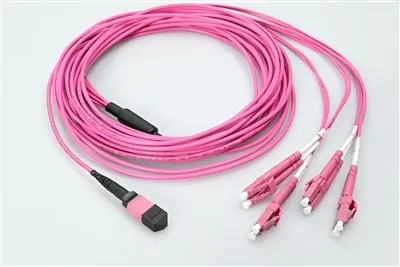
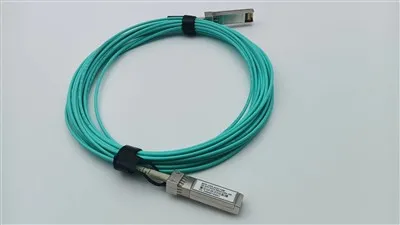
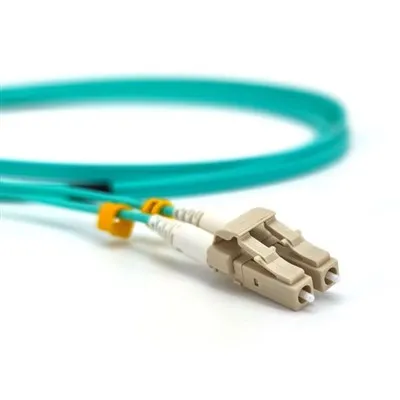
What is SC SC patch cable?
SC-SC fiber optic patch cord is a small compact patch cable very popularly used in many applications. These network solutions include telecommunication networks, LANs, data processing networks, device terminations and premises distributions. SC-SC patch cords are designed to deliver fast Ethernet solutions in Gigabit applications and ATM applications with less space consumption.

Specification
| Parameter | Unit | FC, SC, LC/ Armoured fiber patch cord | ST, MU | MT-RJ, MPO | E2000 | ||||||||
| SM | MM | SM | MM | SM | MM | SM | |||||||
| PC | UPC | APC | PC | PC | UPC | PC | PC | UPC | PC | PC | APC | ||
| Insertion loss(typical) | dB | ≤0.3 | ≤0.2 | ≤0.3 | ≤0.2 | ≤0.3 | ≤0.2 | ≤0.2 | ≤0.3 | ≤0.2 | ≤0.2 | ≤0.3 | ≤0.3 |
| Return loss | dB | ≥45 | ≥50 | ≥60 | ≥30 | ≥45 | ≥50 | ≥30 | ≥45 | ≥50 | ≥35 | ≥55 | ≥75 |
| Operating wavelength | nm | 1310, 1510 | 1310, 1510 | 1310, 1510 | 1310, 1510 | ||||||||
| Exchangeability | dB | ≤0.2 | ≤0.2 | ≤0.2 | ≤0.2 | ||||||||
| Vibration | dB | ≤0.2 | ≤0.2 | ≤0.2 | ≤0.2 | ||||||||
| Operating temperature | ℃ | -40~75 | -40~75 | -40~75 | -40~75 | ||||||||
| Storage temperature | ℃ | -45~85 | -45~85 | -45~85 | -45~85 | ||||||||
| Cable diameter | mm | φ3.0, φ2.0, φ0.9 | φ3.0, φ2.0, φ0.9 | φ3.0, φ2.0, φ0.9 | φ3.0, φ2.0, φ0.9 | ||||||||
Features
Singlemode or Multimode SC-SC, Riser or Plenum Rated
We supplies SC-SC fiber optic cable assemblies, with single mode (9/125 OS1, OS2), duplex and multimode (50/125 and 62.5/125) options. You can choose if it's for riser application or plenum connections or if you want it to be completely customized, you can contact us to know more about our OEM/ODM service for SC-SC patch cords.
Easy and Convenient Pull Out
Built with a conveniently snap in configuration, SC-SC connections are equipped with locking mechanisms that are similar to the retaining tab of an RJ45 connector. Now it's easy to connect and disconnect the connector from the device. The locking tabs are injection-molded with enhanced durability in resisting pulls, strains, snags, and impacts during cabling installs and maintenance.
Safe and Tested Fiber Assembly with Low Insertion Loss
Our patch cords are 100% optically inspected and tested to bring low insertion loss not exceeding 0.02 dB.
Application

Data Centers - High-Density Cabling
- 10G/40G/100G Ethernet backbone connections
- SAN (Storage Area Network) interconnections
- Server-to-switch and switch-to-switch links
- Top-of-rack (ToR) deployments

Enterprise Networks - LAN Infrastructure
- Campus backbone and building interconnects
- Main distribution frame (MDF) to intermediate distribution frame (IDF)
- High-bandwidth office environments
- Horizontal cabling for workstation clusters

Telecommunication - Carrier Networks
- Central office (CO) equipment interconnection
- Fiber-to-the-building (FTTB) distribution
- Multi-dwelling unit (MDU) riser cabling
- Optical distribution frame (ODF) patching

Testing & Laboratory
- Network equipment testing and validation
- Fiber optic measurement and calibration
- Research and development environments
- Quality assurance and certification labs
FAQ
Q: Why choose a 16-core patch cord instead of multiple duplex cables?
A: Great question! Here's the deal – when you're running 16 fibers, you've got two choices: bundle up 8 duplex cables or use a single 16-core assembly. The multi-fiber approach wins hands down for several reasons. First, cable management becomes way simpler – one cable to route versus eight separate ones tangling up your pathway. Second, you're saving serious rack space in high-density environments. Third, installation time drops dramatically – we've seen techs cut their patching time by 60-70% compared to running individual duplexes. The only trade-off? If one fiber has an issue, you're troubleshooting within a bundle. But with our ≤0.3dB insertion loss across all 16 cores, failures are extremely rare.
Q: What's the difference between OM3 and OM4 fiber? Do I need OM4 for my 10G network?
A: This is probably the most common question we get! Short answer: for 10G links under 300 meters, OM3 is perfect – and honestly, that covers about 95% of data center runs. Here's the technical bit: OM3 has an effective modal bandwidth of 2000 MHz·km at 850nm, while OM4 bumps that up to 4700 MHz·km. What does that mean practically? OM3 supports 10G up to 300m, 40G up to 100m, and 100G up to 100m. OM4 extends those distances – 10G to 400m, 40G to 150m, 100G to 150m. So unless you're running longer links or planning for 40G/100G upgrades in the near future, OM3 gives you excellent performance at a better price point. Both use the same 50/125μm core and aqua jacket, so they're fully compatible with your existing OM3 infrastructure.
Q: Can I use this 16-core SC patch cord with my existing SC duplex infrastructure?
A: Absolutely – that's the beauty of the SC connector! Each of the 16 fibers terminates with a standard SC connector, so they'll plug right into any SC adapter panel, ODF, or equipment port you already have. The SC's push-pull latching mechanism is identical whether it's coming from a single duplex cable or our 16-core assembly. One thing to keep in mind: you'll want to make sure your patch panel or adapter layout can accommodate 16 SC ports in the arrangement you need. We typically see customers using these with high-density SC adapter panels that hold 12 or 24 ports. If you need help planning your panel configuration, just reach out – we've done hundreds of these deployments and can share what works best.
Q: What insertion loss should I expect, and how does it affect my link budget?
A: Our 16-core SC OM3 patch cords are tested to deliver ≤0.3dB insertion loss per connector – that's the industry standard for premium-grade assemblies. With two connectors per link (one at each end), you're looking at ≤0.6dB total connector loss. For your link budget calculation, here's what to factor in: connector loss (0.6dB), fiber attenuation (3.5dB/km at 850nm for OM3), and any splice points if applicable. For a typical 100m 10G link, you're using maybe 0.35dB for the fiber itself plus 0.6dB for connectors – well within the 2.6dB budget that 10GBASE-SR allows. We 100% test every single fiber before shipping and include the test report, so you'll know exactly what you're getting. No surprises.
Q: How do I identify which fiber is which in a 16-core cable?
A: Good thinking – fiber identification is critical when you're dealing with multi-fiber cables! We follow the TIA-598 color coding standard, which uses a specific sequence of 12 colors (blue, orange, green, brown, slate, white, red, black, yellow, violet, rose, aqua) plus striping for fibers 13-24. In a 16-core cable, fibers 1-12 are solid colors, and fibers 13-16 use the first four colors with a stripe or tracer. Each fiber is also numbered on the breakout legs. Pro tip: when you're documenting your installation, snap a photo of both ends with the color sequence visible – it'll save you hours of troubleshooting down the road. If you need a custom color scheme or specific labeling for your organization, we can accommodate that too.
Q: What's the minimum bend radius, and can I use these in tight spaces?
A: The SC connectors themselves have a relatively larger footprint compared to LC, but the fiber itself is quite flexible. For our OM3 multi-fiber cables, the minimum bend radius under load is 10x the cable outer diameter, and unloaded it's about 5x. For a typical 16-core distribution cable, that works out to roughly 50-60mm (about 2 inches) when installed. The individual breakout legs at the SC ends can bend tighter – down to about 30mm radius. Here's the thing though: always leave some slack at transition points rather than forcing tight bends. Tight bends increase attenuation and can cause macro-bending losses over time. For really space-constrained applications, consider our bend-insensitive fiber option – it handles 7.5mm radius bends without significant loss increase.
Hot Tags: 16 core patch cord sc multimode om3, China 16 core patch cord sc multimode om3 manufacturers, suppliers, factory, fiber optic patch cord for media reporters in chief, fiber optic patch cord for gaming, fiber optic patch cord for fiber to the home ftth , fiber optic patch cord for exhibition hall optical network, fiber optic patch cord for railway optical network, fiber optic patch cord for optical transport network otn