


Evolux Fiber: Your Professional Fiber Optic Connector Manufacturer!
Shenzhen Evolux Fiber Co., Ltd is a leading provider of cutting-edge optical fiber solutions, specializing in the research, development, manufacturing, and distribution of high-quality fiber optic products. Established in 2013 year, and headquartered in Shen Zhen, China, we have emerged as a trusted name in the field of fiber optics. With a strong focus on innovation and reliability, we strive to meet the evolving demands of the global telecommunications industry.

Our Advantages
Diverse Product Portfolio
We provide a comprehensive range of optical fiber products, from single-mode and multi-mode optical fibers to specialty optical fibers for specific applications, including optical fiber cables, connectors, transceivers, adapters, and related accessories to meet the diverse needs of our customers.
Excellent Customer Support
We have assembled a team of experts who are ready to support our customers. They assist customers in selecting the right fiber optic solution and guide the implementation process, allowing customers to enjoy comprehensive pre-sales consultation to post-sales support and technical assistance.
Advanced R&D Facilities
State-of-the-art R&D facilities, equipment, and specialized laboratories provide an ideal environment for conducting cutting-edge research, experimentation, and testing of fiber optic materials, design, and manufacturing processes.
Professional Customization Services
We offer customization options that allow customers to tailor fiber optic products to their specific needs. Fiber diameter, coating material, or connector type can all be customized flexibly.


Product Categories
Latest Products


How Are Fiber Optic Connectors Manufactured?
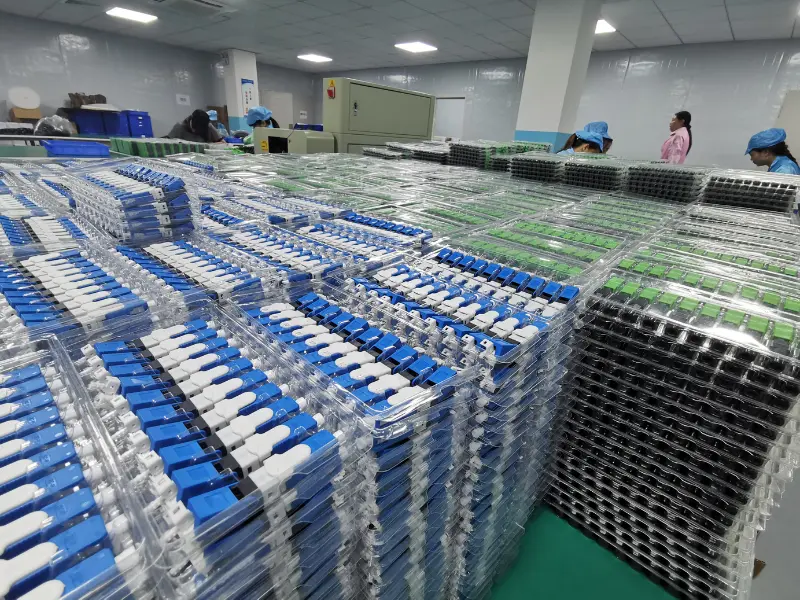
Fiber optic connector manufacturing requires precise fiber alignment, controlled assembly and consistent optical performance. Even small variations in ferrule dimensions, fiber positioning or end-face geometry may affect insertion loss, return loss and long-term connection stability.
The exact manufacturing process depends on the connector design. Conventional fiber optic connectors normally involve fiber preparation, bonding, curing and end-face polishing. Field-installable fast connectors typically use a factory-prepared fiber stub, a precision alignment structure and index-matching technology to simplify termination at the installation site.
At EVOLUX, production requirements are confirmed according to the connector type, polish type, fiber mode, compatible cable structure and target performance. Not every product follows exactly the same process, but the following stages illustrate how we manage connector manufacturing from incoming components to finished products.
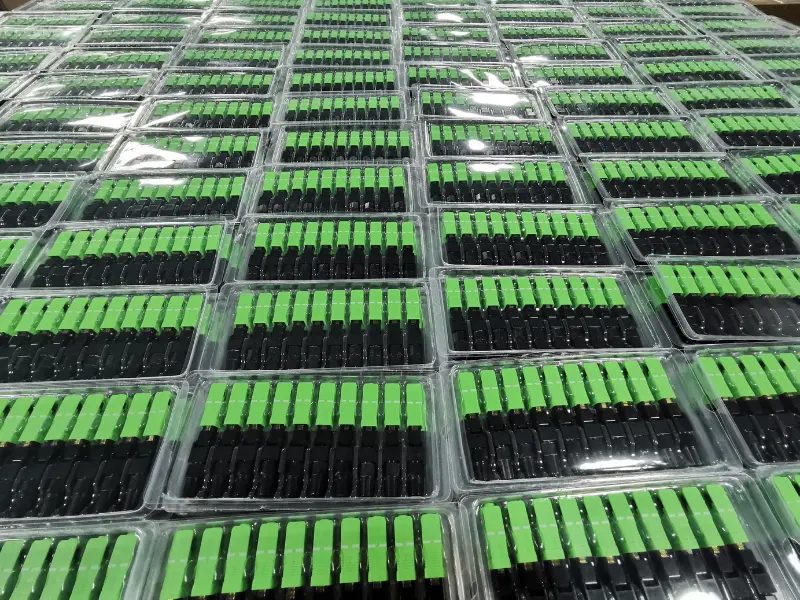
Raw Material Inspection
Ferrules, housings, springs, boots, fiber components and packaging materials are inspected before production.
Checks may include:
- Ferrule dimensions and appearance
- Housing material and color
- Mechanical components
- Fiber components
- Labels and packaging
Non-conforming materials are identified and separated before assembly.
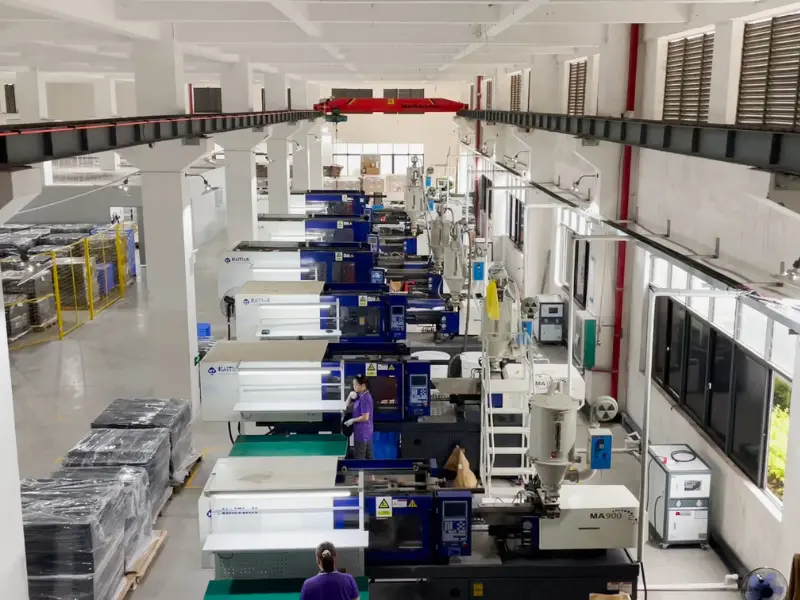
Component and Ferrule Preparation
Components are prepared according to the approved connector specification.
The process may include:
- SC, LC, FC or ST structures
- PC, UPC or APC configurations
- Single-mode or multimode options
- 1.25 mm or 2.5 mm ferrules
- Simplex, duplex or fast connector designs
Materials are organized according to the approved bill of materials.
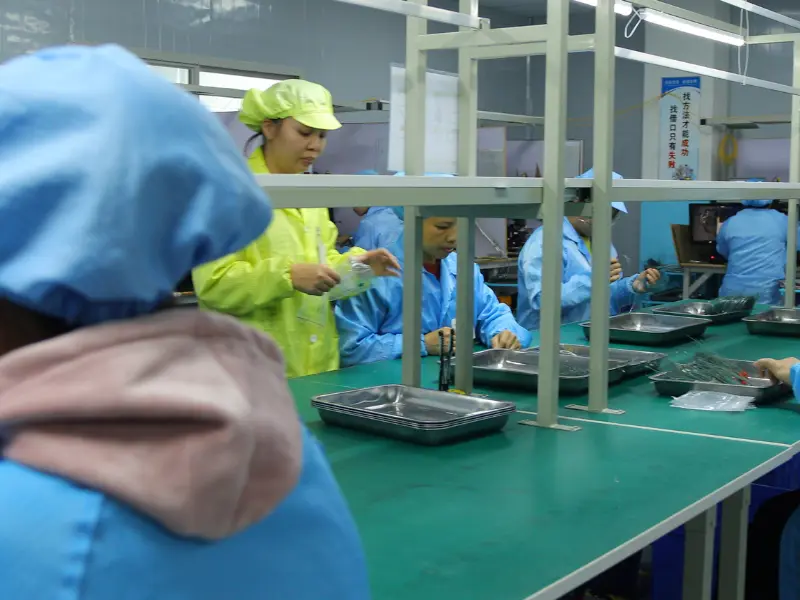
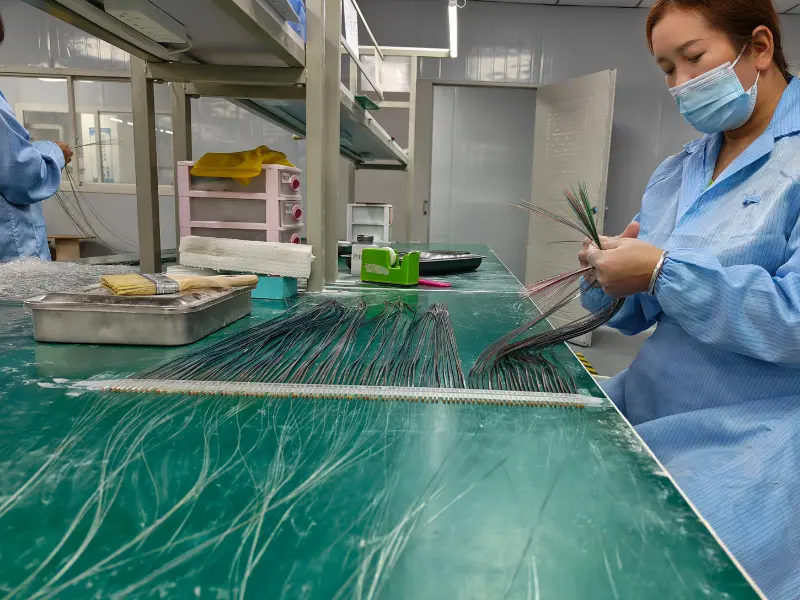
Fiber Preparation or Pre-Embedded Assembly
The process varies between conventional and field-installable connectors.
It may include:
- Fiber stripping and cleaning
- Fiber preparation
- Ferrule insertion
- Pre-polished fiber-stub installation
- Precision alignment assembly
Fast connectors may also use index-matching technology to support stable optical transmission.
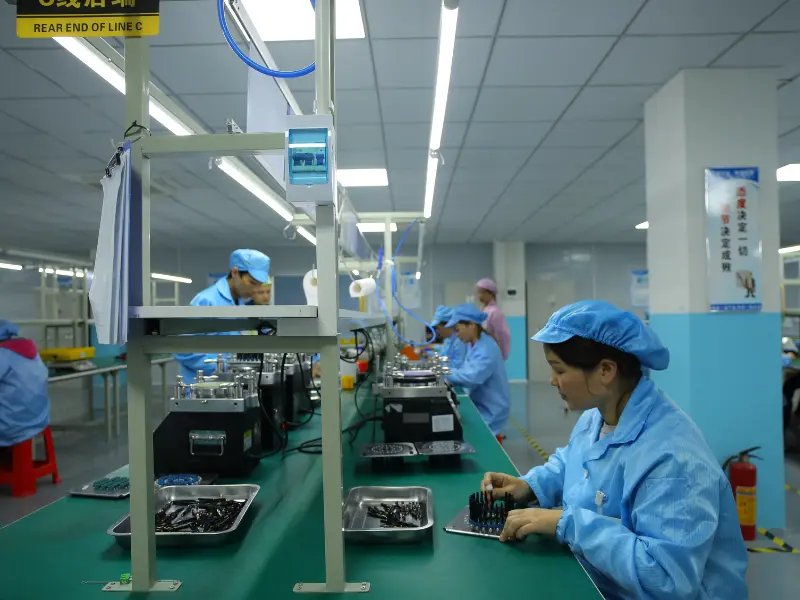
Fiber Fixing and Curing
The fiber is secured using a bonding or mechanical fixing method.
Key controls may include:
- Fiber positioning
- Bonding application
- Curing conditions
- Mechanical locking
- Internal alignment
The process is controlled to reduce movement and maintain stable optical performance.
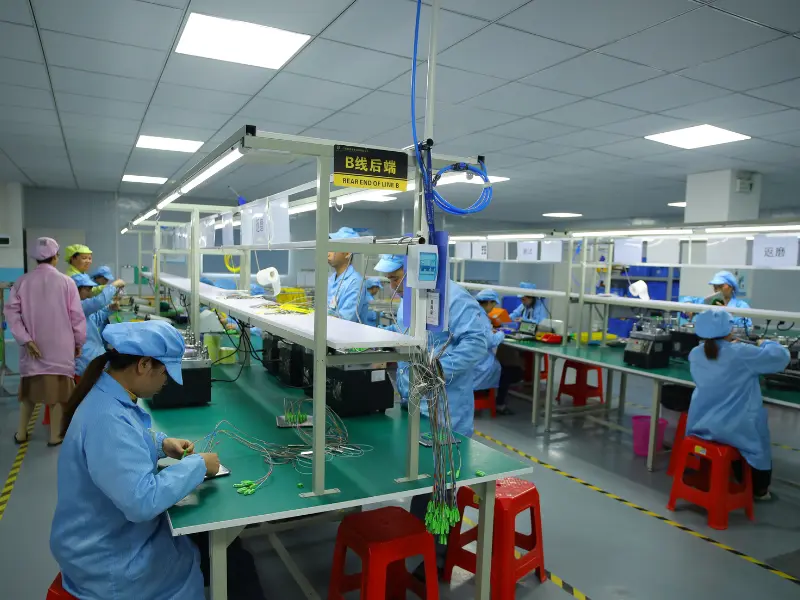
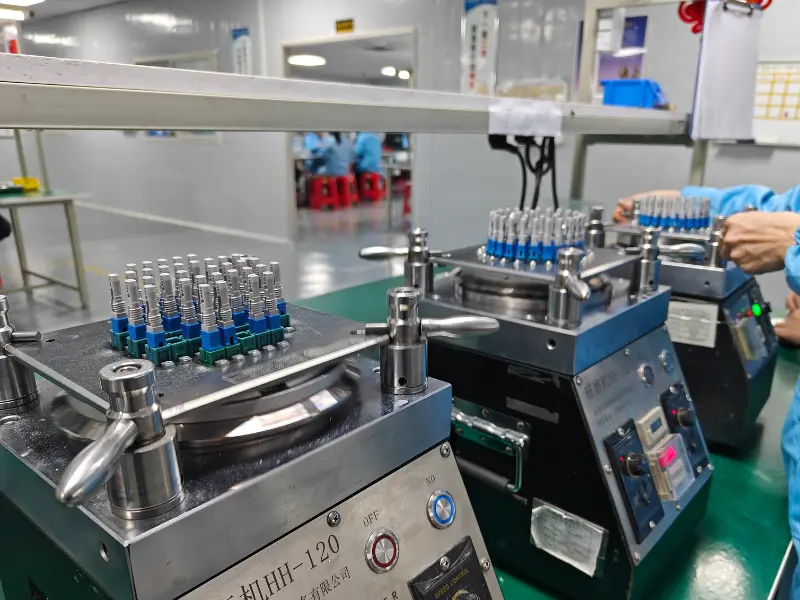
End-Face Processing and Polishing
Conventional connector end faces are processed according to PC, UPC or APC requirements.
The process may include:
- Fiber and adhesive removal
- Ferrule grinding
- Multi-stage polishing
- End-face cleaning
- Microscopic inspection
Controlled polishing helps maintain insertion loss, return loss and connection stability.
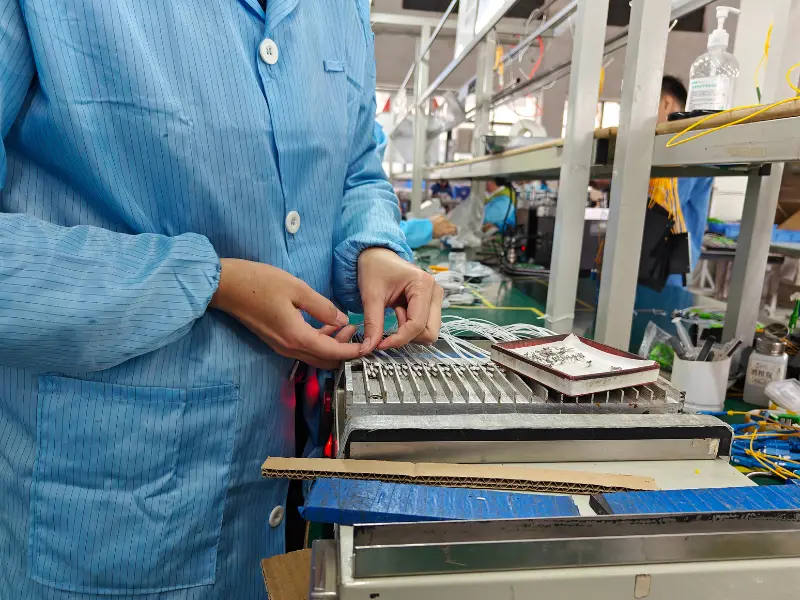
Connector Assembly
Ferrules, springs, housings, boots and locking components are assembled into the finished connector.
Assembly checks may include:
- Ferrule position
- Spring installation
- Housing orientation
- Locking function
- Dust-cap protection
Customized products are assembled according to the approved drawing or sample.
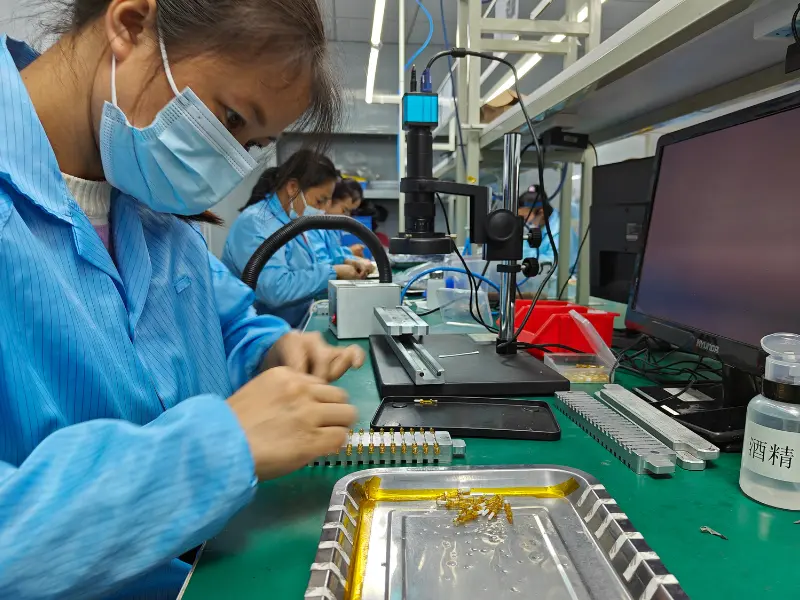
Optical and Mechanical Testing
Finished connectors are tested according to the product specification and application.
Testing may include:
- Insertion loss
- Return loss
- End-face inspection
- Mating and dimensions
- Tensile or durability testing
Test items and acceptance criteria are confirmed according to project requirements.
Final Inspection and Packaging
Approved connectors proceed to final inspection and packaging.
Final checks may include:
- Appearance and cleanliness
- End-face condition
- Optical performance
- Label and quantity accuracy
- Packaging condition
Products are protected with dust caps and packed in standard or customized packaging.
Discuss Your Connector Project
Quality Control from Incoming Materials to Final Shipment
Consistent connector quality depends on more than final testing.
A finished connector may pass one optical test while still being affected by inconsistent materials, unstable assembly conditions, end-face contamination or packaging damage. For this reason, EVOLUX manages quality at multiple stages, including incoming materials, production processes, optical performance, mechanical assembly and final shipment inspection.
Quality criteria are confirmed according to the connector model, application and customer requirements. For customized projects, inspection items and acceptance standards can be reviewed before sample preparation or bulk production.
Incoming Quality Control — IQC
Incoming components are inspected before production to identify material, dimensional and appearance issues.
Inspection may include:
- Ferrule dimensions and surface condition
- Housing material, dimensions and color
- Locking and mating structures
- Springs, boots and mechanical components
- Fiber or pre-embedded fiber components
- Labels and packaging materials
Non-conforming materials are identified and separated before production to reduce assembly problems and maintain batch consistency.
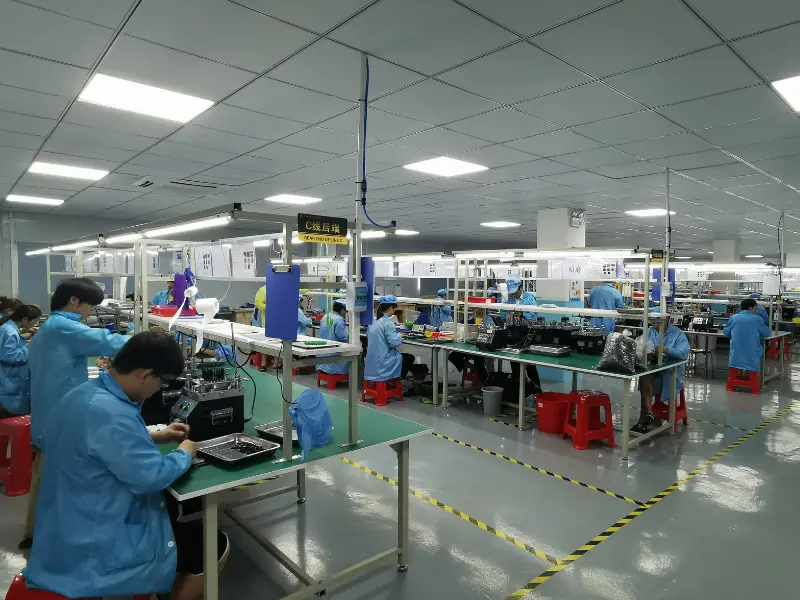
In-Process Quality Control — IPQC
Key production stages are monitored to maintain consistent fiber positioning, connector structure and assembly quality.
Inspection may include:
- Fiber preparation and cleanliness
- Fiber positioning and ferrule assembly
- Bonding, fixing and curing conditions
- End-face grinding and polishing
- Housing orientation and assembly dimensions
- Locking, mating and boot installation
Production follows approved specifications and work instructions. Customized products are controlled according to the confirmed drawing, specification or approved sample.
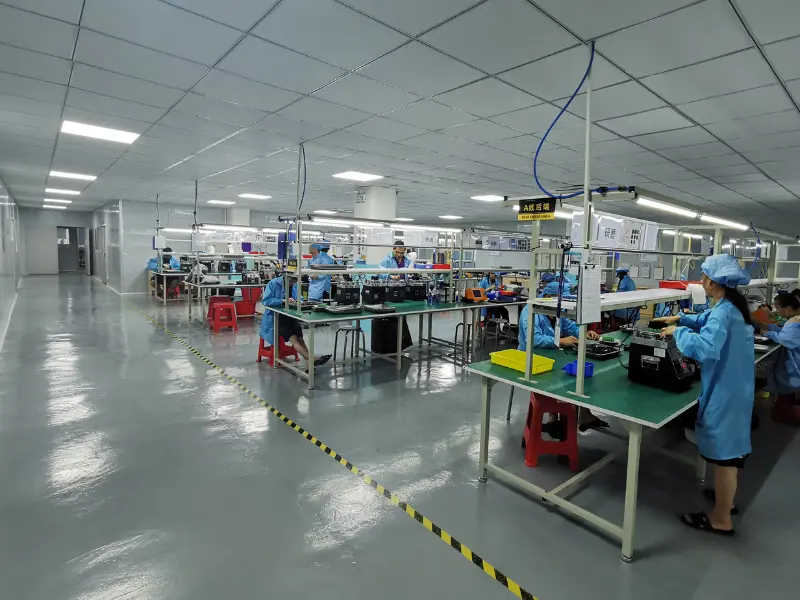
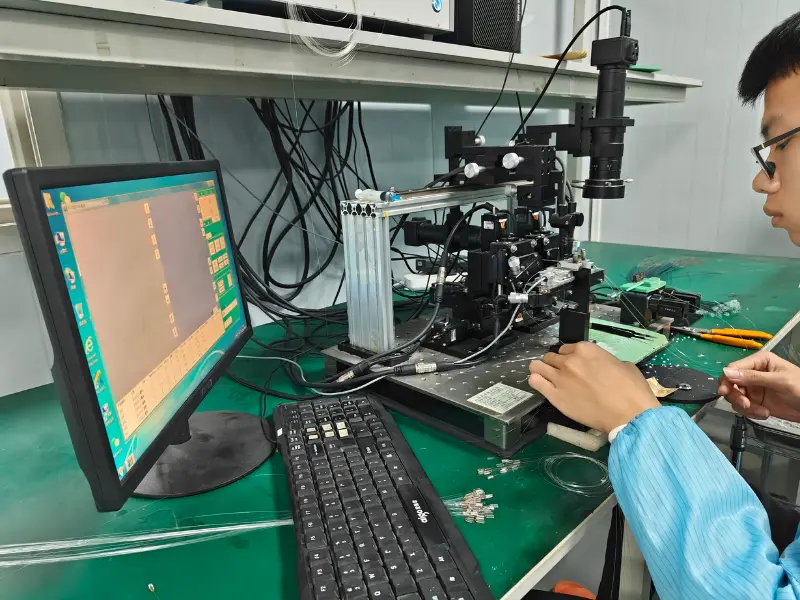
Optical and Mechanical Performance Testing
Finished connectors are tested according to the product model, intended application and confirmed customer requirements.
Testing may include:
- Insertion loss and return loss
- End-face inspection
- Connector dimensions and mating condition
- Connection repeatability
- Tensile strength and cable retention
- Mechanical durability
- Environmental or temperature testing
Not every connector requires the same tests. Inspection items and acceptance criteria are confirmed according to the product design and project requirements.
Final Quality Control and Traceability — FQC/OQC
Finished connectors are inspected before packaging and shipment to verify product quality and order accuracy.
Final checks may include:
- Optical performance and end-face condition
- Product appearance and cleanliness
- Housing color and product marking
- Label, quantity and packaging accuracy
- Carton and customer-specific requirements
Approved products are released for shipment, while non-conforming products are separated for review. Depending on the project, supporting records may include batch inspection data, optical test reports, sample approvals, specification sheets, lot traceability and corrective-action records.
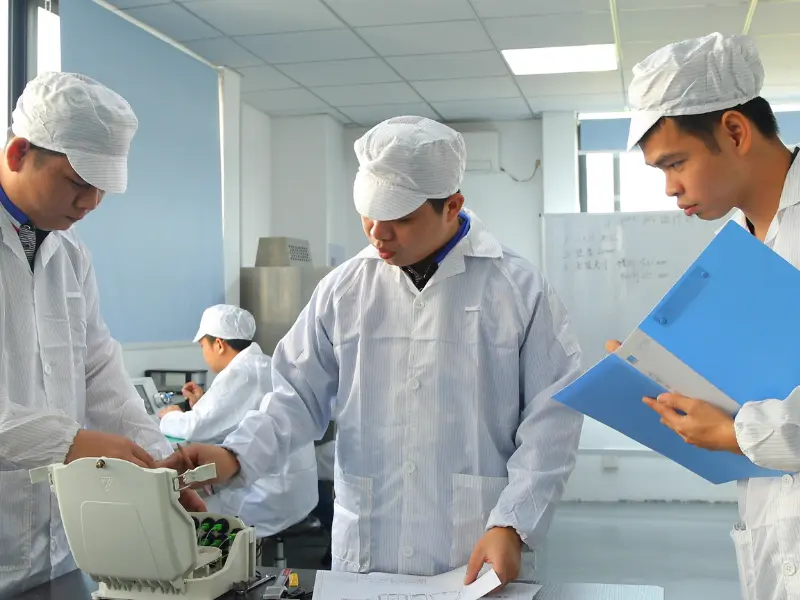
Custom Fiber Optic Connectors Built Around Your Requirements
Standard fiber optic connectors do not always match every network, device or installation environment.Different projects may require a specific connector structure, fiber mode, cable size, housing color, mechanical design, optical performance level or packaging format. EVOLUX supports project-based customization for distributors, contractors, equipment manufacturers and private-label brands.Customization feasibility is reviewed according to the required product structure, order quantity, material availability and technical requirements.
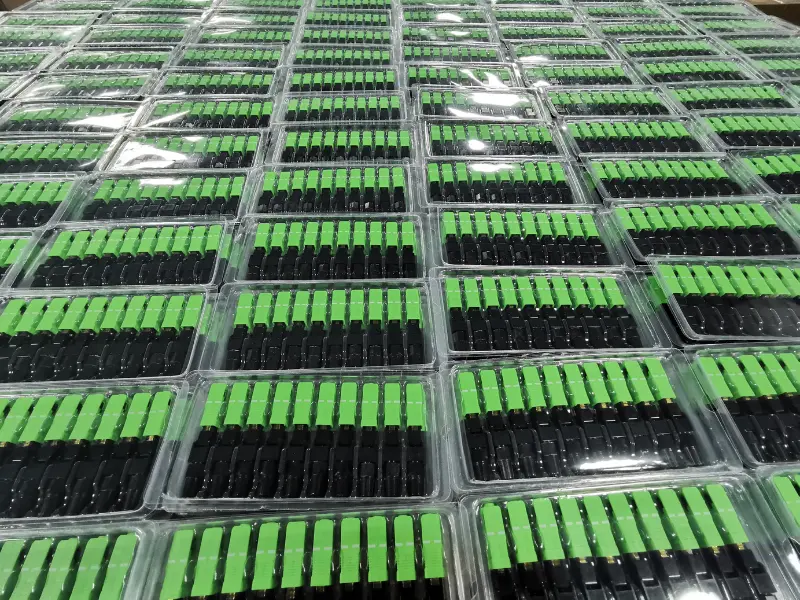
Connector Configuration
Connector configurations can be selected or modified according to the application.
Available options may include:
SC connectors/LC connectors/FC connectors/ST connectors/PC configurations/UPC configurations/APC configurations/Single-mode connectors/Multimode connectors/Simplex structures/Duplex structures/Conventional polished connectors/Field-installable fast connectors/Application-specific connector combinations/
The final configuration is confirmed according to compatibility, performance and installation requirements.
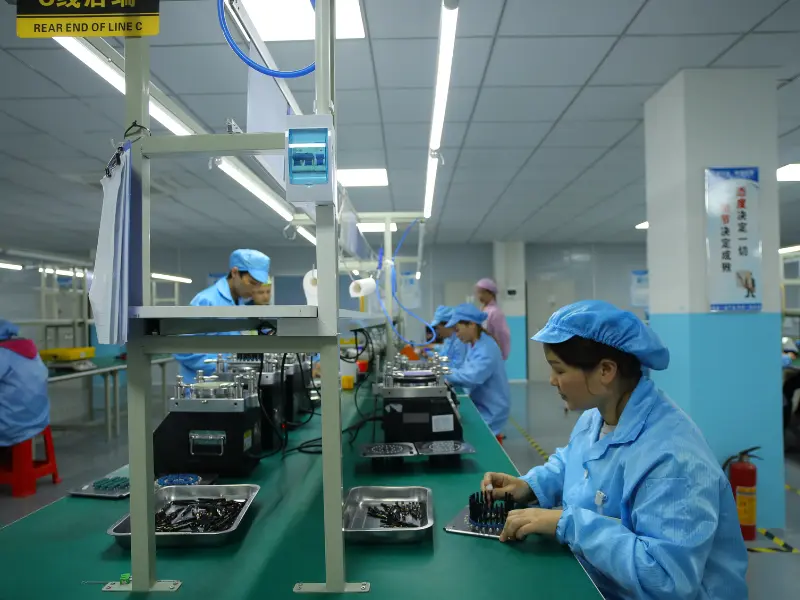
Mechanical Structure
Mechanical components can be reviewed or adjusted for project-specific requirements.
Customization may include:
Connector housing structure/Boot style/Boot length/Locking mechanism/Ferrule specification/Duplex clip structure/Cable-retention components/Reinforced structures/Waterproof structures/Installation accessories/
Mechanical customization may require drawing review, tooling evaluation or sample verification.
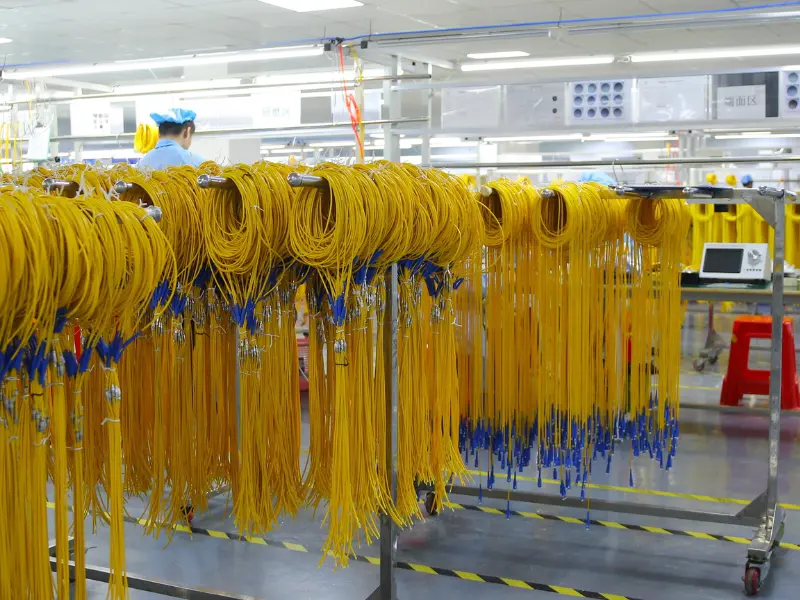
Fiber and Cable Compatibility
Connector structures can be matched to different fiber and cable types.
Available compatibility options may include:
250 μm bare fiber/900 μm buffered fiber/2.0 mm cable/3.0 mm cable/FTTH drop cable/Indoor fiber cable/Customer-specified cable structures
Compatibility depends on the connector model. Customers should provide the cable dimensions, construction drawing or physical sample when requesting a non-standard configuration.
For projects using customer-supplied cable, sample assembly and compatibility testing may be recommended before bulk production.
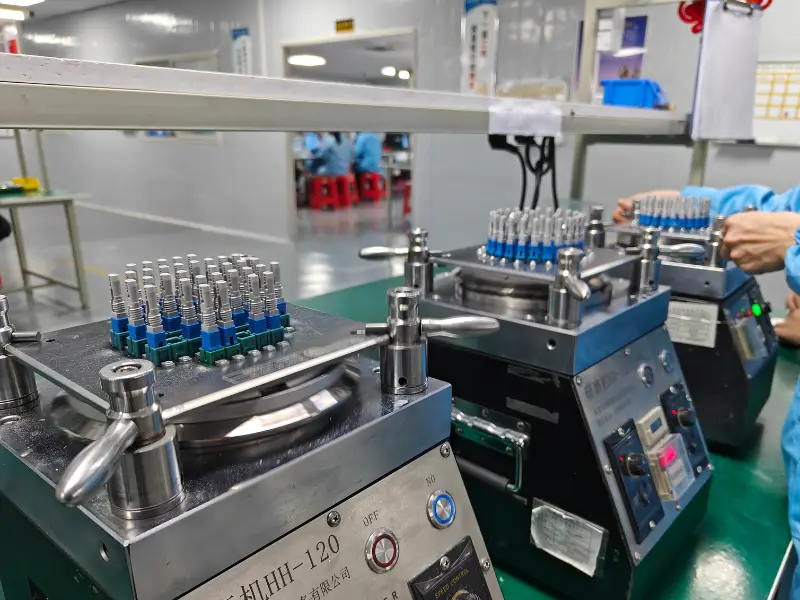
Appearance and Product Identification
Appearance options can help distributors and brands create a consistent product range.
Available options may include:
Connector housing color/Boot color/Duplex clip color/Product marking/Laser marking/Customer logo/Model number/Batch number/Product label/Distributor-specific product code
Color matching and marking methods depend on the connector material, production quantity and manufacturing feasibility.
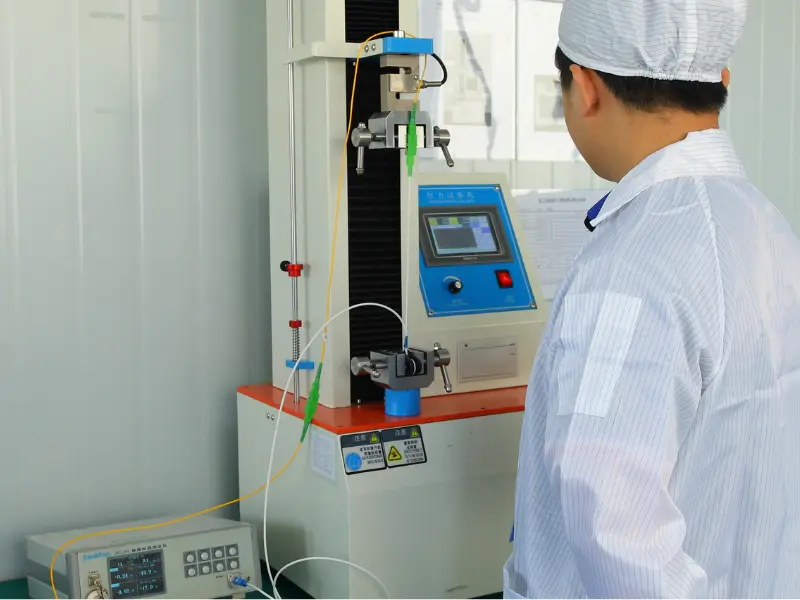
Optical and Mechanical Performance Requirements
Performance targets can be reviewed according to the product design and intended application.
Project requirements may include:
Target insertion loss/Target return loss/Connection repeatability/Mechanical durability/Tensile strength/Cable-retention performance/Operating-temperature requirements/Storage-temperature requirements/Environmental conditions/Application-specific inspection criteria
All performance targets are subject to technical evaluation. The final specification should be confirmed through documentation, sample testing or an approved production sample before bulk manufacturing.
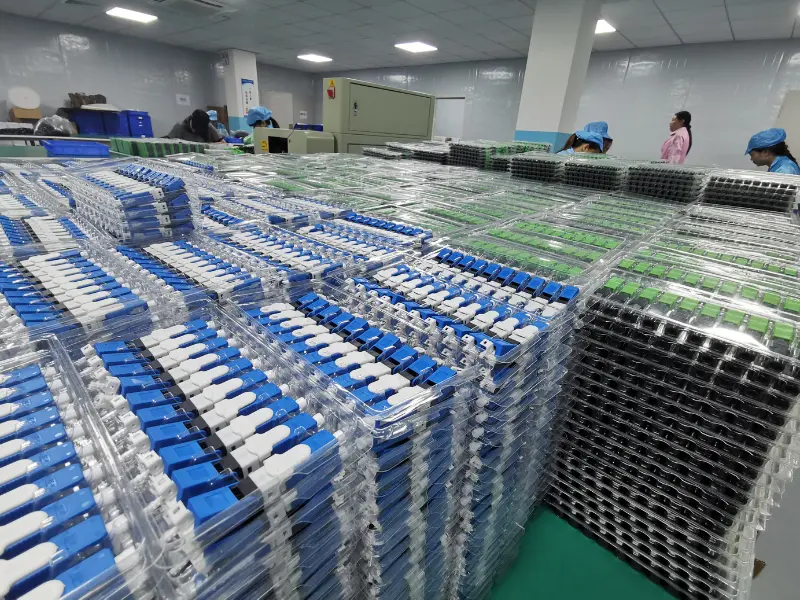
Packaging and Documentation
Packaging can be customized for distributors, project contractors and private-label brands.
Available options may include:
EVOLUX standard packaging/Neutral packaging/Private-label packaging/Customized product labels/Barcode labels/Inner-box labels/Carton markings/Customer logo/User instructions/Installation cards/Packing-list formats/Customer-specific packing quantities
Packaging details should be confirmed before production to ensure that labels, barcodes, quantities and carton information match the customer’s receiving and distribution requirements.
An optical fiber connector is a device used to link optical fibers, facilitating the efficient transmission of light signals. An optical fiber connector enables quicker connection and disconnection than splicing. They come in various types like SC, LC, ST, and MTP, each designed for specific applications.
Lucent Connectors (LC)
LC connectors have some of the smallest ferrules, measuring 1 1/4 mm, which is approximately half the size of an ST connector. Their tiny size puts them into the small form factor category of terminations. These connectors work well for multimode transceivers and single-mode cables.
Standard Connectors (SC)
SC connectors have a 2 1/2 mm ferrule that snaps cleanly into place. Using a push and pull motion secures the connector. These types of terminations have high levels of performance, which along with a price drop since their introduction, has contributed to their vast popularity in multiple applications. In fact, many formerly ST connectors applications now use SC connectors instead, since SC was invented to supplant ST in both telecommunications and data communications.
ST Connectors
ST connectors are among the oldest of fiber cable connector types. Until 2005, this proprietary AT&T brand of connector ranked as one of the most popular fiber terminations. While solutions that solve some issues ST connectors present have replaced these connectors, they still remain popular. Today, their cost is low due to their age, making them a choice for budget-mindful projects. The design of ST connectors is a 2 1/2 mm ferrule that has a bayonet-style connection between the fibers through an adapter. These ferrules use a spring-load design that can make installation difficult unless the parts have precise seating, though a keyed slot assists with aligning the ferrules for connection.
Ferrule Core (FC) Connectors
FC connectors rank as some of the most popular for use with single-mode connections before the introduction of LC and SC connectors. These use a keyed, screw-in type ferrule. However, the process of screwing in the ferrule requires extra time and effort compared to snap-in SC connectors. The screw-in design prevents the connection from interruptions, even when someone pulls the cable or the system has applications in areas with a lot of movement. Video over fiber is one use for these types of connectors due to the constant flow of data through the cable and the security of the connector. Like ST and SC connectors, FC terminations use a 2 1/2 mm ferrule. With a hybrid adapter, anyone can create a bridge between these connector types.
Multi-Position Optical (MPO) Connectors
MTP is the commercial brand of MPO connectors. MTP and MPO connectors are the same, except the MTP brand has a specific use for high-performance applications, whereas MPO works on more mechanical situations. These two connectors usually connect ribbon cables with multiple fibers. These connectors have two to six rows of 12 or 16 fibers. MPO connectors with 12 fibers per row can have two to six rows, with two the most common number. Connectors that have 16 fibers per row do not have more than two rows. Connections between ferrules use pins and holes to mate the ends of the fiber with another cable or an electronic device. Most often, this type of connector has applications in either high-speed links that use multimode or for pre-terminated cable groupings.
MT-RJ Connectors
Today, MT-RJ connectors have disappeared from use. However, some systems may still require these connectors for repairs. MT-RJ only works for multimode cables with duplex fibers. Both fibers go into the ferrule that connects to its mated half with pins and holes, similar to MPO terminations. Some plug-and-jack variations on this type of connector also exist.
Application of Fiber Optic Connector


Internet and Local Area Networks (LANs)
Fiber optic cables allow for greater bandwidth compared to other cable options. Common uses for networking include fiber optics for delivering internet and LAN connectivity throughout a building. Fiber optic cable works especially well over distances greater than 90 meters and when carrying gigabit-speed connections. Both LAN and high-speed internet use multimode fiber optic cable. Many companies today have fiber cable going to telecom closets that then transfer the signal to copper-based Cat5 cable and other cables. These cables carry the signal to computers and telephones. However, this practice of using media converters or telecom closets may disappear over time. Innovations in fiber optic technology, high costs for maintaining telecom closets and lowering prices for fiber optics may eventually make all fiber networks the norm.
Community Antenna TV (CATV) and Other Telecommunications
Community antenna TV and other telecommunications companies often prefer fiber optic cable to deliver their signals due to the lower cost over long distances with less loss and higher bandwidth compared to older technologies. Additionally, each transmitter and receiver pair of fibers can carry more voice and video signals. Compared to wire delivery methods, fiber optics can go 100 times farther and more than 1,000 times faster. CATV may use single-mode fiber optic cabling for its higher bandwidth and lower loss.
Public Utility Networks
Public utilities, such as electrical companies or municipal water treatment facilities, use fiber optics in several ways. They may have fiber optic connected closed-circuit TV (CCTV) security cameras and a network connecting various sites to provide real-time data on operations. Electrical companies, for instance, recognized the interference of their production and distribution equipment on traditional communications wires and made an early switch to fiber optics. City emergency services also use fiber optics with CCTV, wireless technology and traffic cameras to integrate communications and information sharing among responders. Plus, fiber connectivity through in-city networks can offer higher bandwidth to accommodate large numbers of city workers on the system accessing information at once.
Industrial Networking
As with electricity companies, electromagnetic interference also plays a role in the choice of communication products used in industrial businesses. Electrical noise from equipment can cause severe problems with unshielded wire cable. But it does not do the same for fiber optics. With many industrial facilities moving into smart operations with devices connected to each other and the internet over a network, reliable connectivity is vital. For industrial applications, connectors must have firm attachments that cannot easily dislodge, even from constant vibrations caused by machinery operating nearby.

Fiber optic connectors are unique. Fiber cables transmit pulses of light instead of electrical signals, so the terminations must be much more precise. Instead of merely allowing pins to make metal-to-metal contact, fiber optic connectors must align microscopic glass fibers perfectly in order to allow for communication. While there are many different types of fiber connectors, they share similar design characteristics.
Simplex vs. duplex: Simplex means 1 connector per end while duplex means 2 connectors per end. There are three major components of a fiber connector: the ferrule, the connector body, and the coupling mechanism.
Ferrule: This is a thin structure (often cylindrical) that actually holds the glass fiber. It has a hollowed-out center that forms a tight grip on the fiber. Ferrules are usually made from ceramic, metal, or high-quality plastic, and typically will hold one strand of fiber.
Connector Body: This is a plastic or metal structure that holds the ferrule and attaches to the jacket and strengthens members of the fiber cable itself.
Coupling Mechanism: This is a part of the connector body that holds the connector in place when it gets attached to another device (a switch, NIC, bulkhead coupler, etc.). It may be a latch clip, a bayonet-style nut, or similar device.
Step 1: Know the Fiber Count and Connector Type
Choose the connector type based on your existing equipment and long-term plans. Select the LC connector if you are using the most common SFP module. If you use a QSFP28 module, you may choose an MPO or LC connector. SC and LC are the most common choices, MPO is for high throughput data centers, and VSSF connectors such as CS and SN are for 400G and beyond fiber cabling applications.
Step 2: Know the Fiber Type
Like fiber cable, fiber optic connectors can be commonly categorized into single mode and multimode. Single mode fiber permits one light mode to propagate simultaneously, offering the longest transmission distance. The multimode allows many light modes to propagate through the fiber, supporting a very short distance but lowering cabling costs. Those fiber connectors usually have different color codes for easy identification. Single mode connectors typically have blue or green covers, while OM1/OM2 multimode connectors have beige covers, OM3 has aqua color, and OM4 with magenta color.
Step 3: Know the Polish Type
Remember the Polish type. Fiber optic connectors are available in PC, UPC, and APC polish. Different polish offers performance and cost difference. Check them with your supplier before ordering.

Tips for Fiber Optic Connector
Clean Your Connectors
One of the most important steps for maintaining your fiber cables and connectors is to clean them regularly and thoroughly. Dirt, dust, oil, and other contaminants can affect the quality and performance of your optical signals, cause attenuation, reflection, and interference, and even damage the fiber core or the connector end-face. To clean your connectors, you should use a lint-free wipe, a cleaning cassette, or a compressed air canister, depending on the type and size of the connector. You should also inspect your connectors before and after cleaning with a microscope or a video probe to ensure that they are free of debris and scratches.
Store Your Cables Properly
Another key factor for maintaining your fiber cables and connectors is to store them properly when they are not in use or in transit. You should avoid exposing your cables to extreme temperatures, humidity, sunlight, chemicals, or mechanical stress, as these can degrade the fiber material, cause cracks, or break the cable. You should also coil your cables carefully and loosely, following the recommended bend radius and avoiding kinks, twists, or knots. You should label your cables clearly and use protective caps, bags, or cases to prevent dust and damage to the connectors.
Test Your Cables Regularly
To ensure that your fiber cables and connectors are functioning well and delivering the expected performance, you should test them regularly with the appropriate tools and methods. You should measure the optical power, attenuation, and loss of your cables with a power meter, a light source, or an optical time-domain reflectometer (OTDR). You should also check the quality and integrity of your optical signals with an optical spectrum analyzer (OSA) or an optical modulation analyzer (OMA). You should compare your test results with the specifications and standards of your system and identify any issues or anomalies.
Repair or Replace Your Cables If Needed
Sometimes, despite your best efforts, your fiber cables and connectors may suffer from damage, wear, or failure that cannot be fixed by cleaning or testing. In that case, you should repair or replace your cables as soon as possible to avoid further problems or downtime. You should use a fusion splicer or a mechanical splice to join broken or cut fibers, following the manufacturer's instructions and safety precautions. You should also use compatible and high-quality connectors, adapters, and patch cords to connect or replace your cables, and avoid mixing different types or grades of fiber.
Train Your Staff and Follow Best Practices
Finally, one of the most effective ways to maintain your fiber cables and connectors is to train your staff and follow best practices for handling, installing, and operating your fiber system. You should educate your staff on the basics of fiber optics, the types and characteristics of fiber cables and connectors, the potential hazards and risks of working with fiber, and the proper procedures and techniques for cleaning, storing, testing, repairing, and replacing fiber components. You should also follow the industry standards and guidelines for fiber installation, termination, and certification, and document your maintenance activities and records.
Ultimate FAQ Guide to Fiber Optic Connectors
Q: What is a fiber optic connector?
Q: What are the most common fiber connectors?
Q: How do I identify a fiber optic connector?
Q: What is the difference between a fiber optic connector and a splice?
Q: Why are fiber connectors so expensive?
Q: What is the difference between blue and green fiber connectors?
Q: What is the difference between LC and SC fiber connectors?
Q: Which is better SC or LC connector?
Q: How can you tell the difference between an ST and an SC connector?
Q: What does the MU connector stand for?
Q: What's the structure of fiber optic connectors?
Q: How are the fiber connectors tested?
Q: When and how to clean fiber optic connectors?
Q: How to select the right fiber optic connector?
Q: What should I do if I install an SC connector but require an LC type?
Q: How do you connect fiber optic cable to the connector?
Q: How do you connect two fiber optic cable connectors?
Q: Why do I have to clean fiber optic connectors?
Q: Can you I a fiber optic connector?
Q: What are SC connectors?
As one of the leading fiber optic connector manufacturers and suppliers in China, we warmly welcome you to buy fiber optic connector in stock here from our factory. All customized products are with high quality and low price. For pricelist and free sample, contact us now.
fiber optic connector for fiber optic splitting optical cables, durable fiber optic connector, fiber optic connector for fiber optic cables