


Evolux Fiber: Your Professional Fiber Optic PLC Splitter Manufacturer!
Shenzhen Evolux Fiber Co., Ltd is a leading provider of cutting-edge optical fiber solutions, specializing in the research, development, manufacturing, and distribution of high-quality fiber optic products. Established in 2013 year, and headquartered in Shen Zhen, China, we have emerged as a trusted name in the field of fiber optics. With a strong focus on innovation and reliability, we strive to meet the evolving demands of the global telecommunications industry.

Our Advantages
Diverse Product Portfolio
We provide a comprehensive range of optical fiber products, from single-mode and multi-mode optical fibers to specialty optical fibers for specific applications, including optical fiber cables, connectors, transceivers, adapters, and related accessories to meet the diverse needs of our customers.
Excellent Customer Support
We have assembled a team of experts who are ready to support our customers. They assist customers in selecting the right fiber optic solution and guide the implementation process, allowing customers to enjoy comprehensive pre-sales consultation to post-sales support and technical assistance.
Advanced R&D Facilities
State-of-the-art R&D facilities, equipment, and specialized laboratories provide an ideal environment for conducting cutting-edge research, experimentation, and testing of fiber optic materials, design, and manufacturing processes.
Professional Customization Services
We offer customization options that allow customers to tailor fiber optic products to their specific needs. Fiber diameter, coating material, or connector type can all be customized flexibly.





Product Categories
Latest Products
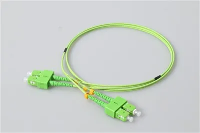
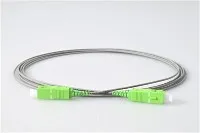
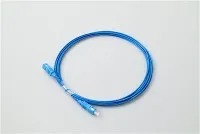


A fiber optic PLC splitter is not selected by split ratio alone. Its package size, connector interface, fiber diameter, cable length and installation method must also match the network architecture and enclosure design.
EVOLUX Fiber supplies PLC splitter solutions for telecom operators, fiber network contractors, ODN solution providers, equipment manufacturers, distributors and private-label brands.
Whether you are purchasing standard models for distribution or preparing a project-specific FTTH deployment, our team can help you review the required configuration before quotation and production.
01
Project-Matched Configuration
Choose the split ratio, package, connector, fiber construction and cable length according to your network topology, installation enclosure and optical budget.
02
Verifiable Optical Performance
Confirm key parameters such as insertion loss, loss uniformity, return loss, polarization dependent loss and directivity according to your acceptance requirements.
03
Flexible Customization
Configure connector interfaces, cable diameters, input and output lengths, product labels, customer part numbers and packaging.
04
Consistent Repeat Procurement
Approved configurations can be recorded for samples, bulk orders and repeat purchases, helping reduce specification differences between different production batches.
Customize Your Fiber Optic PLC Splitter
Standard PLC splitters cover most FTTH, GPON and PON applications, but different projects may require specific split ratios, package sizes, connector interfaces, cable constructions and identification methods.
EVOLUX Fiber provides project-based PLC splitter customization according to your BOM, drawing, sample or technical specification.
Split Ratio and Port Configuration
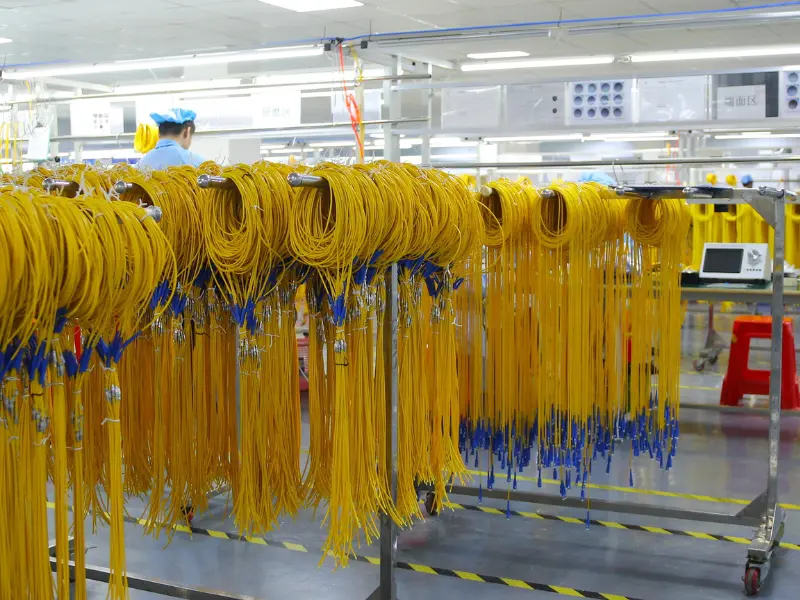
Choose the input and output configuration according to your network architecture and required number of distribution ports.
Available options may include:
- 1×2 to 1×64 configurations
- 2×N configurations
- Single-input or dual-input designs
- Balanced optical power distribution
- Project-specific port arrangements
- Special configurations subject to technical evaluation
Package Type
Select the package according to installation space, protection requirements and fiber management method.
Available options include:
- Bare fiber
- Blockless or mini tube
- ABS module
- LGX cassette
- Rack-mount enclosure
- Custom module construction
Connector Type and Polish
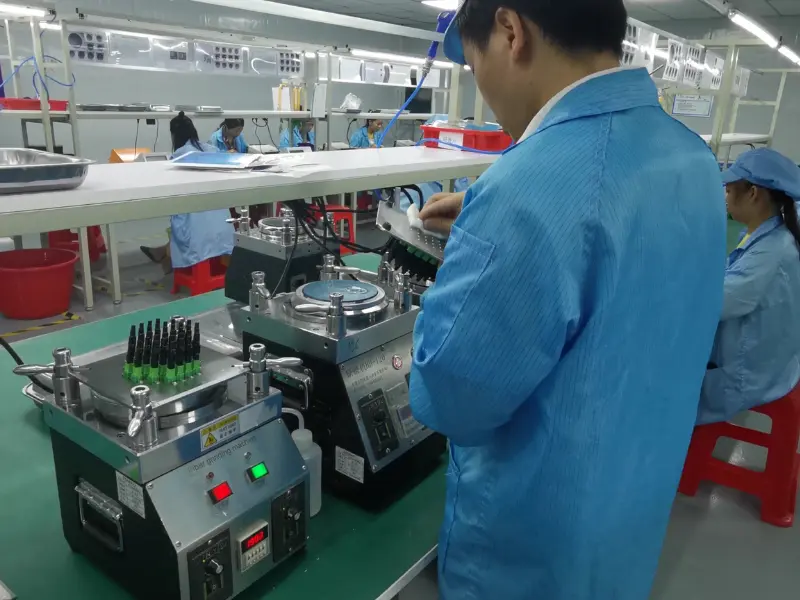
Configure the input and output interfaces to match your adapters, equipment and existing network connections.
Available options may include:
- SC/APC
- SC/UPC
- LC/APC
- LC/UPC
- FC/APC
- FC/UPC
- Unterminated fibers
- Different connectors on the input and output sides
Fiber and Cable Construction
Choose the fiber type, buffer diameter and cable structure according to routing space, bending requirements and mechanical protection needs.
Available options may include:
- 250 μm bare fiber
- 900 μm buffered fiber
- 2.0 mm cable
- 3.0 mm cable
- G.657A1 bend-insensitive fiber
- G.657A2 bend-insensitive fiber
- G.652D single-mode fiber
- Different input and output cable diameters

Cable Length and Port Identification
Specify the input and output cable lengths according to your enclosure dimensions and fiber routing layout.
Identification options may include:
- Customized input and output lengths
- Numbered output fibers
- Color-coded fibers
- Port labels
- Input and output tags
- Serial numbers
- Batch information
- Customer part numbers
OEM Labeling and Packaging
Customize product identification and packaging for distribution, project supply or private-label programs.
Available options may include:
- Neutral product labels
- Customer logo
- Customized model numbers
- Customer part numbers
- Barcode labels
- Individual packaging
- Bulk packaging
- Customer packaging artwork
- Customized carton marks
- Project-specific packing lists
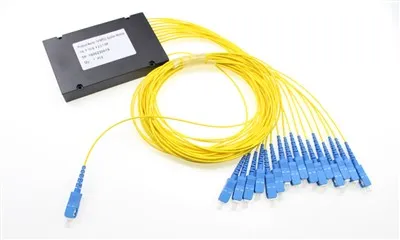
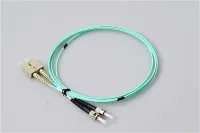
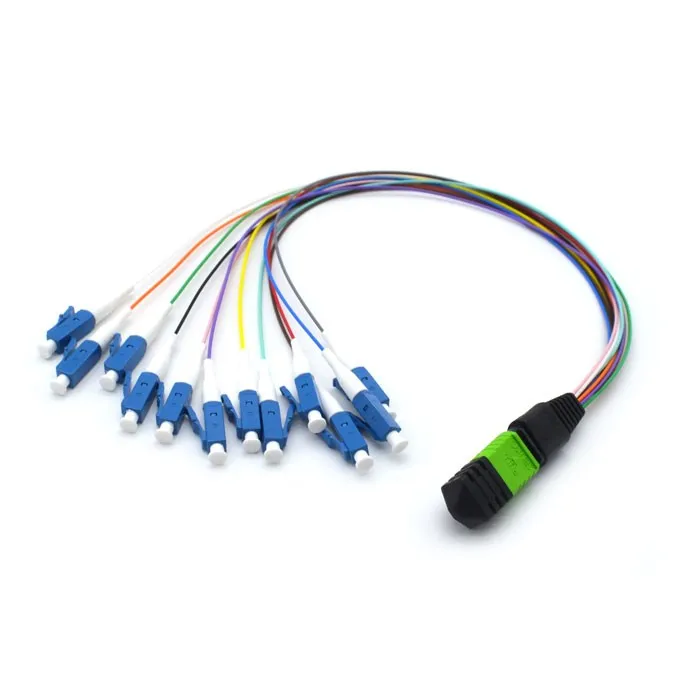
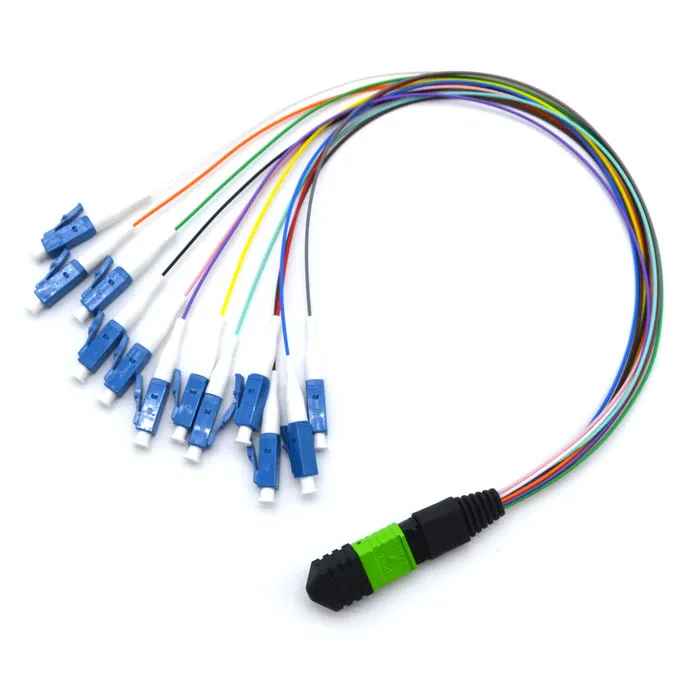
An optical fiber connector is a device used to link optical fibers, facilitating the efficient transmission of light signals. An optical fiber connector enables quicker connection and disconnection than splicing. They come in various types like SC, LC, ST, and MTP, each designed for specific applications.
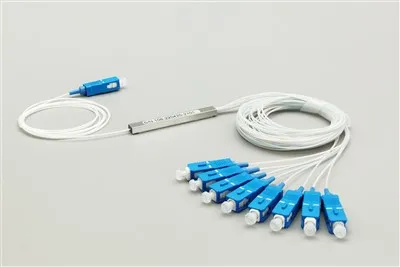
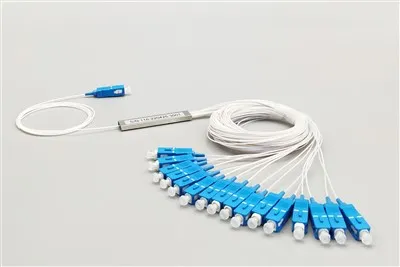
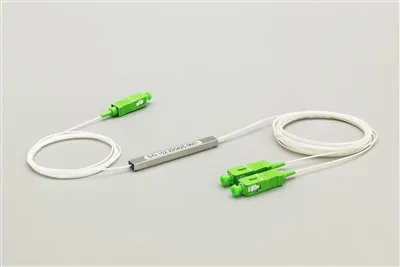
PLC Fiber Optic Splitter can be categorized by the PLC splitter chip they use, meaning there are 1xN and 2xN PLC splitters, such as 1x4 splitter, 1x8 splitter, 1x16 splitter, 2x32 splitter, 2x64 PLC splitters, etc. Users can choose different input and output numbers depending on subscriber conditions or cable length. In addition, PLC splitters also can be classified based on different packages to meet clients’ needs in various scenarios, including small size PLC splitter that needs to be used in terminal boxes and big size rack mounted PLC splitter that can be installed in racks. There are five types of PLC splitters in the market: Bare Fiber Optical Splitter, Blockless Fiber Splitter, ABS Splitter, LGX Splitter, and Rack-Mount Splitter.
Bare Fiber Optical Splitter
The bare fiber splitter has no connector at the bare fiber ends, so it requires a complete set of protection in the carrying case and on the device. Due to its compact size, it can be easily placed in formal splice boxes and splice boxes. The bare fiber splitter minimizes space occupation and reduces installation costs at the same time. It is commonly used for FTTH, PON, LAN, CATV, test equipment, and other applications.
Blockless Fiber Splitter
Although the blockless PLC splitter has a similar appearance to the bare fiber splitter. However, it can provide stronger fiber protection because it has a more compact stainless steel tube package. The blockless PLC splitter does not require fiber optic fusion during installation and is mainly used for different connections above distribution boxes or network cabinets.
ABS Module Fiber Splitter
The ABS splitter has a plastic ABS case, which has good protection for internal optical components and cables. ABS splitter is simple and compact, which can be adapted to different installation environments and requirements. It is widely used with outdoor fiber distribution boxes for PON, FTTH, FTTX, GOPN networks.
LGX Cassette Fiber Splitter
The LGX PLC splitter is equipped with a rugged metal box. It can be used alone or easily installed in a standard fiber optic patch panel or fiber optic chassis without archival splicing or skilled personnel during deployment. The standard LGX metal box enclosure provides a plug-and-play approach to integration in the network, which eliminates risk during installation.
Rack-Mount Splitter
1U and 2U are two available rackmount sizes for splitters on the market, while 1U rack-mount splitters are more commonly used. PLC splitter is installed in the rack unit, which has excellent optical performance and convenient network installation. The rack-mount splitter is widely used in EPON, GPON, FTTX, FTTH, etc., and provides an ideal solution for a high-density cabling environment.
Benefits of Fiber Optic PLC Splitter
Cost-Effectiveness
Fiber optic splitters eliminate the need for multiple fibers by allowing the division of a single fiber into multiple paths. This significantly reduces the cost of network deployment and maintenance, as fewer fibers are required to serve multiple subscribers or devices.
Flexibility and Scalability
Splitters provide flexibility and scalability to network designs. They can be easily added or removed as per network requirements, allowing for seamless network expansion or reconfiguration. This flexibility enables network administrators to adapt to changing needs without extensive infrastructure changes.
Minimal Signal Loss
High-quality fiber optic splitters exhibit low insertion loss and return loss, ensuring efficient signal distribution. The minimal signal loss enables reliable transmission over long distances without compromising signal quality. This is particularly important for applications requiring high data rates and low latency.
Application of Fiber Optic PLC Splitter
Data Center
PLC fiber splitters are frequently used in data center networks to distribute fast data to numerous servers and storage devices. This makes it possible for data centers to efficiently handle high volumes of data traffic, resulting in quick and seamless data transfer.

Optical Access Networks
PLC fiber splitters are frequently used in optical access networks to provide high-speed internet connectivity to a number of clients. They provide end users with high-speed and dependable connectivity and are perfect for FTTH (Fiber to the Home) and FTTB (Fiber to the Building) applications.PLC splitter in PON networks.
Passive Optical Networks (PONs)
PLC splitters are a crucial component of passive optical networks (PONs), which are optical networks that link numerous consumers to a single optical fiber. Each customer has a unique dedicated connection thanks to the PLC splitter’s separation of the optical signal into various pathways.


Medical Equipment
To distribute the optical signals from various cameras to a single monitor, PLC fiber splitters are also used in medical equipment such as endoscopes. Because of this, medical experts can view photos from different perspectives and get a better understanding of the internal structure of the patient’s body.
Common Technical Indicators of Fiber Optic PLC Splitters
Insertion Loss
The insertion loss of the splitter refers to the number of dBs per output relative to the loss of input light.
Additional Losses
Additional losses are defined as the sum of optical power for all output ports and the number of dBs relative to the loss of optical power in the input.
Spectrophotical Ratio
The spectrophotical ratio is defined as the output power ratio of each output port of the optical splitter, and in the system application, the spectrophotometer ratio is indeed based on the amount of optical power required by the actual system optical node to determine the appropriate spectrophotial ratio (except for the average distribution), and the spectrophotometer's spectrophotical ratio is related to the wavelength of the transmitted light.
Degree of Isolation
Isolation refers to the ability of one optical path of a light divider to isolate light signals in other light paths.
Components of Fiber Optic PLC Splitter


Input and Output Ports
Input ports are where the incoming optical signal enters the splitter, typically through a single fiber optic cable. The number of input ports depends on the type and configuration of the splitter. Output ports are where the split optical signals exit the splitter and are connected to the recipients or other network devices. The number of output ports can vary and determines the number of paths into which the signal is divided.
Couplers and Dividers
Couplers and dividers play a vital role in splitting the optical signal. They are designed to divide the incoming signal into multiple output paths. Couplers are responsible for distributing the signal evenly among the output ports, ensuring that each path receives a portion of the signal’s power. Dividers, on the other hand, separate the signal into distinct paths, allowing for simultaneous transmission to multiple recipients.
Fiber Array and Waveguides
Fiber arrays are arrays of individual fibers that are aligned and fused together to form the splitting region within the splitter. They provide the physical framework for splitting the optical signal. Waveguides, on the other hand, are structures that guide and direct the optical signal within the splitter. In the case of Planar Lightwave Circuit (PLC) splitters, waveguides are etched onto a silica or silicon substrate, allowing for precise control and distribution of the optical signal.
Protective Casings
Fiber optic splitters are housed in protective casings to shield the delicate components from external environmental factors. These casings are typically made of durable materials, such as metal or plastic, and provide mechanical protection, as well as maintain the alignment and stability of the internal components. The protective casings also assist in managing the fiber connections, ensuring reliable and secure operation.
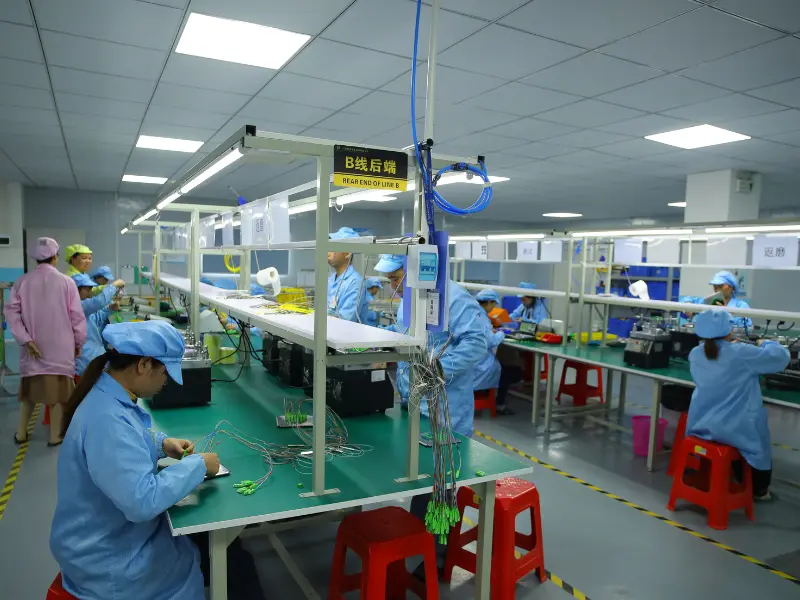
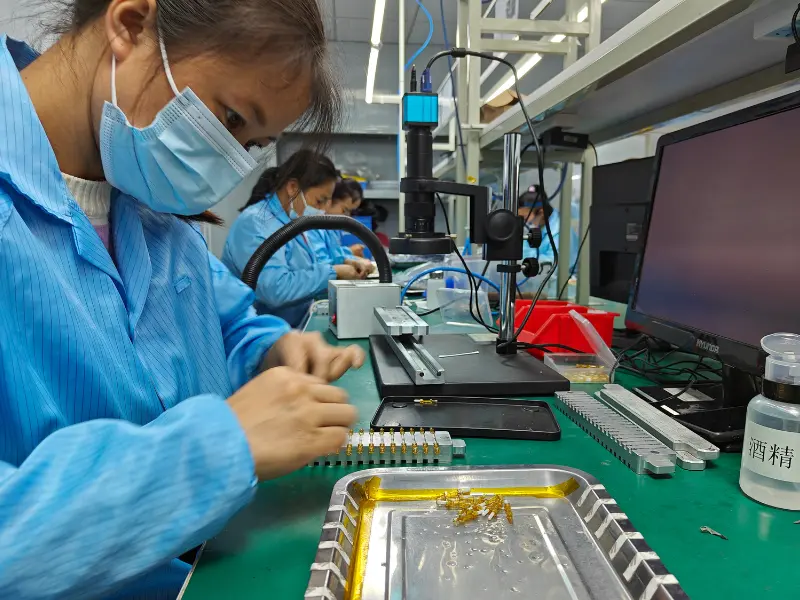
In all, there are five steps to manufacture a fiber optic splitter. Each step requires strict control and management of various parameters like environment, temperature, and detailed precision on assembly and equipment.
Components Preparation
Generally, three components are needed. The PLC circuit chip is embedded on a piece of glass wafer, and each end of the glass wafer is polished to ensure a highly precise flat surface and high purity. The v-grooves are then ground onto a glass substrate. A single fiber or multiple ribbon fiber is assembled onto the glass substrate. This assembly is then polished.
Alignment
After the preparation of the three components, they are set onto an aligner stage. The input and output fiber array is set on a goniometer stage to align with the PLC chip. Physical alignment between the fiber arrays and the chip is monitored through a continuous power level output from the fiber array.
Cure
The assembly is then placed in a UV (ultraviolet) chamber where it will be fully cured at a controlled temperature.
Packaging
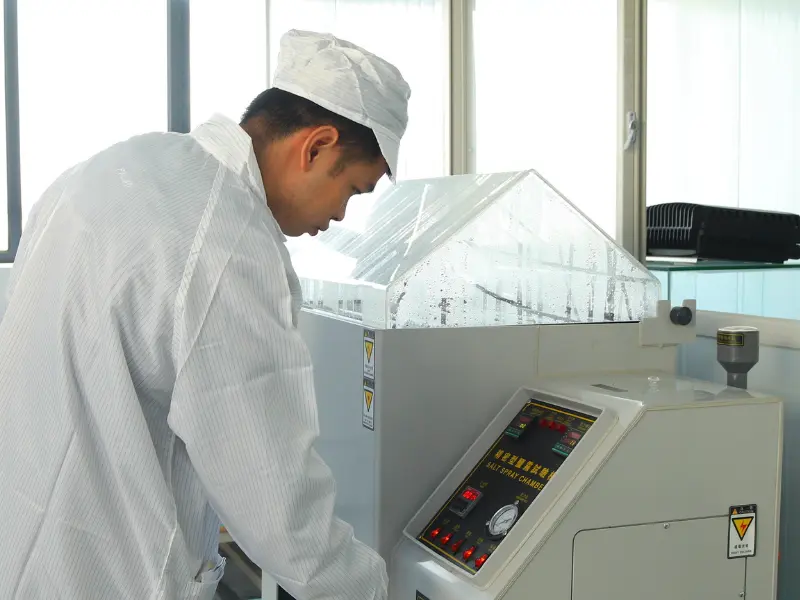
The bare splitter is aligned and assembled into a metal housing where fiber boots are set on both ends of the assembly. And then a temperature cycling test is needed to ensure the final product condition.
Optical Testing
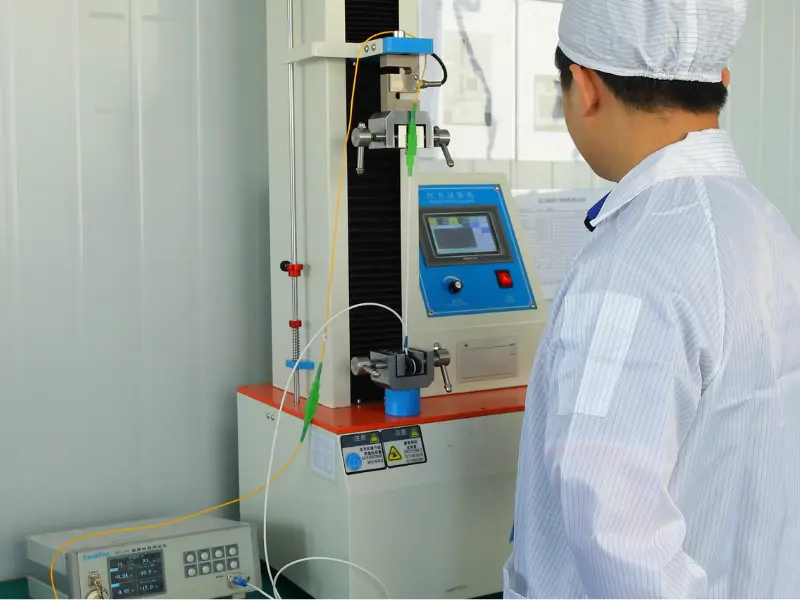
In terms of testing, three important parameters such as insertion loss, uniformity, and polarization dependent loss (PDL) are performed on the splitter to ensure the quality of the manufactured splitter.
Factors to Consider Before Choosing a Fiber Optic PLC Splitter
Network Size and Type
Consider the size and type of the network where the splitter will be deployed. For larger networks, Planar Lightwave Circuit (PLC) splitters are often preferred due to their scalability, wider bandwidth, and higher splitting ratios. Smaller networks may benefit from Fused Biconical Tapered (FBT) splitters, which are more cost-effective for lower splitting ratios.
Performance and Cost Comparison
Consider the performance and cost aspects of FBT and PLC splitters. FBT splitters are typically more cost-effective for smaller networks and lower splitting ratios. PLC splitters, although relatively more expensive, offer better performance, wider bandwidth, and higher splitting ratios, making them suitable for most fiber optic networks or applications requiring greater signal distribution capacity.

Quality and Reliability
Select optical splitters from reputable manufacturers known for their quality and reliability. This ensures that the splitters meet industry standards and provide consistent performance over time. Consider factors such as durability, environmental stability, and long-term reliability when making a selection.
Splitter Configuration
Determine the appropriate splitter configuration based on the number of output ports required. Common configurations include 1×2, 1×4, 1×8, and so on, representing the number of input and output ports. Evaluate the current and future network requirements to select the optimal splitter configuration.
Signal Requirements
Evaluate the signal requirements of the network. If the application demands high data rates, low latency, and minimal signal loss, choose splitters with low insertion loss and high return loss. PLC splitters generally offer better performance in terms of insertion loss and return loss compared to FBT splitters.
Wavelength Compatibility
Consider the wavelength compatibility of the splitter with the optical signals used in the network. Ensure that the chosen splitter supports the specific wavelengths required for the application. Some splitters may be wavelength-dependent, and selecting the appropriate type ensures compatibility and optimal performance.
Ultimate FAQ Guide to Fiber Optic PLC Splitter
Q: Is there a splitter for fiber optic cable?
Q: What is the difference between a PLC splitter and an FBT splitter?
Q: What is the difference between a fiber optic coupler and a splitter?
Q: How does a fiber splitter work?
Q: What does PLC mean in fiber?
Q: How is a fiber optic splitter made?
Q: What are the different types of PLC splitters?
Q: What is the ratio of PLC splitter?
Q: What is a Fiber Optic PLC Splitter?
Q: How does PLC splitter work in PON network?
Q: What is the application scene of a Fiber Optic PLC Splitter?
Q: What is an optical splitter and how does fiber optic splitter work in a fiber optic network?
Q: How do fiber optic splitters function in passive optical networks (PONs)?
Q: What are the key components involved in the functioning of a fiber optic splitter?
Q: How to apply fiber optic splitters in PON system?
Q: What is the maximum splitting ratio for a fiber optic PLC splitter?
Q: What is the insertion loss of a fiber optic PLC splitter?
Q: What is the wavelength range of a fiber optic PLC splitter?
Q: What is the typical operating temperature range for a fiber optic PLC splitter?
Q: How do you clean a fiber optic PLC splitter?
As one of the leading fiber optic plc splitter manufacturers and suppliers in China, we warmly welcome you to buy fiber optic plc splitter in stock here from our factory. All customized products are with high quality and low price. For pricelist and free sample, contact us now.
cladding diameter of fiber optic plc splitter, compatibility of fiber optic plc splitter with other devices, fiber optic plc splitter international standard