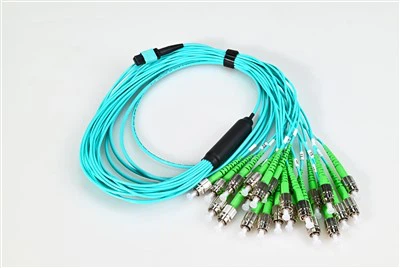
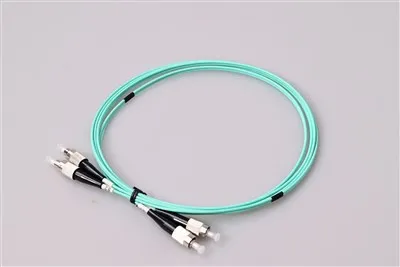
Fiber Optic MU Patchcord offers a new solution for high-performance telecommunications networking. The MU connector is at least half the size of the standard SC connector, providing twice the port density while maintaining all the optical performance of traditional fiber optic connectors. The MU system includes a complete range of multimode and singlemode options, making it an ideal choice for modern network infrastructure.
Why Choose US?
- Products of Superior Quality: Reliability and sturdiness are guaranteed by the high-quality manufacturing of our Fiber Optic MU Patchcords.
- Cost-effective Options: Our prices are competitive without sacrificing quality.
- Speedy Delivery: We make sure that your orders are shipped quickly because we know how important it is to get them to you on time.
- Technical Assistance: Installation guidance and technical support are available from our team of experts.
Product Specifications
|
Connector |
MU |
Fiber Count |
Simplex/Duplex |
|
Fiber Mode |
9/125;50/125;62.5/125 |
Minimum Bend Radius |
10 mm |
|
Polish Type |
APC/UPC |
Cable Diameter |
0.9mm/2.0mm/3.0mm |
|
Cable Jacket |
PVC/LSZH |
Jacket Color |
Yellow/Orange/OM3/OM4 |
|
Wavelength |
1310nm/1550nm |
Durability |
500Times |
|
Insertion Loss |
≤0.3 dB |
Interchangeability |
≤0.2 dB |
|
Return Loss |
≥60 dB |
Vibration |
≤0.2 dB |
|
Operating Temperature |
-40~75°C |
Storage Temperature |
-45~85°C |
Product Features
- NTT-MU Hardware Compatibility: Ensures seamless integration with existing NTT-MU hardware.
- NTT & JIS Compliance: Meets international and industry standards for quality and performance.
- Compact, Pull-Proof Design: Durable and reliable, designed to withstand tough environments.
- 100% Optically Inspected and Tested: Each patchcord is tested for insertion loss to ensure optimal performance.
- Riser or Plenum Rated: Available in various cable types, including PVC, OFNR, LSZH, and RoHS.
- Low Insertion Loss and High Return Loss: Compliant with IEC, TIA/EIA, and Telcordia standards.
- Custom Fiber Optic Cable Lengths and Jacket Colors: Tailored to your specific needs.
- Various Fiber Types and Wavelengths: Supports singlemode and multimode fibers, including OM2, OM3, and OM4.
- Good Packing, Competitive Prices, and Fast Delivery: Ensuring a hassle-free procurement experience.
Two Polish Types for Various Signal Sensitivity Demands
The fiber endface of APC is polished at an 8° angle and UPC is polished with no angle.

| UPC is mainly used for TV, telephony and data systems. | APC is mainly used for FTTX, PON and other WDM systems. |
Three Diameters to Meet Different Wiring Needs
3.0mm, 2.0mm and 0.9mm cable diameters are mainly used for indoor installation and cabling.

Quality Control
At Shenzhen Evolux Fiber Co., Ltd, we maintain strict quality control measures to ensure that every Fiber Optic MU Patchcord meets the highest standards. Our manufacturing processes include:
- Material Inspection: All raw materials are inspected before use.
- In-Process Inspection: Continuous monitoring during production to ensure consistency.
- Final Inspection: Each product undergoes a final inspection to ensure it meets our quality standards.
OEM Service
We offer comprehensive OEM services, including:
- Custom Branding: Add your company logo and branding to our products.
- Custom Packaging: Tailor the packaging to your specifications.
- Private Labeling: Create a private label for your brand.
Application

DWDM/CWDM Systems
- Dense wavelength division multiplexing equipment
- High-density backplane interconnections
- MAN and WAN backbone networks
- Long-haul transmission systems (1310nm/1550nm)

High-Density Data Centers
- Space-constrained patch panel environments
- 2x port density vs. SC connectors in same footprint
- Storage area network (SAN) cross-connections
- 1G/10G Ethernet server interconnections

Telecommunications Networks
- NTT-standard network equipment integration
- Optical distribution frame (ODF) patching
- Voice network optical transmission
- Carrier-grade infrastructure deployment

Testing & Measurement
- OTDR and optical power meter connections
- R&D laboratory fiber testing
- Reference standard cable for loss measurements
- Industrial and military optical systems
FAQ
Q: What exactly is an MU connector, and how is it different from SC or LC?
A: Great question – this comes up a lot! The MU connector was developed by NTT in Japan and is essentially a "mini SC" – it uses the same push-pull mechanism as SC, but with a 1.25mm zirconia ferrule instead of the 2.5mm ferrule used in SC connectors. That means you can fit two MU channels in the same footprint as a single SC connector. Compared to LC, the MU has a similar ferrule size (both 1.25mm), but uses push-pull instead of latch-locking. In our 10+ years of manufacturing, we've found MU is particularly popular in DWDM systems and Japanese telecom networks where NTT compatibility is required.
Q: Why would I choose MU over the more common LC connector?
A: Honestly, if you're starting fresh, LC is the more universal choice for most applications. But there are specific situations where MU is the right call: if you're working with NTT-standard equipment, DWDM/CWDM systems in Japan or Asia, or integrating with existing MU infrastructure, then MU is your connector. We also see MU used in some legacy telecom and industrial systems. The push-pull mechanism some engineers prefer over LC's latch – it's a bit quicker to connect/disconnect in tight spaces. If your equipment has MU ports, that's obviously your answer!
Q: What's the difference between APC and UPC polish types for MU patchcords?
A: This is crucial to get right. UPC (Ultra Physical Contact) has a flat, dome-shaped polish with return loss ≥50dB – perfectly fine for most digital data applications like Ethernet and data centers. APC (Angled Physical Contact) has an 8-degree angled polish achieving return loss ≥60dB, which is critical for analog signals, CATV, and long-haul applications where even small reflections can cause problems. Our yellow singlemode MU patchcords typically come in UPC, but we manufacture APC versions for customers who need that extra return loss performance. Just remember – never mix APC and UPC connectors together; they won't mate properly and you'll damage the ferrules.
Q: What does "SM SX Yellow" mean in the product name?
A: Let me break that down for you – it's actually pretty simple once you know: "SM" stands for Single Mode (9/125μm fiber core), which supports long-distance transmission at 1310nm and 1550nm wavelengths. "SX" means Simplex – that's a single fiber strand, as opposed to duplex which has two fibers. And "Yellow" is the industry-standard jacket color for singlemode fiber per TIA-598 standards. So when you see "SM SX Yellow," you know you're getting a single-fiber, singlemode patchcord with the standard yellow jacket that any technician will immediately recognize. We also make multimode versions in orange (OM1/OM2) and aqua (OM3/OM4) if that's what you need.
Q: What insertion loss should I expect from your MU patchcords?
A: We spec our MU patchcords at ≤0.3dB insertion loss, which meets IEC, TIA/EIA, and Telcordia standards. But I'll let you in on something – most units we ship actually measure between 0.15-0.2dB because we 100% optically test every single patchcord before it leaves our facility. For return loss, you're looking at ≥60dB for APC polish and ≥50dB for UPC. The interchangeability (mating with other MU connectors) is ≤0.2dB. These specs matter for your link budget calculations, especially if you're cascading multiple connections. Need test data for a specific batch? Just ask – we keep records.
Q: Can MU patchcords handle 10G speeds or higher?
A: Absolutely – the fiber itself isn't the speed bottleneck, your transceivers are. Our singlemode MU patchcords (9/125μm OS2) can easily support 1G, 10G, 25G, 40G, and even 100G transmission. For singlemode at 1310nm, you're looking at transmission distances up to 10km; at 1550nm, you can reach 40km or more depending on your equipment. We also offer multimode versions (50/125 and 62.5/125) for shorter-reach, higher-bandwidth applications. If you're building infrastructure today, singlemode is future-proof for whatever speed comes next.
Q: What's the minimum bend radius, and does it matter for high-density installations?
A: This is really important for real-world installations. Our MU patchcords have a minimum bend radius of 10mm under load – about the diameter of a pencil. This is particularly valuable in high-density patch panels where space is tight and cables inevitably get bent. Going below the minimum bend radius increases attenuation and can eventually damage the fiber. In the applications where MU excels – like cramped DWDM chassis backplanes – that 10mm bend radius gives you flexibility while maintaining signal integrity. That said, give your cables reasonable slack and use proper cable management whenever possible.
Q: What cable jacket options do you offer, and which should I choose?
A: We offer PVC and LSZH (Low Smoke Zero Halogen) jackets in various diameters: 0.9mm, 2.0mm, and 3.0mm. Here's how to choose: PVC is cost-effective and works great for standard installations. LSZH is what you need for plenum spaces, public buildings, transportation, and anywhere fire safety is a concern – it doesn't emit toxic smoke when burned. For diameter, 0.9mm is the most compact for tight spaces, 2.0mm is our most popular all-around choice, and 3.0mm provides extra durability and easier handling. We can also provide Riser (OFNR) and Plenum-rated options depending on your building codes. Just let us know your environment and we'll recommend the right spec.
Q: Do your MU patchcords comply with NTT and JIS standards?
A: Yes – this is actually one of the key reasons customers choose MU connectors specifically. Our MU patchcords are fully compliant with NTT-MU hardware specifications and JIS (Japanese Industrial Standards). This ensures seamless integration with NTT network equipment and other Japanese telecom infrastructure. We've been supplying MU products to Asian telecom operators for over 10 years, so we understand the specific requirements. All our products also meet IEC, TIA/EIA, and Telcordia standards for broader international compatibility.
Q: Can you customize lengths, colors, and connector combinations?
A: That's one of our strengths as a manufacturer. We offer custom lengths from as short as 0.5m up to whatever you need – just specify in your order. For hybrid cables, we can do MU to LC, MU to SC, MU to FC, or any combination you require. Jacket colors can be customized beyond the standard yellow (for SM) and orange/aqua (for MM) if you need color-coding for cable management. We also offer OEM services including custom branding, packaging, and private labeling. Typical lead time for custom orders is 2-4 weeks depending on quantity and specifications. Just reach out to our sales team with your requirements.
Hot Tags: fiber optic mu patchcord sm sx yellow, China fiber optic mu patchcord sm sx yellow manufacturers, suppliers, factory, fiber optic patch cord with st connector, fiber optic patch cord exporter, fiber optic jumper cord, fiber optic patch cord for media reporters in chief, fiber optic patch cord for television, fiber optic patch cord for artificial intelligence