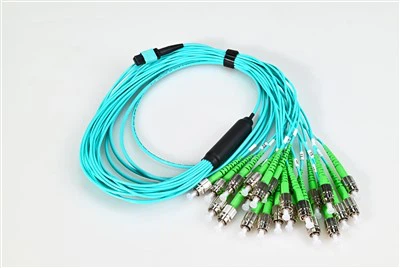
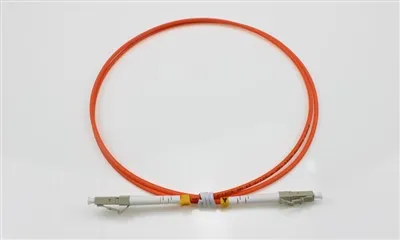
What is LC LC patch cable?
LC-LC fiber patch cable with two LC fiber connectors terminated at both ends is the most commonly used fiber optic cable type in the industry. Compared with other common fiber optic cables, FC fiber cables offer high density and reliable performance in most applications. If you are looking for a hybrid variant, our LC APC to LC UPC single mode hybrid patch cord is one of the most frequently requested configurations for mixed-polarity deployments.
Our cables are 100% optically inspected and tested for insertion loss.
Specification
| Connector Type | LC UPC to LC APC | Fiber Mode | Yellow 9/125μm |
| Fiber Grade | G657A/G652D | Wavelength | 1310/1550nm |
| Insertion Loss | ≤0.3dB | Return Loss | ≥50dB |
| Min. Bend Radius(Fiber Core) | 10mm | Min. Bend Radius(Fiber Cable) | 10/5D (Dynamic/Static) |
| Fiber Count | Duplex | Cable Jacket | LSZH |
| Operating Temperature | -20~70°C | Storage Temperature | -40~80°C |
The classification methods of optical cables
Optical fiber cable is a communication line that uses optical fibers meeting optical performance requirements as the transmission medium to achieve optical signal transmission. It consists of components such as the cable core, reinforcement elements, and sheath, and may also include additional elements like waterproof layers, buffer layers, insulation layers, and armor layers as needed.
The classification methods of optical cables mainly include the following:
By transmission medium: categorized into single-mode fiber optic cables and multimode fiber optic cables.
According to the cable core structure: it is divided into stranded optical cable, skeletal optical cable, central tube optical cable, ribbon optical cable, and flat optical cable.
Reinforced components: categorized into non-metallic optical cables, standard optical cables, and reinforced component optical cables.
By installation method: divided into duct optical cable, overhead optical cable, direct-buried optical cable, and submarine optical cable.
Based on the usage environment, they are categorized into indoor optical cables and outdoor optical cables.
Applications
Cross-Connection Between UPC and APC Terminated Equipment
The primary use case for this hybrid LC patch cable is bridging devices with different connector polish types. When network equipment uses LC/APC ports but patch panels are LC/UPC terminated (or vice versa), this UPC-to-APC fiber jumper eliminates the need for adapter conversion. For a full overview of how these polishing standards differ in performance, see our guide on PC vs UPC vs APC fiber connector polish types and return loss performance.
FTTH OLT and ONU Interconnection
In fiber-to-the-home deployments, OLT equipment often uses APC connectors for optimal return loss, while some legacy ONU devices have UPC interfaces. This LC UPC-APC hybrid cable provides direct connectivity between mismatched PON terminal equipment. For standard FTTH runs where both ends share the same polish type, our LC LC single mode fiber patch cable for FTTH and data center connections is a cost-effective alternative.
CATV Headend and Distribution Node Patching
Cable television optical networks typically require APC connectors to minimize back-reflection in analog video signals. When integrating UPC-terminated test equipment or legacy components, this hybrid patch cord for CATV headend use maintains signal integrity across interface types.
Telecom Central Office Cross-Connect Applications
Telecommunications facilities often manage mixed connector inventories during network upgrades. This single mode hybrid jumper cable allows gradual migration from UPC to APC infrastructure without replacing all existing patch panels simultaneously.
Laboratory Testing with Mixed Connector Configurations
Optical test labs frequently encounter equipment with different connector polish standards. A dedicated UPC-to-APC test patch cable reduces the need for multiple adapters and ensures consistent measurement conditions during fiber characterization.
Structured Cabling Transition in Building Networks
During building network upgrades from legacy UPC systems to modern APC installations, this G657A1 hybrid patch cable enables temporary or permanent bridging between old and new cabling segments without full infrastructure replacement.
FAQ
Q1: Why would I need an LC UPC to LC APC hybrid patch cable instead of using an adapter?
A: A dedicated hybrid patch cable provides lower total insertion loss compared to using a UPC-to-APC mating adapter. Each adapter connection adds loss and potential reflection points. This single hybrid jumper with factory-polished ends ensures cleaner signal transfer when bridging UPC and APC equipment.
Q2: What is the main difference between UPC and APC connector polish types?
A: UPC (Ultra Physical Contact) has a flat polished end face, while APC (Angled Physical Contact) has an 8-degree angled end face. APC connectors provide higher return loss (lower back-reflection), making them preferred for analog video and high-sensitivity applications. This hybrid cable connects both types directly.
Q3: Can I use this LC UPC-APC cable for GPON or XGS-PON networks?
A: Yes. Passive optical networks often have OLT ports with APC connectors and some ONT/ONU devices with UPC ports. This hybrid single mode patch cable for PON deployment bridges such interface mismatches without requiring adapter modules at each connection point.
Q4: What does G657A1 bend-insensitive fiber mean for installation?
A: G657A1 fiber allows tighter bend radii (as low as 10mm) without significant signal loss. This makes the hybrid patch cable suitable for confined spaces, dense patch panels, and routing around obstacles where standard G652D fiber would suffer macro-bend attenuation.
Q5: Is the LSZH jacket on this cable required for indoor installation?
A: LSZH (Low Smoke Zero Halogen) jackets are recommended or required in enclosed spaces like data centers, office buildings, and public venues. This flame-retardant LC hybrid cable meets indoor fire safety standards and produces minimal toxic smoke if exposed to fire. For guidance on selecting the right jacket type for different environments, refer to our article on indoor and outdoor fiber optic cable installation requirements and jacket selection.
Q6: What return loss can I expect from the APC end of this hybrid cable?
A: The APC connector end typically achieves ≥60dB return loss due to its angled polish. The UPC end provides ≥50dB return loss. Combined with ≤0.3dB insertion loss, this hybrid duplex patch cord maintains signal quality for sensitive optical links.
Q7: Can this hybrid patch cable be used for long-distance single mode transmission?
A: Yes. The 9/125μm single mode fiber supports transmission over many kilometers at 1310nm and 1550nm wavelengths. This LC UPC to APC jumper for long-haul connectivity works with standard single mode transceivers and can be deployed in metro or access network segments.
Q8: Are custom lengths available for this UPC-APC hybrid fiber cable?
A: Custom cable lengths, jacket colors, and duplex/simplex configurations can be manufactured to order. Contact the supplier to specify requirements for bulk hybrid patch cable orders or project-specific installations.
Hot Tags: LC UPC to LC APC Hybrid Single Mode Patch Cable with G657A1 Bend-Insensitive Fiber, China LC UPC to LC APC Hybrid Single Mode Patch Cable with G657A1 Bend-Insensitive Fiber manufacturers, suppliers, factory, fiber optic patch cord for wide area network, fiber optic patch cord with mtp connector, fiber optic patch cord for university optical network, optical patch cord, fiber optic patch cord wholesale, reliable fiber optic patch cord