Product Introduction
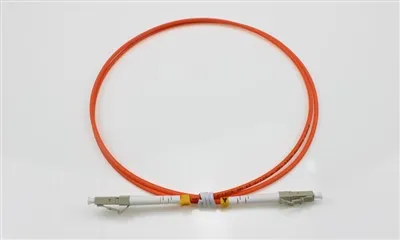
MPO/ multi-fiber cabling system is ideally suited for a high density environment that demands space saving and innovative cable management solutions. MPO fan-out supports various connections from multi-fiber to single-fiber out.
Specification
|
Specification |
MM low loss |
Standard |
SM low loss |
Standard |
|
Insertion Loss |
Typitcal<0.30dB |
Typitcal<0.50dB |
Typitcal<0.30dB |
Typitcal<0.50dB |
|
Return Loss |
≥20dB |
≥20dB |
≥PC45dB |
≥PC45dB |
Feature
Push-pull latching
Easy assembly , no tool needed
Alignment achieved with high precious guide pins
Designed for low loss and standard loss SM and MM applications
Ruggedized round cable, oval cable and bare ribbon options available
Color coded housing available to different fiber type, polish type and connector grade


Application

Data Center & Cloud Infrastructure
- High-density data center cabling and backbone systems
- 40G QSFP+ SR4 and 100G QSFP28 SR4 direct connections
- Top-of-Rack (ToR) to Spine-Leaf architecture links
- Storage Area Network (SAN) backbone interconnections

Array Trunk & High-Density Cabling
- Array trunk cables for high-capacity backbone transmission
- High fiber density card edge access applications
- Main Distribution Area (MDA) trunk cable deployments
- Building-to-building backbone connections (up to 300m)

Fanout, Cassette & Breakout Systems
- Array fiber to single fiber fanouts and cassettes
- MTP-to-LC breakout cassette module connections
- 40G to 4×10G and 100G to 4×25G breakout solutions
- Seamless 10G to 40G/100G network migration

Optical Switching & HPC Networks
- Optical switching interframe connections
- HPC cluster interconnects requiring parallel optics
- Financial trading floor low-latency networks
- Video production and broadcast facility cabling
FAQ
Q: What's the difference between MTP and MPO connectors? Are they interchangeable?
A: Great question – this comes up all the time! MPO (Multi-fiber Push On) is the generic industry standard for multi-fiber connectors, while MTP® is a high-performance brand manufactured by US Conec. Think of it like this: all MTP connectors are MPO-compliant, but not all MPO connectors have the enhanced features of MTP. The MTP version offers tighter tolerances, removable housings for easier retermination, and better overall optical performance. They're fully interchangeable and will mate with each other, but when you mix them, the overall link performance will be limited by the lower-quality connector. For mission-critical data center applications, we recommend MTP for the best results.
Q: What does polarity Type A, Type B, and Type C mean? Which one do I need?
A: Polarity is all about making sure your transmitter (Tx) connects to the receiver (Rx) at the other end – get it wrong and you've got zero signal. Here's the quick breakdown: Type A is "straight-through" with key-up on one end and key-down on the other. Type B is "reversed" with both ends key-up, flipping fiber positions 1-to-12 and 12-to-1. Type C is "pairs flipped" where adjacent pairs swap positions. For most 40G/100G parallel optics deployments in data centers, we see Type B used most often because it lets you use the same standard A-to-B duplex patch cords at both ends – simpler inventory management. If you're unsure, send us your network diagram and we'll help you figure out the right polarity configuration.
Q: What's the maximum transmission distance for OM3 fiber at 40G and 100G?
A: With OM3 multimode fiber running 40GBASE-SR4 or 100GBASE-SR4 optics, you're looking at a maximum of 100 meters. For 10GBASE-SR, OM3 can go up to 300 meters. Now, if you need a bit more reach – say 150 meters for 40G/100G – you'd want to step up to OM4 fiber, which has higher bandwidth (4700 MHz·km vs 2000 MHz·km for OM3). Most data center applications fit comfortably within OM3's reach since rack-to-rack distances are typically well under 100 meters. Bottom line: for cost-sensitive projects with shorter runs, OM3 is perfectly capable and saves you money.
Q: Do I need male or female MTP connectors? What about pins?
A: This is critical – get the gender wrong and you'll either damage connectors or have no connection at all. Male MTP connectors have alignment pins; female connectors have guide holes that receive those pins. Here's the golden rule: male always mates with female, never same-to-same. Most transceiver modules (QSFP+, QSFP28) have built-in male interfaces with pins, so your patch cord needs to be female. When connecting two female trunk cables through an adapter panel, the adapter itself handles the pin alignment. We manufacture our cables with precision guide pins that ensure sub-micron fiber alignment – that's how we achieve those low insertion loss numbers.
Q: Why is the cable jacket aqua colored? Does that indicate anything specific?
A: Aqua is the TIA-598 standard color code for laser-optimized OM3 and OM4 multimode fiber – it's not just decorative! When you're working in a dense data center with hundreds of cables, that aqua jacket instantly tells you it's multimode 50/125 micron fiber designed for VCSEL transceivers at 850nm. You won't accidentally mix it up with yellow single-mode cables. Some manufacturers use Erika Violet (a slightly different shade) specifically for OM4 to differentiate from OM3, though both aqua and violet are acceptable. Our connector boots are also color-coded by fiber count: grey for 8-fiber, black for 12-fiber, and red for 24-fiber – makes installation and troubleshooting so much faster.
Q: What insertion loss should I expect from these MTP/MPO patch cords?
A: Our MTP/MPO OM3 patch cords are specified for ≤0.50dB maximum insertion loss with standard multimode MT ferrules, but we also offer low-loss versions that hit ≤0.30dB typical and ≤0.50dB max. For really demanding applications, our elite/premium grade cables achieve around 0.15dB typical. Every cable we ship gets individually tested – we use 3D interferometry to verify ferrule geometry and end-face quality. Return loss is ≥20dB for multimode. These specs matter when you're calculating your link budget for 40G or 100G connections; every tenth of a dB counts over multiple patch points. We provide test reports with each batch if you need documentation for your records.
Q: Can I use these OM3 cables for 10G connections, or is that overkill?
A: Not overkill at all – actually, it's a smart investment. OM3 fiber with MTP/MPO connectors supports 10GBASE-SR up to 300 meters no problem. The beauty is you're building infrastructure that's ready for 40G and 100G when you need to upgrade – no recabling required. Many of our customers deploy OM3 MTP trunk cables today for 10G and simply swap out transceivers later to jump to higher speeds. The 12-fiber MTP connector works perfectly with 10G SFP+ through breakout cassettes (MTP to 6×LC duplex), giving you the density benefits of multi-fiber cabling even at lower speeds. It's all about future-proofing your investment.
Q: How do I properly clean MTP/MPO connectors? They seem more complex than LC.
A: You're right that MTP cleaning requires specific tools – you can't just use a standard LC click cleaner. We recommend MTP-specific reel-type cleaners or cassette cleaners designed for multi-fiber ferrules. The cleaning motion should go across all 12 (or 24) fiber end-faces in a single pass. Before every mating, clean both connectors – even a single dust particle on one fiber can cause 1dB+ loss and wreck your link budget. Keep those dust caps on whenever the connector isn't plugged in. For inspection, you'll need a microscope with an MTP adapter tip. We include dust caps with every cable, and trust me, use them. The few seconds spent cleaning saves hours of troubleshooting later.
Hot Tags: mtp mpo fiber patch cords mm om3, China mtp mpo fiber patch cords mm om3 manufacturers, suppliers, factory, fiber optic patch cord for lan, fiber optic patch cord price, fiber optic patch cord for media publishers, fiber optic patch cord for gymnasium optical network, fiber optic patch cord with st connector, fiber optic patch cord for media publishers in chief