Introduction
Fiber optic connectors are the physical interface between two fiber optic cables, allowing light signals to be transmitted and received. There are several types of fiber optic connectors, each with its own characteristic features, advantages, and disadvantages. In this article, we will explore the different types of fiber optic connectors and their respective applications.
Connector Types**
1. **SC Connector
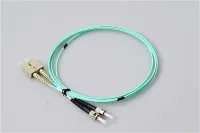
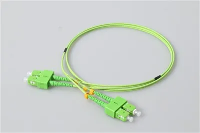
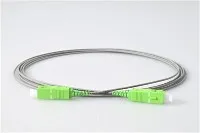
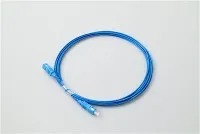
The SC (Subscriber Connector) connector is a snap-in connector with a push-pull latching mechanism that clicks when connected. It is one of the most commonly used connectors in fiber optic networks. The SC connector has a ceramic ferrule, which provides precise alignment of the fiber cores. It is suitable for single-mode and multimode fibers and high-density applications.
2. ST Connector
The ST (Straight Tip) connector uses a bayonet twist-lock mechanism that provides a secure connection. It has a metal body and a ceramic ferrule that supports single-mode and multimode fibers. The ST connector is commonly used in older fiber optic networks, as well as in industrial and military applications.
3. LC Connector
The LC (Lucent Connector) is a small form-factor connector that utilizes a push-pull latching mechanism. It has a ceramic ferrule and supports single-mode and multimode fibers. The LC connector is used in high-density applications, such as data centers, telecommunications, and enterprise networks.
4. FC Connector
The FC (Ferrule Connector) is a screw-type connector with a metal body and a ceramic ferrule. It supports single-mode fibers and is commonly used in high-speed optical networks, as well as in medical and military applications.
5. MTP/MPO Connector
The MTP/MPO (Multifiber Termination Push-on/Pull-off) connector is a high-density connector that can support up to 12 fibers in a single connector. It utilizes a push-pull latching mechanism and has a metal body with a plastic housing. The MTP/MPO connector is used in high-density applications, such as data centers and telecommunications.
Advantages and Disadvantages
Each fiber optic connector has its own advantages and disadvantages. Here are some of the pros and cons of each connector type:
1. SC Connector
Advantages: Reliable, easy to install, suitable for high-density applications.
Disadvantages: Not suitable for field termination.
2. ST Connector
Advantages: Low cost, easy to install, suitable for industrial and military applications.
Disadvantages: Not suitable for high-density applications, not compatible with LC connectors.
3. LC Connector
Advantages: High performance, suitable for high-density applications, compatible with other small form-factor connectors.
Disadvantages: More expensive than SC or ST connectors.
4. FC Connector
Advantages: High performance, suitable for high-speed applications, rugged design.
Disadvantages: More expensive than SC or ST connectors, not compatible with other connectors.
5. MTP/MPO Connector
Advantages: High density, fast installation, easy to clean.
Disadvantages: Expensive, not suitable for single-fiber applications.
Conclusion
Choosing the right fiber optic connector is essential for ensuring optimal performance of your fiber optic network. Each connector type has its own pros and cons, and the choice depends on your specific application and requirements. Whether you need high-speed connections, high-density applications, or rugged connectors for industrial and military applications, there is a fiber optic connector that will meet your needs.