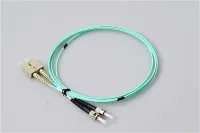
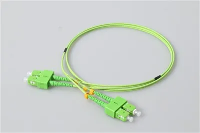
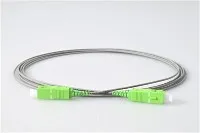
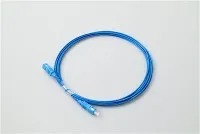
Fiber optic connectors are used to connect fibers where connection/disconnection functions are required. Due to the possibility of polishing and fine tuning during the manufacturing process of optical connectors, connectors are usually assembled onto optical fibers in the supplier's manufacturing factory. However, the assembly and polishing operations involved can be carried out on-site, such as to terminate long-term operation at the distribution frame.
Fiber optic connectors are used for telephone switches, for customer premises wiring, and for connecting equipment and cables in external factory applications, or for cross connecting cables.
Most fiber optic connectors are spring loaded, so when the connectors are paired, the fiber end faces are pressed together. The resulting glass to glass or plastic to plastic contact eliminates signal loss caused by the air gap between the connected optical fibers.
The performance of fiber optic connectors can be quantified through insertion loss and return loss. The measurement of these parameters is now defined in IEC standard 61753-1. This standard provides 5 levels for insertion loss from A (best) to D (worst), and M levels for multimode. Another parameter is return loss, ranging from 1 (best) to 5 (worst).
Various fiber optic connectors can be used, but SC and LC connectors are the most common connector types on the market. The rated insertion frequency of a typical connector is 500-1000. The main difference between connector types is the size and method of mechanical connection. Typically, organizations will standardize a connector based on the equipment they typically use.
In many data center applications, small (such as LC) and multi fiber (such as MTP/MPO) connectors have replaced larger legacy (such as SC), allowing for more fiber ports in each rack space.
In outdoor factory applications, it may be necessary to place connectors underground, on outdoor walls, or on power poles. In this case, protective covers are often used and can be divided into two categories: sealed (sealed) and free breathing. A sealed shell can prevent moisture and air from entering, but lacks ventilation and can become hot if exposed to sunlight or other heat sources. On the other hand, the freely breathing shell can ventilate, but it can also absorb moisture, insects, and pollutants in the air. Choosing the correct enclosure depends on the type, location, and environmental factors of the cables and connectors.