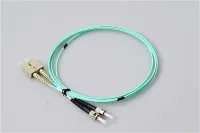
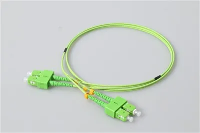
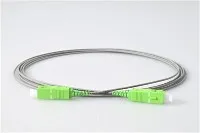
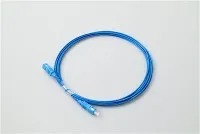
Everything you need to know about fiber optic pigtails - from basic concepts to connector selection, installation guides, and product recommendations. Explore our in-depth articles and find the right solution for your network.
Pigtail Basics: Start Here
New to fiber optic pigtails? Start with these foundational articles covering what pigtails are, how they differ from patch cords, and why they're essential in fiber networks.
-

What Is a Fiber Pigtail Used For?
Learn the fundamentals of fiber optic pigtails - their structure, function, and role in fiber networks. Covers basic definition and components, how pigtails connect fiber cables to network equipment, common connector types (SC, LC, FC, ST), and key benefits including easy installation, low insertion loss, and mechanical protection.
-

Pigtail vs Patch Cord: What's the Difference?
Understand when to use pigtails versus patch cords. This comparison explains: one connector (pigtail) vs two connectors (patch cord), pigtails for permanent fusion splicing, patch cords for plug-and-play connections, length differences and typical use scenarios.
-

Most Common Pigtail Connectors in the Industry
Discover which pigtail connectors dominate the market and why. Covers industry adoption trends for different connector types, why LC and SC connectors lead modern installations, and connector selection based on application requirements.
Pigtail Connector Types
Different connectors serve different purposes. Explore detailed guides on each connector type to find the best match for your network infrastructure.
| Connector | Style | Ferrule Size | Best For | Learn More |
|---|---|---|---|---|
| SC | Push-pull latch | 2.5mm ceramic | FTTH, CATV, Enterprise LAN, GPON/EPON | SC Pigtails → |
| LC | Push-pull latch | 1.25mm ceramic | Data Centers, High-density SFP+/QSFP | LC Pigtails → |
| FC | Screw-on threaded | 2.5mm ceramic | Telecom CO, OTDR Test Equipment | FC Pigtails → |
| ST | Bayonet twist-lock | 2.5mm ceramic | Legacy Networks, Industrial Automation | ST Pigtails → |
| E2000 | Push-pull with shutter | 2.5mm ceramic | High-security, Railway, Broadcast | E2000 Pigtails → |

SC vs LC: Form Factor Matters
LC connectors feature a 1.25mm ferrule - half the size of SC's 2.5mm ferrule. This compact design enables twice the port density in the same rack space, making LC the standard choice for modern data centers with 10G/25G/100G deployments. SC remains cost-effective for FTTH and enterprise access layers where density is less critical.
FC vs SC: Connection Security
FC connectors use a threaded screw-on mechanism that provides superior vibration resistance - essential for telecom central offices, mobile cell sites, and test equipment. SC's push-pull latch offers faster mating cycles but may work loose in high-vibration environments. Choose FC when connection stability is paramount.

Connector Deep Dives
-
Complete Guide to Fiber Pigtail Connector Names
A comprehensive reference covering all fiber pigtail connector types including SC, LC, ST, FC, MPO/MTP for high-density multi-fiber connections, E2000 with built-in shutter, SMA, D4, LX.5 specialty connectors, and how to identify connectors by physical features.
-
ST Pigtails vs LC, FC, SC: Detailed Comparison
An in-depth comparison covering physical design differences (bayonet vs push-pull vs screw-on), installation and maintenance considerations, optical performance comparison (insertion loss, return loss), and port density requirements.
-
SC vs FC Connectors: Which to Choose?
Head-to-head comparison of the two most common telecom connectors: SC's push-pull simplicity vs FC's screw-on stability, cost and availability considerations, and application-specific recommendations.
Single-Mode vs Multimode Pigtails
Choosing the right fiber type is critical. Single-mode for long distances, multimode for short-range high-bandwidth - learn which suits your needs.
| Type | Core Size | Jacket Color | Max Distance | Primary Use Case |
|---|---|---|---|---|
| Single-Mode OS2 | 9/125μm | Yellow | Up to 100+ km | Telecom backbone, FTTH, Long-haul, Metro WDM |
| Multimode OM3 | 50/125μm | Aqua | Up to 300m @10G | Data Center 10GBASE-SR, Enterprise backbone |
| Multimode OM4 | 50/125μm | Aqua / Violet | Up to 400m @10G, 150m @40G | High-speed Data Centers, 40G/100G parallel optics |
| Multimode OM5 | 50/125μm | Lime Green | Up to 440m @10G SWDM | Future-proof SWDM wavelength division multiplexing |
Fiber Type Selection Guide
Single-mode fiber uses a 9μm core that allows only one light mode to propagate, enabling long-distance transmission with minimal dispersion. Multimode fiber's larger 50μm core allows multiple light modes, making it easier to couple with LEDs/VCSELs but limiting distance due to modal dispersion.
Critical Rule: Never mix single-mode and multimode in the same link - the core size mismatch causes 10-20dB loss or complete signal failure.

Selection Tip: Always match your pigtail fiber type to your existing cable plant. Check your installed cable jacket color - yellow indicates single-mode, aqua/lime indicates multimode. Verify transceiver specifications for wavelength and distance compatibility.
Installation & Fusion Splicing
Proper installation ensures reliable performance. Learn fusion splicing techniques, best practices, and common mistakes to avoid.

Fusion Splicing Process
Fusion splicing creates a permanent, low-loss joint (<0.05dB typical) between the pigtail and cable fiber. The process involves precision cleaving at 90°, alignment in a fusion splicer, arc welding, and heat-shrink protection. Quality fusion splices meet TIA-568 standards for insertion loss and return loss.
Splice Tray Management
Proper splice tray organization is critical for future maintenance. Maintain minimum 30mm bend radius throughout, secure pigtails without stress points, document fiber assignments, and leave service loops for future re-splicing. Follow IEC 61300-3-35 for fiber routing best practices.

-

Fiber Pigtail Installation Basics
Step-by-step guidance for installing fiber pigtails: Required tools (fusion splicer, precision cleaver, buffer stripper), fusion splicing process from fiber prep to heat shrink, splice protection and tray management per TIA standards, OTDR and power meter testing procedures after installation.
Quick Installation Tips
- Cleanliness is critical: Use IPA wipes on all fiber ends - contamination causes 0.1-0.5dB loss
- Maintain bend radius: Never bend fiber tighter than 30mm (single-mode) or 25mm (multimode)
- Use proper tools: Quality cleaver = quality splice; poor cleaves cause bubbles and high loss
- Test after splicing: Verify insertion loss <0.1dB per splice with OTDR or power meter
Related Resources
- Installation Video Tutorials - Step-by-step visual guides
- Fiber Optic Terminal Boxes - Enclosures for housing spliced pigtails
- PLC Splitters - Signal splitting for PON/FTTH networks
Applications & Use Cases
Fiber pigtails serve different roles across industries. Explore how pigtails are used in various network environments with industry-standard compliance.
Data Centers (TIA-942 Compliant)
High-density LC pigtails terminate backbone fiber at Main Distribution Areas (MDAs). They connect to structured cabling patch panels for cross-connecting servers, switches, and storage arrays. Compliant with TIA-942 standards for enterprise data center cabling infrastructure.
Recommended: LC Pigtails, OM3/OM4 Multimode for 10G/40G/100G SR
FTTH / FTTX (ITU-T G.984 Standard)
SC pigtails are the standard for fiber-to-the-home deployments. They terminate distribution cables at Optical Distribution Frames (ODFs) and Fiber Access Terminals (FATs). Ideal for GPON/EPON/XGS-PON splitter connections per ITU-T G.984/G.9807 specifications.
Recommended: SC/APC Pigtails, Single-Mode OS2
Telecommunications (Telcordia GR-326)
FC pigtails provide secure connections in Central Offices (CO) and Remote Terminals (RT). Their screw-on mechanism meets Telcordia GR-326 requirements for vibration resistance in outdoor cabinets and mobile cell site equipment rooms.
Recommended: FC/UPC Pigtails, Single-Mode
Enterprise Networks (TIA-568)
Campus and building networks use pigtails at Telecommunications Rooms (TR) to terminate horizontal and backbone cabling per TIA-568 structured cabling standards. Supports 1G/10G Ethernet infrastructure for corporate environments.
Recommended: SC or LC Pigtails based on switch port compatibility
Industrial & Broadcast (EN 50173)
Harsh environments require robust connections meeting EN 50173 industrial cabling standards. FC and ST pigtails offer mechanical stability for factory automation, railway signaling, and broadcast production facilities with enhanced environmental ratings (IP67 options available).
Recommended: ST Pigtails, FC Pigtails with ruggedized options
CATV / Video Distribution (SCTE Standards)
Cable television headends and distribution hubs require APC polish pigtails for analog video transmission per SCTE standards. The angled polish provides >60dB return loss to prevent optical reflections that cause video interference and signal degradation.
Recommended: SC/APC or FC/APC Pigtails, Single-Mode
Fiber Optic Pigtail Products
Browse our complete selection of fiber optic pigtails. All products feature factory-polished connectors, low insertion loss ≤0.3dB, and are available in various lengths and configurations.
Shop by Connector Type


Frequently Asked Questions
Q: What is the difference between a pigtail and a patch cord?
A: A pigtail has one connector and one bare fiber end for permanent fusion splicing. A patch cord has connectors on both ends for plug-and-play connections. Pigtails are typically used for fusion splicing in splice closures, terminal boxes, and ODFs, while patch cords are used for temporary or reconfigurable connections. Learn more →
Q: Which connector type should I choose?
A: LC for data centers (high port density, small form factor), SC for FTTH and enterprise networks (cost-effective, push-pull design), FC for telecom and test equipment (vibration-resistant screw-on), ST for legacy and industrial networks (bayonet twist-lock). Your choice should match existing infrastructure and equipment compatibility. See all connector types →
Q: Can I mix single-mode and multimode pigtails?
A: No. Single-mode fiber (9/125μm core) and multimode fiber (50/125μm or 62.5/125μm core) are optically incompatible. The core size mismatch causes 10-20dB loss or complete communication failure. Always match pigtail fiber type to your existing cable plant infrastructure - check jacket color (yellow = single-mode, aqua = multimode).
Q: What does APC vs UPC mean?
A: UPC (Ultra Physical Contact, blue connector) has a flat, slightly domed polish with return loss around -50dB. APC (Angled Physical Contact, green connector) has an 8-degree angled polish achieving return loss better than -60dB. APC is required for CATV, PON, and analog video systems to prevent optical reflections. Never connect APC to UPC connectors - the angle mismatch causes high insertion loss and potential ferrule damage.
Q: What insertion loss should I expect?
A: Quality factory-polished pigtails should have insertion loss ≤0.3dB per connector (typical 0.15-0.25dB). When combined with a proper fusion splice (≤0.05dB average), the total connection loss should be under 0.35dB. Higher losses may indicate contamination, ferrule damage, or poor polish quality. Always test with a calibrated power meter or OTDR after installation.
Q: What length pigtail should I order?
A: Standard lengths are 1m, 1.5m, and 2m. Choose based on your splice enclosure size and cable routing requirements. Ensure adequate service loop (30-50cm extra) for future re-splicing. For high-density applications, shorter pigtails (0.5m-1m) reduce cable bulk; for floor-mounted ODFs, longer pigtails (2m-3m) provide routing flexibility.
Need Help Choosing?
Not sure which pigtail is right for your project? Our technical team can help you select the best products based on your specific requirements, application environment, and existing infrastructure.
- Contact Our Team - Get personalized recommendations
- Request a Quote - For bulk orders and custom specifications
- About Evolux Fiber - Learn about our manufacturing capabilities