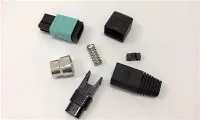
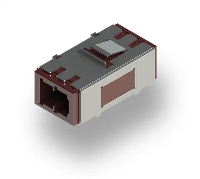
In the realm of fiber optic technology, pigtails play a crucial role in establishing reliable connections for data transmission. Among the various types of fiber optic pigtails available in the market, Fiber Optic ST Pigtails stand out with their unique characteristics and applications. As a dedicated supplier of Fiber Optic ST Pigtails, I am excited to delve into the differences between these pigtails and other types, helping you make informed decisions for your fiber optic network needs.


Understanding Fiber Optic Pigtails
Before we explore the differences, let's briefly understand what fiber optic pigtails are. A fiber optic pigtail is a short length of fiber optic cable with a connector pre - installed at one end. The other end is left bare, which can be spliced to a longer fiber optic cable or a fiber optic component. Pigtails are used in various applications, including data centers, telecommunications networks, and local area networks (LANs), to provide a convenient and reliable connection point.
Common Types of Fiber Optic Pigtails
There are several common types of fiber optic pigtails, each with its own connector type. Some of the most well - known ones include ST (Straight Tip), LC (Lucent Connector), and FC (Ferrule Connector).
Fiber Optic ST Pigtails
Fiber Optic ST Pigtails are equipped with ST connectors. The ST connector is a bayonet - style connector that was one of the first widely used fiber optic connectors. It has a round ceramic ferrule that holds the fiber in place. The bayonet - style coupling mechanism provides a quick and secure connection. ST connectors are known for their durability and are suitable for both single - mode and multi - mode fiber applications. They are often used in older networks and in environments where a rugged connection is required. You can learn more about our Fiber Optic ST Pigtails on our website.
LC Simplex Fiber Patch Cord
The LC connector used in LC Simplex Fiber Patch Cord is a small - form - factor connector. It has a push - pull latching mechanism, which allows for easy insertion and removal. LC connectors have a much smaller footprint compared to ST connectors, making them ideal for high - density applications such as data centers. They offer low insertion loss and high return loss, which means better signal performance. LC pigtails are commonly used in modern Ethernet networks and fiber - to - the - home (FTTH) installations.
Fiber optic FC pigtail
Fiber optic FC pigtails feature FC connectors. The FC connector is a screw - type connector with a threaded coupling mechanism. It has a ceramic or metal ferrule. The screw - on design provides a very stable and secure connection, which is especially useful in environments where vibration or movement might occur. FC connectors are often used in long - haul telecommunications networks and some industrial applications. You can find more details about Fiber optic FC pigtail on our website.
Key Differences
Physical Design
One of the most obvious differences between Fiber Optic ST Pigtails and other types lies in their physical design. The ST connector has a bayonet - style coupling, which is larger and more robust compared to the push - pull LC connector. The FC connector, with its screw - type coupling, is also different in terms of the way it is connected. The size of the connectors affects the density of the connections in a fiber optic panel. LC connectors, being smaller, allow for a higher number of connections in a given space, while ST and FC connectors take up more room.
Installation and Maintenance
Installation and maintenance processes vary among these pigtails. ST pigtails are relatively easy to install due to their bayonet - style coupling. You simply insert the connector and twist it to lock it in place. However, over time, the bayonet mechanism might wear out, and the connector may need to be replaced. LC pigtails are extremely easy to install and remove with their push - pull latching mechanism. They are also less likely to be damaged during installation. FC pigtails require more time to install because of the screw - on mechanism, but they offer a very secure connection once installed. In terms of maintenance, LC connectors are often easier to clean and inspect due to their simple design.
Performance
When it comes to performance, LC pigtails generally offer better optical performance in terms of insertion loss and return loss. The small - form - factor design of the LC connector allows for more precise alignment of the fibers, resulting in lower signal loss. ST pigtails, while reliable, may have slightly higher insertion loss compared to LC pigtails. FC pigtails also offer good performance, especially in terms of stability under harsh conditions. However, they may require more careful handling during installation to ensure optimal performance.
Application Scenarios
The choice of pigtail type often depends on the application scenario. Fiber Optic ST Pigtails are suitable for environments where a rugged and reliable connection is needed, such as in industrial settings or older networks. LC Simplex Fiber Patch Cords are the go - to choice for high - density data centers and modern Ethernet networks. Fiber optic FC pigtails are commonly used in long - haul telecommunications and some specialized industrial applications where stability is crucial.
Why Choose Our Fiber Optic ST Pigtails
As a supplier of Fiber Optic ST Pigtails, we take pride in offering high - quality products. Our ST pigtails are manufactured using the latest technology and high - grade materials. We ensure strict quality control during the production process to guarantee reliable performance. Our pigtails are available in both single - mode and multi - mode options, catering to a wide range of applications. Whether you need pigtails for an industrial network or an upgrade of an older telecommunications system, our Fiber Optic ST Pigtails can meet your requirements.
Contact Us for Procurement
If you are interested in purchasing Fiber Optic ST Pigtails or any other fiber optic products, we invite you to contact us for procurement. We have a team of experts who can provide you with detailed information about our products, help you choose the right pigtails for your application, and offer competitive pricing. We are committed to providing excellent customer service and ensuring that you get the best fiber optic solutions for your network.
References
- Fiber Optic Association. (n.d.). Fiber Optic Connector Basics.
- Juniper Networks. (n.d.). Understanding Fiber Optic Connectors.
- Corning Incorporated. (n.d.). Fiber Optic Connector Technologies.