Hey there! As a supplier of Fiber Optic SC Pigtails, I've got a lot to share about their signal transmission characteristics. Let's dive right in.

What's a Fiber Optic SC Pigtail Anyway?
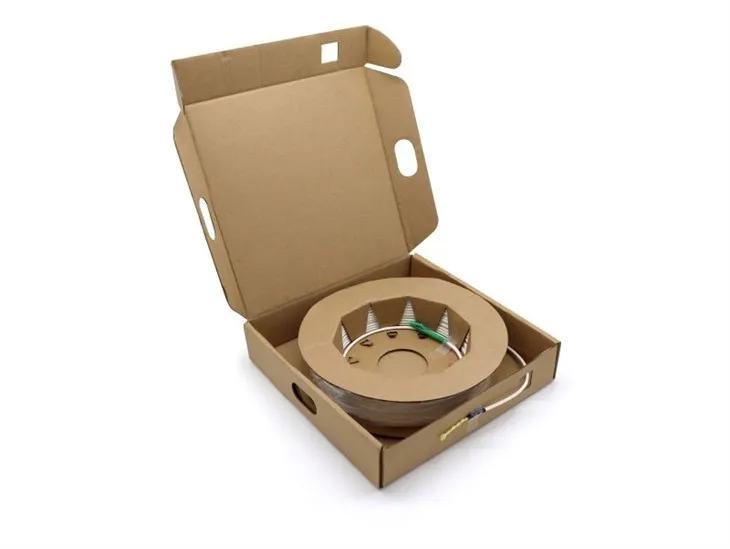
First off, a Fiber Optic SC Pigtail is a length of optical fiber with an SC connector pre - installed at one end. The SC connector, also known as a Subscriber Connector, is a popular choice in the fiber optic world because of its push - pull latching mechanism, which makes it easy to install and remove. These pigtails are used in a variety of applications, from data centers to telecommunications networks.
Signal Transmission Basics
When we talk about signal transmission in fiber optic cables, we're dealing with light. Yeah, that's right, light! Instead of using electrical signals like traditional copper cables, fiber optics use light to carry information. And that's where things get really interesting.
The light used in fiber optic transmission is usually in the infrared spectrum, with common wavelengths being 850nm, 1310nm, and 1550nm. Each wavelength has its own advantages and is used depending on the specific application. For example, 850nm is often used for short - distance transmissions in local area networks (LANs), while 1310nm and 1550nm are better for longer - distance transmissions.
Low Signal Loss
One of the most significant characteristics of Fiber Optic SC Pigtails is their low signal loss. Signal loss, also known as attenuation, is the reduction in the strength of the light signal as it travels through the fiber. Compared to copper cables, fiber optic cables have much lower attenuation. This means that the signal can travel much further without the need for repeaters.
For instance, in a well - installed Fiber Optic SC Pigtail, the attenuation can be as low as 0.2dB/km at 1550nm. That's incredibly low! To put it in perspective, copper cables can have attenuation values that are several orders of magnitude higher. This low attenuation allows for high - quality signal transmission over long distances, making fiber optics ideal for telecommunications and long - haul data transmission.
High Bandwidth
Another great thing about Fiber Optic SC Pigtails is their high bandwidth. Bandwidth refers to the amount of data that can be transmitted in a given amount of time. Fiber optic cables can support much higher bandwidths than copper cables.
In today's digital age, where we're constantly streaming high - definition videos, playing online games, and transferring large files, high bandwidth is crucial. With a Fiber Optic SC Pigtail, you can achieve data transfer rates of up to 100Gbps or even higher. This high bandwidth capability makes fiber optics the go - to choice for data centers and other high - speed communication networks.
Immunity to Electromagnetic Interference (EMI)
Unlike copper cables, Fiber Optic SC Pigtails are immune to electromagnetic interference (EMI). EMI can be caused by a variety of sources, such as power lines, radio waves, and electrical equipment. When a copper cable is exposed to EMI, it can cause the signal to become distorted or even lost.
But with fiber optics, since the signal is carried by light, there's no electrical current involved. This means that fiber optic cables are not affected by EMI. So, whether you're installing a network in an industrial environment with lots of electrical noise or near a radio tower, you can count on a Fiber Optic SC Pigtail to provide a reliable and interference - free signal.
Single - Mode vs. Multi - Mode
Fiber Optic SC Pigtails come in two main types: single - mode and multi - mode. Each type has different signal transmission characteristics.
Single - mode fiber has a very small core diameter (usually around 9 microns). This allows only one mode of light to propagate through the fiber. Single - mode fiber is ideal for long - distance transmissions because it has lower attenuation and can support higher data rates over longer distances. It's commonly used in telecommunications networks and long - haul data links.
On the other hand, multi - mode fiber has a larger core diameter (usually 50 or 62.5 microns). This allows multiple modes of light to propagate through the fiber. Multi - mode fiber is better suited for short - distance transmissions, such as in LANs and data centers. It's also less expensive than single - mode fiber, making it a popular choice for many applications.
Polarization - Mode Dispersion (PMD)
Polarization - Mode Dispersion (PMD) is another factor to consider when it comes to the signal transmission characteristics of Fiber Optic SC Pigtails. PMD occurs when the two polarization modes of light in a fiber travel at different speeds, causing the signal to spread out over time.
In high - speed transmission systems, PMD can limit the data rate and the distance over which the signal can be transmitted. However, modern fiber optic manufacturing techniques have significantly reduced PMD in Fiber Optic SC Pigtails. So, as long as you choose a high - quality pigtail from a reputable supplier, you shouldn't have too many problems with PMD.
Comparison with Other Pigtail Types
It's also worth comparing Fiber Optic SC Pigtails with other types of pigtails, like LC Simplex Fiber Patch Cord, Fiber Optic LC Pigtails, and Fiber Optic ST Pigtails.
LC connectors are smaller than SC connectors, which makes them a great choice for high - density applications where space is limited. However, SC connectors are more widely used and are generally easier to install and remove. ST connectors, on the other hand, use a bayonet - style locking mechanism, which can be more secure in some applications but may be a bit more difficult to install compared to SC connectors.
Conclusion and Call to Action
In conclusion, Fiber Optic SC Pigtails offer excellent signal transmission characteristics, including low signal loss, high bandwidth, immunity to EMI, and the choice between single - mode and multi - mode fibers. Whether you're setting up a small LAN or a large - scale telecommunications network, a Fiber Optic SC Pigtail can provide a reliable and high - performance solution.
If you're in the market for Fiber Optic SC Pigtails or any other fiber optic products, I'd love to have a chat with you. We can discuss your specific needs and find the best solution for your project. So, don't hesitate to reach out and start a conversation about your procurement requirements.
References
- "Fiber Optics for Dummies" by Greg Harvey
- "Optical Fiber Communication Technology" by Gerd Keiser