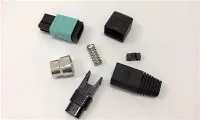
As a supplier of Fiber Optic FC Pigtails, I often encounter inquiries about the potential use of our products in military applications. This blog post aims to explore whether a Fiber Optic FC Pigtail can indeed be used in military settings, delving into the technical aspects, advantages, challenges, and considerations associated with such applications.
Technical Overview of Fiber Optic FC Pigtails
Fiber Optic FC Pigtails are essential components in fiber optic networks. They consist of a short length of optical fiber with an FC connector at one end. The FC connector, which stands for Ferrule Connector, is a threaded connector known for its high precision and reliability. It uses a ceramic ferrule to align the optical fibers accurately, ensuring low insertion loss and high return loss.
The optical fiber in the pigtail can be either single - mode or multi - mode. Single - mode fibers are designed for long - distance transmissions, typically over several kilometers, while multi - mode fibers are more suitable for shorter distances, usually within a building or a campus network.
Advantages of Using Fiber Optic FC Pigtails in Military Applications
High - Speed Data Transmission
In modern military operations, the ability to transmit large amounts of data quickly and accurately is crucial. Fiber Optic FC Pigtails offer extremely high data transfer rates, far exceeding those of traditional copper cables. This allows for real - time communication between different military units, such as between command centers, surveillance systems, and weapon platforms. For example, in a battlefield scenario, high - speed data transmission can enable the rapid exchange of intelligence, target information, and tactical plans.
Immunity to Electromagnetic Interference (EMI)
Military environments are often filled with various sources of electromagnetic interference, including radar systems, radio transmitters, and electronic warfare equipment. Copper cables are highly susceptible to EMI, which can lead to signal degradation and data loss. In contrast, fiber optic cables, including FC pigtails, are immune to EMI. This makes them ideal for use in military applications where reliable communication is essential, even in the presence of strong electromagnetic fields.
Lightweight and Compact Design
Weight and space are critical considerations in military equipment, especially in airborne and mobile applications. Fiber Optic FC Pigtails are much lighter and more compact than copper cables of equivalent performance. This reduces the overall weight of military systems, which can improve fuel efficiency in vehicles and aircraft, and also allows for more efficient use of limited space inside military equipment.
Security
Fiber optic cables are inherently more secure than copper cables. It is extremely difficult to tap into a fiber optic cable without being detected, as any attempt to do so will disrupt the light signal. This makes Fiber Optic FC Pigtails a preferred choice for transmitting sensitive military information, such as classified intelligence and command signals.
Challenges and Considerations in Military Use
Environmental Durability
Military operations often take place in harsh environments, including extreme temperatures, high humidity, dust, and vibration. Fiber Optic FC Pigtails need to be designed and manufactured to withstand these conditions. Specialized coatings and ruggedized connectors can be used to protect the optical fiber from environmental damage. For example, the pigtails may need to be tested to military standards such as MIL - STD - 810G, which covers environmental engineering considerations and laboratory tests for military equipment.
Cost
The initial cost of fiber optic components, including FC pigtails, can be higher than that of copper cables. However, when considering the long - term benefits, such as lower maintenance costs, higher reliability, and better performance, the cost - effectiveness of fiber optic solutions becomes more apparent. Military budgets need to take into account the total cost of ownership, including installation, operation, and maintenance.


Compatibility
Military systems often need to be interoperable with existing equipment and communication networks. Ensuring the compatibility of Fiber Optic FC Pigtails with other fiber optic components, such as LC Simplex Fiber Patch Cord, Fiber Optic LC Pigtails, and Fiber Optic ST Pigtails, is essential. This may require careful selection of connectors and adapters to ensure seamless integration.
Case Studies of Fiber Optic Use in Military
There are already numerous examples of fiber optic technology being used in military applications around the world. For instance, in naval vessels, fiber optic networks are used to connect various onboard systems, such as navigation, communication, and weapon control systems. The high - speed and reliable data transmission provided by fiber optic cables ensures the efficient operation of these systems, even in the challenging maritime environment.
In military aircraft, fiber optic technology is used to reduce weight and improve communication between different avionics systems. This helps to enhance the performance and safety of the aircraft.
Our Offerings as a Supplier
As a supplier of Fiber Optic FC Pigtails, we understand the unique requirements of military applications. Our products are designed and manufactured to meet the highest quality standards. We offer a wide range of FC pigtails, including single - mode and multi - mode options, with different lengths and connector configurations.
Our pigtails are tested rigorously to ensure low insertion loss, high return loss, and excellent mechanical stability. We also provide customization services to meet the specific needs of military customers, such as ruggedized designs for harsh environments and special connector requirements.
Conclusion
In conclusion, Fiber Optic FC Pigtails have significant potential for use in military applications. Their high - speed data transmission, immunity to EMI, lightweight design, and security features make them well - suited for the demanding requirements of modern military operations. While there are challenges such as environmental durability, cost, and compatibility to be addressed, with the right design and manufacturing processes, these challenges can be overcome.
If you are interested in exploring the use of Fiber Optic FC Pigtails for your military applications, we invite you to contact us for further discussion and to start the procurement process. Our team of experts is ready to assist you in finding the most suitable solutions for your needs.
References
- "Fiber Optic Communication Technology" by Gerd Keiser
- Military Standard MIL - STD - 810G: Environmental Engineering Considerations and Laboratory Tests
- Various research papers on fiber optic technology in military applications from industry journals