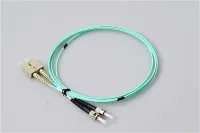
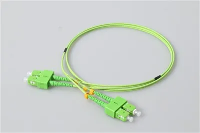
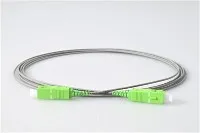
Armored fiber optic cable is just regular fiber with a metal layer-steel or aluminum-wrapped around the core. It stops things from crushing, chewing, or otherwise destroying your cable. Data centers, campus runs, factories, anywhere the route gets rough.
If you already know the basics and just need to pick the right type, skip down to the comparison table. Otherwise, here's how these cables are put together and where each type makes sense.
How Armored Fiber Cable Is Constructed
 Start from the outside and work in. The outer jacket is polyethylene for outdoor cable, PVC or LSZH for indoor. Under that sits a layer of aramid yarn for tensile strength during pulls. Then the armor. Inside the armor, the fibers live in tight-buffer tubes or loose tubes depending on the application.
Most of that is identical to any other fiber cable. The part people tend to gloss over is the relationship between armor type and buffer construction, because it affects how you actually terminate the cable on site. Indoor armored cables use tight-buffered fiber at 900µm per strand-you can put connectors right on those and skip furcation entirely, which is nice. Outdoor armored cables go with loose-tube construction, fibers floating in gel or dry-block material inside larger tubes. That handles temperature swings way better (you're typically rated down to -40°C), but you have to furcate before you connectorize, and that's an extra step nobody loves doing in the field at 7 AM.
Whether you're running single-mode or multimode is a totally separate question from the armor. Single-mode for distance and bandwidth, multimode for shorter links. The armor doesn't touch optical performance.
Aluminum Interlock vs. Corrugated Steel: Which Armor Type Do You Need?
| Feature | Interlocking Aluminum Armor (AIA) | Corrugated Steel Tape Armor |
|---|---|---|
| How it's made | Aluminum strips wound helically, overlapping | Coated steel tape folded into a sealed tube |
| Crush resistance | Moderate. Foot traffic, stacked boxes, the occasional ladder drag | High. Direct burial, heavy equipment zones |
| Rodent protection | Partial-gaps between wraps can be exploited | Effective. Continuous tube, no entry points |
| Weight | About half the weight per meter of steel tape | Heavier. A 24-fiber cable runs roughly 2x the aluminum version |
| Flexibility | Routes easily through cable trays and around corners | Stiffer, bigger minimum bend radius |
| Fire ratings | Riser (OFCR), Plenum (OFNP), LSZH | Outdoor rated only, in most cases |
| Where it goes | Data centers, risers, open ceiling runs, campus indoor pathways | Direct burial, duct runs, industrial outdoor, harsh environments |
For indoor work in North America, aluminum interlock dominates. Data centers, hospital IT closets, government buildings, university risers-it's everywhere. The helical wrap gives the cable enough flex to route through trays and J-hooks without turning every bend into a wrestling match.
Here's the thing that doesn't get talked about enough: aluminum interlock can eliminate conduit on a lot of indoor runs. Instead of the usual two-step-install conduit, then pull cable-you just run the armored cable along the ladder rack or through the open ceiling directly. On a building with 30 or 40 runs, that's days off the schedule, not hours. It also carries plenum and riser ratings, which matters because so many of these runs end up going through air-handling spaces.
But aluminum interlock is not truly rodent-proof. We need to be clear about that. The helical wraps overlap, but there's enough gap that a determined squirrel or rat will chew through. I've seen the aftermath. If the site has a documented rodent history, don't even think about it-go straight to corrugated steel.
Corrugated steel tape forms a sealed tube with zero gaps. It's what you want for direct-burial runs, duct installations between buildings, and industrial sites-refineries, mines, manufacturing floors-where you're dealing with chemicals, vibration, and forklifts. The cable is heavy and stiff, which makes it a pain for tight indoor routing, but underground or in a cable trough that doesn't matter at all. The corrugation also gives you a decent moisture barrier, which is part of why it works for burial even in wet soil without always needing a separate innerduct.
For the really extreme stuff-submarine landings, river crossings-there are specialized steel wire armor and braided armor variants built for much higher tensile loads than tape armor can handle. But that's a different conversation.
Indoor, Outdoor, and Indoor/Outdoor Cable
Indoor armored cable: tight-buffer fiber, interlocking aluminum armor, flame-retardant jacket. Outdoor: loose-tube fiber, corrugated steel, water-blocking compounds. Simple enough.
The one that's been showing up more and more on campus projects is indoor/outdoor-rated armored cable. The pitch is you run a single cable from the outside duct entry, through the building penetration, up the riser, into the telecom room-no splice at the building entry point. That's one fewer splice enclosure per transition, plus all the labor behind it. For a campus with 10 or 15 buildings, it adds up fast. These cables usually combine loose-tube fiber with an LSZH or riser jacket and aluminum interlock armor.
Why Bother with the Extra Cost?
Armored cable runs 20 to 40 percent more than equivalent unarmored cable, so you need a reason.
Rodents. That's the reason, and it's not even close. One chew-through on an unarmored campus run means an emergency truck roll, a splice tech, new hardware, and however many hours or days of downtime while you wait for all that to come together. That single repair bill almost always exceeds what you would've spent upgrading the entire cable route to armored. So facilities that have been through it once? They write armored cable into every spec going forward. University campuses, suburban office parks, anything bordering open land where squirrels, gophers, or rats are active. Corrugated steel for confirmed rodent pathways. Aluminum interlock where rodents are possible but haven't proven themselves yet.
Second reason: high-traffic indoor areas. Warehouse ceilings, factory mezzanines, retail back-of-house. Aluminum interlock covers it.
Third: direct burial. You just can't put bare cable in the ground and expect it to survive.
Termination: Pre-Terminated or Field-Terminated
Pre-terminated armored cable ships with connectors already on-LC and SC for patch cords, MPO/MTP for trunks. Factory termination consistently hits insertion loss below 0.2 dB, and good luck matching that in the field when you're also fighting with an armor strip. If your runs are planned and measured, pre-terminated is the move.
Field termination makes sense when you can't pin down exact lengths. Outdoor trenching, building retrofits, anything where the route might shift once you're actually on site. You'll want a rotary cable stripper for the armor. And remember-metallic armor means bonding and grounding per NEC Article 770. It's an extra step that doesn't exist with unarmored cable, and it's one inspectors will absolutely check.
Picking Cable for Specific Jobs
Data center cross-connects on OM3 or OM4 multimode: pre-terminated aluminum interlock trunks. Fast to install, clean optical numbers right out of the box.
Campus backbone between buildings: outdoor corrugated steel with gel-filled single-mode loose-tube fiber. And please, spec more fiber count than you think you need. Pulling a second cable in three years costs massively more than adding strands to the original order. We've seen projects where doubling the count added maybe 15 percent to the cable cost but would've saved a full second installation down the road. At the far end, terminate into a patch panel and connect to equipment with simplex or duplex patch cords.
Runs going outdoor to indoor with no good splice point: indoor/outdoor-rated armored cable. One cable, no transition splice, cleaner BOM.
Applicable Standards
IEC 60794 covers mechanical and environmental testing. ITU-T G.652 defines single-mode fiber specs. For commercial building cabling in North America, you're looking at ANSI/TIA-568.3-D. GR-20-CORE (Telcordia) handles outside-plant reliability. Fire safety ratings fall under UL 1666 and NFPA 262. Get the fire rating wrong for the pathway-riser, plenum, general purpose-and you're ripping it all out. Nobody wants that conversation with a project manager.
A Few Installation Notes
Bend radius on armored cable sits at 10 to 20 times the outer diameter. Go past that and you kink the fiber-permanently. Always bond and ground metallic armor at both ends per NEC 770.
When you're stripping armor for field termination, leave about 10 to 12 inches of armor-free tail for buffer access. And go easy with the rotary stripper depth. Nick the 900µm buffer coating underneath and you've got a problem that won't show up until testing-or worse, six months later as an intermittent.
One more thing people forget: if you're pulling armored cable through existing conduit, check the fill. The increased outer diameter means a conduit that comfortably fit unarmored cable might be too tight for the armored version. Measure first.
Frequently Asked Questions
Q: What Is The Difference Between Armored And Unarmored Fiber Cable?
A: Armored cable has a metallic layer (aluminum or steel) between the jacket and the fiber core for crush resistance and rodent protection. Unarmored doesn't. You pay for it in weight, cost, and bend radius. If the route isn't exposing fiber to physical risk, unarmored works fine and costs less.
Q: Can Armored Fiber Cable Be Directly Buried?
A: Only if it's specifically rated for direct burial-that means corrugated steel tape armor with water-blocking loose-tube construction. The gel or dry-block tape inside prevents moisture from migrating if a rock or root punctures the jacket over time. Aluminum interlock is not burial-rated. Most local codes call for 18 to 24 inches of depth.
Q: Does Armored Fiber Cable Need Grounding?
A: Yes. NEC Article 770 requires you to bond metallic armor to the building grounding electrode system at both ends.
Q: Is Armored Fiber Cable Rodent-Proof?
A: Corrugated steel effectively is-the continuous sealed tube doesn't give rodents anywhere to start. Aluminum interlock is not, because of the gaps between the helical wraps. It'll discourage casual gnawing but won't hold up against a motivated animal. For routes with known rodent traffic, always go corrugated steel.
Q: What Connectors Work With Armored Fiber Cable?
A: All the same ones-LC, SC, ST, MPO/MTP. Armor doesn't change your connector choice. It just makes the termination process more involved since you have to strip back the armor before you can get at the fiber buffer tubes.