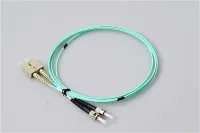
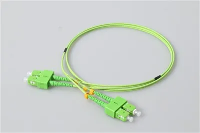
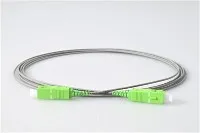
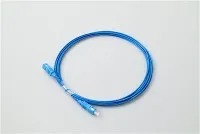
What does a fiber optic connector look like?
Introduction:
Fiber optic connectors play a crucial role in modern communication systems, allowing the efficient and reliable transmission of data over long distances. They are integral components in fiber optic cables that enable the seamless transfer of information in the form of light pulses. In this article, we will delve into the details of fiber optic connectors, exploring their physical appearance, construction, types, and applications.
Physical Appearance of Fiber Optic Connectors:
Fiber optic connectors come in various shapes and sizes, but they typically share some common physical characteristics. These connectors consist of a ferrule, which holds the fiber in place, and a connector body that provides the necessary structural support. The connector body is usually made of durable materials such as metal or plastic, ensuring the stability and longevity of the connector.
The most prominent feature of a fiber optic connector is the ferrule, which is a cylindrical component typically made of ceramic or metal. It is precision-engineered to hold the optical fiber securely in place, ensuring efficient light transmission. The ferrule also facilitates accurate alignment and connection between fibers, minimizing signal loss or disruption.
At the end of the ferrule, there is a polished surface known as the endface. The endface is critical for achieving optimal optical performance, as it allows the light signal to pass from one fiber to another without significant attenuation. To maintain the integrity of the endface, connectors are designed to protect it from dust, dirt, and other contaminants.
Construction and Types of Fiber Optic Connectors:
Fiber optic connectors employ different construction methods and designs, which determine their compatibility, durability, and ease of use. Some common types of fiber optic connectors include:
1. SC Connector: The Subscriber Connector (SC) is a widely used connector due to its simple push-pull latching mechanism. It features a square-shaped connector body and a ceramic ferrule, allowing for precise alignment. SC connectors are commonly used in data centers, telecommunications, and LANs (Local Area Networks).
2. LC Connector: The Lucent Connector (LC) is a small form-factor connector that offers high-density connections. It has a similar design to the SC connector but features a smaller ferrule size, enabling greater port density. LC connectors are popular in applications where space-saving is crucial, such as fiber-to-the-home (FTTH) installations.
3. ST Connector: The Straight Tip (ST) connector was one of the first fiber optic connectors widely used in networking applications. It utilizes a bayonet-style coupling mechanism that requires a twist-on/twist-off motion for connection. ST connectors are commonly found in older Local Area Networks and fiber optic cable installations.
4. FC Connector: The Ferrule Connector (FC) is a robust and versatile connector commonly used in laboratory and instrument applications. It features a threaded coupling mechanism that provides a secure and stable connection. FC connectors offer excellent repeatability and are often used in high-vibration environments.
5. MPO/MTP Connector: Multi-fiber Push-On/Pull-off (MPO) or its high-performance variant, MTP, connectors are designed for high-density applications that require multiple fibers in a single connector. These connectors feature a rectangular-shaped ferrule with multiple fibers, allowing for quick and efficient connections. MPO/MTP connectors are used in data centers, backbone networks, and high-speed data transmission.
Applications of Fiber Optic Connectors:
Fiber optic connectors find applications in various sectors, enabling the seamless transfer of data and information. Some essential areas where fiber optic connectors are extensively used include:
1. Telecommunications: Fiber optic connectors are heavily relied upon in telecommunications networks, providing high-speed and reliable data transmission. They are used in the backbone infrastructure, connecting different network elements and facilitating long-distance communication.
2. Data Centers: With the growing demand for cloud computing and big data applications, data centers require high-density and efficient connectivity. Fiber optic connectors, especially MPO/MTP connectors, are crucial in establishing quick and reliable links between servers, switches, and storage devices.
3. Broadcasting and Entertainment: Fiber optic connectors play a vital role in the broadcast industry, carrying audio and video signals over long distances without degradation. They are also used in the production and transmission of live events, such as concerts and sports broadcasts.
4. Medical Field: Fiber optic connectors are widely utilized in medical equipment and devices, enabling precise and high-quality imaging. They are essential in endoscopes, laser delivery systems, and other medical instruments that require reliable optical communication.
Conclusion:
Fiber optic connectors, with their distinct physical appearance and diverse types, form the backbone of modern communication systems. They provide efficient, low-loss connections between fiber optic cables, ensuring the seamless transmission of data over long distances. With their widespread applications, fiber optic connectors continue to revolutionize various industries, enabling faster and more reliable communication in an increasingly connected world.