For the latest 2026 theme content, please visit here.
What is the difference between fiber cable and fiber patch cord?
Fiber optics has revolutionized the field of telecommunications and data transmission. The use of optical fibers has made it possible to transmit vast amounts of information over long distances at incredible speed. Two vital components in fiber optic systems are fiber cables and fiber patch cords. While they may seem similar, there are significant differences between the two. In this article, we will explore and highlight these differences.
Fiber Cable
Fiber cables, also known as optical cables or optical fiber cables, are the primary medium for transmitting optical signals. They consist of one or multiple strands of glass or plastic fibers enclosed within a protective jacket. The fibers themselves are incredibly thin, usually around the diameter of a human hair.
The primary purpose of a fiber cable is to carry optical signals from one point to another. These signals travel through the core of the fiber, which is made of a material that has a high refractive index. The core is surrounded by a cladding layer, which is a material with a lower refractive index. This design allows the light signals to propagate through the fiber without significant loss of signal strength.
Fiber cables are widely used in various industries, including telecommunications, data centers, and networking. They can span long distances, sometimes reaching thousands of kilometers, and transmit data at extremely high speeds. Fiber cables are durable, resistant to electromagnetic interference, and can transmit data across multiple channels simultaneously.
Fiber Patch Cord
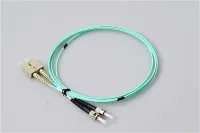
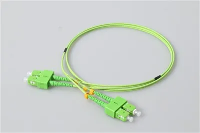
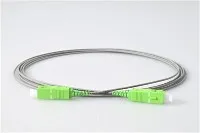
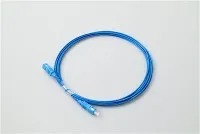
A fiber patch cord, also known as a fiber optic patch cable or jumper, is a short-length cable used to connect optical devices. Unlike fiber cables, patch cords are not standalone transmission lines but rather serve as interconnects within a larger fiber network. They are typically used for shorter distances, such as connecting devices within a data center or between adjacent racks.
The construction of a fiber patch cord is similar to a fiber cable. It consists of an optical fiber enclosed within a protective jacket. However, patch cords are usually terminated with connectors at both ends, making them easily pluggable into devices without the need for splicing or fusion.
The connectors on a patch cord serve as the interface between the fiber optic cables and the devices they connect. Common types of connectors include LC, SC, ST, and MTP/MPO. These connectors ensure a reliable and secure connection between devices, allowing for quick installation, removal, and replacement without interrupting the entire fiber network.
Differences
Now, let''s delve into the key differences between fiber cables and fiber patch cords.
1. Length and Purpose
- Fiber cables are used to transmit optical signals over long distances, often spanning kilometers. They are designed to provide a continuous optical path and are typically buried underground or installed in overhead lines.
- Fiber patch cords, on the other hand, are used for short-distance connections within a fiber network. They are usually less than a few meters long and are employed to connect devices such as switches, routers, and servers.
2. Connectivity
- Fiber cables are typically spliced or fused together to create a continuous transmission line. Splicing involves joining two fiber cables permanently, while fusion splicing uses heat to melt the fibers together. This method ensures a reliable and strong connection.
- Fiber patch cords, as mentioned earlier, use connectors at both ends. These connectors allow for quick and easy connections and disconnections, making them ideal for situations where frequent changes or reconfigurations are necessary.
3. Durability and Protection
- Fiber cables are designed to withstand harsh environments and protect the delicate fibers inside. They feature a rugged and robust outer jacket that provides mechanical protection, moisture resistance, and protection against extreme temperatures.
- Fiber patch cords also have a protective outer jacket but are not typically exposed to the same environmental conditions as fiber cables. They are generally handled and used in controlled environments, such as data centers, where they are less likely to experience physical stress or exposure to extreme temperatures.
4. Transmission Distance and Speed
- Fiber cables can transmit optical signals across long distances, often without the need for regeneration or amplification. They can carry signals for thousands of kilometers while maintaining high data transmission rates.
- Fiber patch cords are designed for shorter distances and are not suitable for transmitting signals over long distances. Their purpose is to provide quick and reliable connections between devices in close proximity. The data rates achieved through patch cords are typically lower compared to fiber cables.
Conclusion
In conclusion, fiber cables and fiber patch cords both play crucial roles in fiber optic systems, but they serve different purposes and have distinct characteristics. Fiber cables form the backbone of optical networks, transmitting signals over long distances, while fiber patch cords are used for shorter connections within a network. Understanding their differences is essential for effectively designing and implementing fiber optic infrastructure.