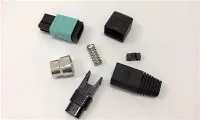
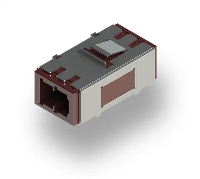
Fiber optic pigtails play a crucial role in fiber optic communication systems. As a professional fiber optic pigtail supplier, I am well - versed in the various types of fiber optic pigtails available in the market. In this blog post, I will introduce you to different types of fiber optic pigtails, their characteristics, and applications.
1. Simplex Fiber Optic Pigtails
Simplex fiber optic pigtails consist of a single fiber strand within a protective jacket. They are commonly used in applications where only one - way communication is required or for connecting devices in a simple network setup. For example, in a small office network, a simplex pigtail can be used to connect a single - mode fiber switch to a media converter.
The connectors on simplex pigtails come in a variety of types. One of the popular connectors is the SC connector. The Fiber Optic Sc Pigtail typically features a push - pull locking mechanism, which makes it easy to install and remove. It has a relatively low insertion loss and high return loss, ensuring reliable signal transmission. Another type is the FC connector. The Fiber Optic Fc Pigtail uses a screw - on locking mechanism, providing a very stable connection. It is often used in high - precision and high - reliability applications such as in laboratories or high - end networks.
2. Duplex Fiber Optic Pigtails
Duplex fiber optic pigtails contain two fiber strands within a single jacket, allowing for simultaneous two - way communication. They are widely used in Ethernet networks, fiber - to - the - home (FTTH) applications, and data centers.
Duplex pigtails usually come with connectors like LC or SC. LC connectors are small - form - factor connectors, which are ideal for high - density applications. In a data center, where there is a large number of fiber connections in a limited space, LC duplex pigtails can be used to maximize the port density on switches and routers. SC duplex pigtails, on the other hand, are larger but are still very popular due to their simplicity and reliability. They are often used in campus networks and enterprise networks.
3. MPO/MTP Fiber Optic Pigtails
MPO (Multi - fiber Push - On) and MTP (a registered trademark of US Conec for high - performance MPO connectors) fiber optic pigtails are designed for high - speed, high - density applications. These pigtails can accommodate multiple fiber strands, typically 12, 24, or even more in a single connector.
In modern data centers with high - bandwidth requirements, MPO/MTP pigtails are essential. They can be used for connecting servers to top - of - rack switches, or for connecting between different racks in a data center. The advantage of MPO/MTP pigtails is their ability to transmit multiple signals simultaneously, which significantly increases the data transfer capacity. However, they require more precise installation and alignment compared to simplex and duplex pigtails.


4. ST Fiber Optic Pigtails
ST (Straight Tip) fiber optic pigtails were once very popular in fiber optic networks. The ST connector uses a bayonet - style locking mechanism, which provides a relatively secure connection. It is often used in older networks or in some industrial applications where a more robust connector is required.
The ST pigtail is suitable for both single - mode and multi - mode fibers. In industrial environments, where there may be vibrations or mechanical stresses, the ST connector's locking mechanism helps to maintain a stable connection. However, compared to some of the newer connectors, ST connectors have a larger physical size and may have relatively higher insertion losses.
5. E2000 Fiber Optic Pigtails
The Fiber Optic E2000 Pigtail features a unique shutter mechanism. When the connector is not plugged in, the shutter automatically closes to protect the fiber end - face from dust and damage. This makes the E2000 pigtail very suitable for harsh environments, such as outdoor installations or in industrial settings where dust and debris are common.
The E2000 connector also has excellent optical performance, with low insertion loss and high return loss. It is available in both single - mode and multi - mode versions, and can be used in a variety of applications, including telecommunications networks, cable television networks, and local area networks.
Applications of Different Fiber Optic Pigtails
- Telecommunications: In long - distance telecommunications networks, single - mode simplex and duplex pigtails are commonly used. The low attenuation of single - mode fibers allows for signal transmission over long distances. MPO/MTP pigtails are also increasingly being used in the core network to handle high - speed data traffic.
- Data Centers: High - density applications in data centers rely heavily on LC duplex pigtails and MPO/MTP pigtails. These pigtails enable the high - speed interconnection of servers, switches, and storage devices. SC pigtails are also used in some legacy or less - dense parts of the data center.
- FTTH: For fiber - to - the - home applications, SC and LC pigtails are the most commonly used. They are easy to install and can provide reliable connections for residential users to access high - speed internet, television, and telephone services.
- Industrial Applications: In industrial settings, ST and E2000 pigtails are preferred due to their robustness. The ST connector's bayonet - style locking mechanism and the E2000 connector's dust - protection shutter make them suitable for environments with vibrations and dust.
Conclusion
As you can see, there is a wide variety of fiber optic pigtails available, each with its own unique characteristics and applications. Whether you need a simple simplex pigtail for a small - scale network or a high - density MPO/MTP pigtail for a large - scale data center, there is a suitable solution for you.
If you are in need of fiber optic pigtails for your project, I encourage you to contact us for a detailed discussion. We have a wide range of products in stock and can provide customized solutions to meet your specific requirements. Our team of experts is ready to assist you in choosing the right fiber optic pigtails for your application.
References
- "Fiber Optic Communication Systems" by Govind P. Agrawal
- Industry standards documents from organizations such as the Telecommunications Industry Association (TIA) and the International Electrotechnical Commission (IEC)
- Technical whitepapers from leading fiber optic component manufacturers.