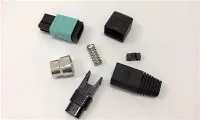
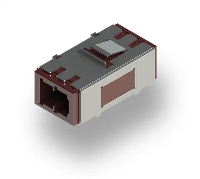
Hey there! I'm a supplier of Fiber Optic FC Adaptors, and today I wanna chat about how temperature changes can affect the performance of these little but crucial components.
First off, let's briefly go over what a Fiber Optic FC Adaptor is. It's a key part in fiber - optic communication systems, used to connect two fiber - optic cables together. It provides a stable and low - loss connection, allowing light signals to travel smoothly from one cable to another.
Now, let's dig into the effects of temperature changes. Temperature can have a significant impact on the physical and optical properties of the Fiber Optic FC Adaptor.
Physical Changes
When the temperature changes, the materials that make up the Fiber Optic FC Adaptor expand or contract. Most of these adaptors are made of materials like ceramic, metal, and plastic. Each of these materials has a different coefficient of thermal expansion.
For example, ceramics are often used for the ferrule part of the adaptor because they offer high precision and good stability. However, when the temperature rises, ceramics will expand slightly. If the expansion is not uniform across the ferrule, it can lead to misalignment between the two fibers being connected. This misalignment can cause an increase in insertion loss, which means that more of the light signal is lost as it passes through the adaptor.
Metals, on the other hand, usually have a higher coefficient of thermal expansion compared to ceramics. If the metal parts of the adaptor expand too much, they can put pressure on the ceramic ferrule or other components. This pressure can distort the shape of the ferrule or cause the adaptor to become loose, again resulting in increased insertion loss and potentially even signal interruption.
Plastic components in the adaptor are also affected by temperature. At high temperatures, plastics can become soft and deform. This deformation can change the internal structure of the adaptor, leading to poor fiber alignment and increased signal loss. At low temperatures, plastics can become brittle and crack, which can completely break the connection.
Optical Changes
Temperature changes can also directly affect the optical properties of the fiber - optic cables connected by the FC Adaptor. The refractive index of the fiber core, which determines how light travels through the fiber, is temperature - dependent.
When the temperature changes, the refractive index of the fiber core can change. This change can cause the light to travel at a different speed or in a different path within the fiber. As a result, the light signal may not couple efficiently into the other fiber at the adaptor, leading to higher insertion loss.
Moreover, temperature can also affect the dispersion characteristics of the fiber. Dispersion is the spreading out of light pulses as they travel through the fiber. An increase in temperature can change the dispersion properties, causing the light pulses to spread more. This spreading can lead to inter - symbol interference, where the symbols (bits) in the digital signal start to overlap, making it difficult for the receiver to accurately decode the signal.
Performance Degradation at High Temperatures
In high - temperature environments, the performance of the Fiber Optic FC Adaptor can degrade rapidly. As mentioned earlier, the expansion of materials can cause misalignment and increased insertion loss. The insertion loss may increase by several tenths of a decibel, which can be a significant problem in long - distance or high - speed fiber - optic communication systems.
High temperatures can also accelerate the aging process of the materials in the adaptor. For example, the plastic parts may start to break down chemically, and the metal parts may corrode more quickly. This aging can further degrade the performance of the adaptor over time.
Performance Degradation at Low Temperatures
At low temperatures, the main issue is the brittleness of materials. Plastic components are particularly vulnerable. Cracks in the plastic can expose the internal components to moisture and dust, which can cause further damage.
The low - temperature environment can also cause the fibers to become more rigid. This increased rigidity can make it more difficult to achieve a proper alignment when connecting the fibers, leading to higher insertion loss.
Mitigating the Effects of Temperature Changes
To deal with the effects of temperature changes, manufacturers often take several measures. One common approach is to use materials with low coefficients of thermal expansion. For example, some advanced ceramics have very low expansion rates, which can help reduce the misalignment caused by temperature changes.
Another way is to design the adaptor with a more flexible structure. This flexibility can allow the adaptor to accommodate the expansion and contraction of materials without causing significant misalignment.
In addition, environmental protection measures can be taken. For example, using protective enclosures can shield the adaptor from extreme temperatures, moisture, and dust.
Other Fiber - Optic Adapters
If you're also interested in other types of fiber - optic adapters, we have some great options. Check out our Fiber Optic Mtrj Adapter, which is known for its high - density and easy - to - use design. The Fiber Optic E2000 Adapter offers excellent protection against dust and scratches, making it suitable for harsh environments. And our Fiber Optic Lc Adapters are widely used in data centers and telecommunications networks for their small size and high performance.
Conclusion
In conclusion, temperature changes can have a significant impact on the performance of Fiber Optic FC Adaptors. From physical misalignment to optical property changes, these effects can lead to increased insertion loss, signal distortion, and even complete signal interruption. However, with proper design and environmental protection, we can mitigate these effects and ensure the reliable operation of fiber - optic communication systems.
If you're in the market for high - quality Fiber Optic FC Adaptors or other fiber - optic products, feel free to reach out to us. We're always ready to discuss your specific needs and provide the best solutions for your projects.


References
- "Fiber Optic Communication Systems" by Govind P. Agrawal
- "Optical Fiber Technology: Materials, Devices, and Systems" by Ivan Kaminow and Tingye Li