Hey there! As a supplier of fiber optic adapters, I often get asked about the torsion resistance of these little but crucial components. So, let's dive right into what torsion resistance means for a fiber optic adapter.
First off, what's torsion? Torsion is basically a twisting force. When we talk about the torsion resistance of a fiber optic adapter, we're referring to its ability to withstand twisting forces without getting damaged or affecting its performance.
In the world of fiber optics, a fiber optic adapter is like a bridge that connects two fiber optic connectors. It ensures that the light signals can travel smoothly from one fiber to another. But in real - world applications, these adapters can face all sorts of mechanical stresses, and torsion is one of them.
Imagine a scenario where the fiber optic cables connected to the adapter get accidentally twisted. Maybe someone trips over the cables or moves equipment in a way that causes a twist. If the adapter has poor torsion resistance, this simple twist could lead to misalignment of the fiber cores inside the connectors. When the fiber cores are misaligned, the light signals can't transfer properly, which results in signal loss. And in a high - speed data transmission network, even a small amount of signal loss can cause big problems, like slow data transfer speeds or even complete network outages in extreme cases.
So, how do we measure the torsion resistance of a fiber optic adapter? Well, manufacturers usually conduct a series of tests. They'll attach the adapter to a testing device that can apply a controlled twisting force. The adapter is then twisted in both clockwise and counter - clockwise directions, and the amount of twist it can endure before the signal quality starts to degrade is measured.
The materials used in the construction of the adapter play a huge role in its torsion resistance. For example, adapters made from high - quality plastics or metals are generally more resistant to torsion. High - grade plastics can be engineered to have good flexibility and toughness, allowing them to bend a bit without breaking when twisted. Metals, on the other hand, offer high strength and rigidity. Stainless steel, for instance, is a popular choice for making the outer shell of fiber optic adapters because it can withstand significant torsion forces.
The design of the adapter also affects its torsion resistance. Adapters with a more robust internal structure are better at handling twisting. For example, some adapters have multiple layers of reinforcement that help distribute the twisting force evenly across the adapter. This reduces the stress on any single point and makes the adapter less likely to break or get damaged.
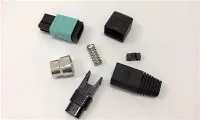
Now, let's talk about some of the fiber optic adapters we offer as a supplier. We have the Optical Fiber Adaptor Mtp / Mpo Adapter. These adapters are commonly used in high - density data centers. They are designed to handle a large number of fiber connections, and their torsion resistance is crucial. In a data center environment, there are a lot of cables running in different directions, and accidental twisting is quite possible. Our Mtp / Mpo adapters are made with high - quality materials and a well - thought - out design to ensure they can withstand torsion and keep the signals flowing smoothly.
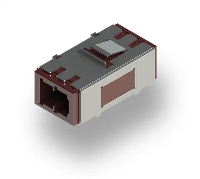
Another great product we have is the Fiber Optic E2000 Adapter. The E2000 adapters are known for their high - precision alignment and dust - protection features. But they also have excellent torsion resistance. The E2000 design is quite sturdy, and it can handle the kind of twisting forces that might occur during installation or maintenance.
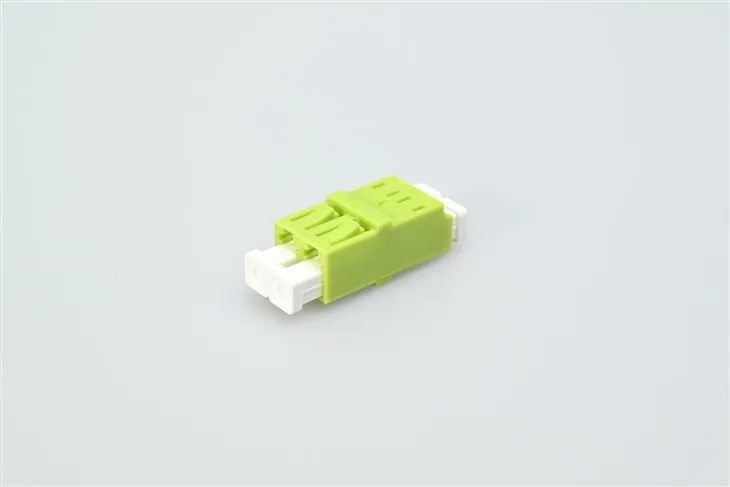

And then there's our Factory Price Ftth Networking Lc - lc Duplex Fiber Adapter. In fiber - to - the - home (FTTH) networks, the adapters need to be reliable and resistant to various mechanical stresses. Our Lc - lc duplex adapters are made to offer great torsion resistance at an affordable price. This is important because in residential areas, the installation and movement of cables might not be as carefully controlled as in a professional data center, so the adapters need to be tough.
The torsion resistance of a fiber optic adapter is not just a technical specification; it's a key factor that determines the reliability and performance of a fiber optic network. Whether it's a large - scale data center or a home network, having adapters that can withstand torsion is essential.
As a supplier, we're constantly working on improving the torsion resistance of our products. We invest in research and development to find better materials and designs. We also conduct rigorous quality control tests to make sure that every adapter we send out meets our high standards.
If you're in the market for fiber optic adapters and you're worried about torsion resistance, you've come to the right place. We can provide you with high - quality adapters that are built to last. And we're always happy to have a chat about your specific needs. Whether you're a network installer, a data center operator, or just someone setting up a home network, we can help you find the perfect adapter for your project. So, don't hesitate to reach out if you're interested in purchasing our fiber optic adapters. Let's have a discussion and see how we can work together to make your fiber optic network a success.
References:
- Industry standards for fiber optic adapter testing
- Research papers on materials for fiber optic components