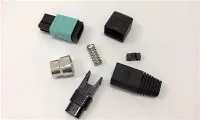
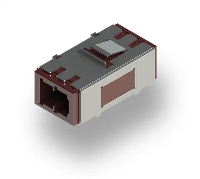
Yo, what's up everyone! As a supplier of Fiber Optic ST Couplers, I've been getting a lot of questions lately about polarization - dependent loss (PDL). So, I thought I'd take some time to break it down for you all.
Let's start with the basics. What the heck is polarization - dependent loss? Well, in simple terms, PDL is the difference in the insertion loss of an optical component, like our Fiber Optic ST Couplers, for different states of polarization of the input light. You see, light can be thought of as an electromagnetic wave, and it has a property called polarization, which describes the orientation of the electric field vector of the wave.
Now, in an ideal world, an optical coupler would treat all polarizations of light the same way. But in reality, that's not the case. Different polarizations of light can experience different amounts of loss as they pass through the coupler. This difference in loss is what we call PDL.
Why does PDL matter? Well, for one thing, it can have a big impact on the performance of your optical communication system. In high - speed and long - distance optical networks, even a small amount of PDL can cause signal degradation. It can lead to an increase in bit - error rate (BER), which means more errors in the data being transmitted. And in a world where we rely so heavily on fast and reliable data transfer, that's a big deal.
Let's dig a little deeper into how PDL occurs in Fiber Optic ST Couplers. The structure of the coupler itself plays a big role. Inside the coupler, there are various materials and interfaces that the light has to pass through. These materials can have different refractive indices for different polarizations of light. When light hits an interface between two materials, some of it is reflected and some of it is transmitted. The amount of reflection and transmission depends on the polarization of the light.
For example, if the refractive index of a material is different for horizontally polarized light compared to vertically polarized light, then the two polarizations will experience different amounts of reflection and transmission at the interface. This leads to a difference in the loss for the two polarizations, which is the PDL.
Another factor that can contribute to PDL is the manufacturing process. Even small variations in the alignment of the fibers or the quality of the materials used in the coupler can cause differences in the PDL. That's why at our company, we pay a lot of attention to the manufacturing process to minimize PDL in our Fiber Optic ST Couplers.
Now, you might be wondering how we measure PDL. There are a few different methods, but one of the most common is the use of a polarization - scrambling technique. In this method, a polarization scrambler is used to continuously change the polarization state of the input light. The output power of the coupler is then measured as the polarization state changes. By analyzing the variations in the output power, we can calculate the PDL.
So, what can you do to deal with PDL in your optical system? Well, one option is to choose a coupler with a low PDL. That's where our Fiber Optic ST Couplers come in. We've spent a lot of time and effort developing our couplers to have a very low PDL. Our manufacturing process is designed to ensure that the fibers are properly aligned and the materials are of the highest quality, which helps to minimize PDL.
Another option is to use polarization - insensitive components in your system. For example, you might consider using Fiber Optic Lc Adapters. These adapters are designed to be less sensitive to the polarization of the light, which can help to reduce the overall impact of PDL in your system.


If you need a high - density solution, you might also want to check out our Mtp®/mpo - 8/12/24 Black Fiber Optic Adapter/coupler with Flange, Key Up To Down. These adapters are great for applications where you need to connect multiple fibers in a small space, and they also have a relatively low PDL.
And if you're looking for a different type of adapter, we also offer Fiber Optic Fc Adaptor. These adapters are known for their high - precision and low - loss performance, and they can be a great addition to your optical system.
In conclusion, PDL is an important factor to consider when choosing an optical coupler for your system. It can have a significant impact on the performance of your network, but by choosing the right components and taking steps to minimize PDL, you can ensure that your system operates smoothly and efficiently.
If you're interested in learning more about our Fiber Optic ST Couplers or any of our other products, or if you want to discuss your specific requirements, don't hesitate to reach out. We're always happy to have a chat and help you find the best solution for your needs.
References
- "Fiber Optic Communication Systems" by Govind P. Agrawal
- "Optical Fiber Technology: Principles and Applications" by R. Ramaswami and K. N. Sivarajan