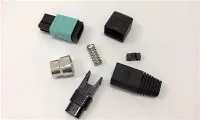
Fiber optic pigtails are essential components in fiber optic communication systems, serving as the connection between fiber optic cables and various devices. However, signal attenuation in fiber optic pigtails can significantly impact the performance of these systems. As a leading supplier of fiber optic pigtails, we understand the importance of minimizing attenuation to ensure optimal signal transmission. In this blog post, we will explore several effective strategies to reduce the attenuation of fiber optic pigtails.
Understanding Fiber Optic Pigtail Attenuation
Before delving into the solutions, it is crucial to understand what causes attenuation in fiber optic pigtails. Attenuation refers to the loss of signal strength as light travels through the fiber. Several factors contribute to this loss, including absorption, scattering, bending, and connector losses.
Absorption occurs when the fiber material absorbs some of the light energy, converting it into heat. Scattering, on the other hand, happens when light is redirected in different directions due to impurities or irregularities in the fiber. Bending losses occur when the fiber is bent beyond its recommended radius, causing light to leak out of the core. Connector losses are due to misalignment, dirt, or damage at the connection points.
Choosing High - Quality Fiber Optic Pigtails
The first step in reducing attenuation is to select high - quality fiber optic pigtails. At our company, we offer a wide range of products, such as Fiber Optic Sc Pigtail 2.0mm and Lc Simplex Fiber Patch Cord. These pigtails are made from premium materials with low absorption and scattering coefficients.
High - quality fibers have fewer impurities and a more uniform core, which reduces the amount of light absorbed or scattered. They are also designed to have a larger core diameter or a more efficient mode field diameter, allowing more light to be transmitted through the fiber with less loss. When choosing pigtails, it is important to consider the specific requirements of your application, such as the transmission distance, bandwidth, and operating wavelength.
Proper Installation and Handling
Proper installation and handling of fiber optic pigtails are crucial to minimizing attenuation. During installation, it is essential to follow the manufacturer's guidelines carefully. This includes ensuring that the fiber is not bent beyond its minimum bend radius. For most single - mode fibers, the minimum bend radius is typically around 10 - 20 times the outer diameter of the fiber, while for multimode fibers, it can be slightly larger.
When making connections, it is important to use high - quality connectors and to ensure that they are properly aligned. Misaligned connectors can cause significant signal loss. We recommend using precision - alignment connectors and following the correct termination procedures. For example, when terminating a Fiber Optic Sc Pigtail, make sure the fiber end face is clean and polished to a high standard.
In addition, proper handling during installation and maintenance is essential. Avoid pulling or stretching the fiber too tightly, as this can cause micro - bends and increase attenuation. Use appropriate tools and techniques to protect the fiber from damage.
Cleaning and Maintenance
Regular cleaning and maintenance of fiber optic pigtails can significantly reduce attenuation. Dirt, dust, and contaminants on the fiber end faces can cause reflection and absorption, leading to increased signal loss. We recommend using specialized fiber optic cleaning tools, such as lint - free wipes and cleaning solutions.
When cleaning the end faces, it is important to follow the correct procedure. First, inspect the end faces for visible dirt or damage. If there is dirt, use a cleaning wipe moistened with a small amount of cleaning solution to gently wipe the end face in a single, smooth motion. Avoid rubbing the end face back and forth, as this can cause scratches.
In addition to regular cleaning, periodic inspection of the pigtails is also necessary. Check for signs of damage, such as cracks, breaks, or excessive bending. If any damage is found, replace the pigtail immediately to prevent further attenuation.
Temperature and Environmental Considerations
The temperature and environmental conditions can also affect the attenuation of fiber optic pigtails. Extreme temperatures can cause the fiber material to expand or contract, which can lead to changes in the refractive index and increased attenuation. High humidity can also cause corrosion and damage to the fiber and connectors.
To minimize the impact of temperature and environmental factors, it is important to install the pigtails in a controlled environment. If the installation is in an outdoor or harsh environment, use protective enclosures and cables that are designed to withstand these conditions. For example, some fiber optic cables are jacketed with materials that provide protection against moisture, UV radiation, and mechanical stress.
Testing and Monitoring
Regular testing and monitoring of the fiber optic pigtails are essential to detect and address attenuation issues early. Use specialized fiber optic testing equipment, such as an optical time - domain reflectometer (OTDR) or a light source and power meter, to measure the attenuation of the pigtails.
The OTDR can provide a detailed profile of the fiber, showing the location and magnitude of any attenuation points. By regularly testing the pigtails, you can identify potential problems, such as connector losses or fiber damage, and take corrective actions before they cause significant performance degradation.
Conclusion
Reducing the attenuation of fiber optic pigtails is crucial for ensuring the reliable performance of fiber optic communication systems. By choosing high - quality pigtails, following proper installation and handling procedures, performing regular cleaning and maintenance, considering environmental factors, and conducting regular testing and monitoring, you can effectively minimize signal loss.
As a trusted supplier of fiber optic pigtails, we are committed to providing our customers with high - quality products and professional technical support. If you are interested in learning more about our fiber optic pigtails or have any questions about reducing attenuation, please feel free to contact us for further discussion and potential procurement opportunities. We look forward to working with you to meet your fiber optic needs.


References
- Ghatak, Ajoy. "Optical Electronics." Cambridge University Press, 2019.
- Senior, John M. "Optical Fiber Communications: Principles and Practice." Pearson, 2019.
- ITU - T Recommendations for fiber optic communication systems.