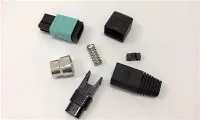
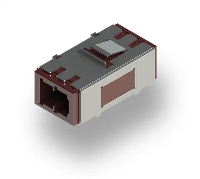
Hey there! As a supplier of fiber optic connectors, I often get asked about return loss. So, I thought I'd take a moment to break it down for you.
Let's start with the basics. Return loss, in the context of fiber optic connectors, is a measure of how much light is reflected back towards the source when it hits a connector. It's an important metric because excessive reflection can cause all sorts of problems in a fiber optic network.
You see, when light travels through a fiber optic cable, it's supposed to go in one direction - from the source to the destination. But when it reaches a connector, some of that light can bounce back. This reflected light can interfere with the original signal, leading to things like signal degradation, increased noise, and even system failures. That's why we want to keep return loss as low as possible.
So, how is return loss measured? Well, it's typically expressed in decibels (dB). A higher return loss value means less light is being reflected. For example, a return loss of -50 dB is better than -20 dB because it indicates that significantly less light is bouncing back.
Now, what factors can affect the return loss of a fiber optic connector? There are a few key ones. First up is the quality of the connector itself. A well - made connector with precise alignment and a smooth end - face finish will generally have lower return loss. At our company, we take great care in manufacturing our connectors to ensure the highest quality. We use advanced polishing techniques to create a super - smooth end - face, which helps to minimize reflections.
The type of connector also plays a role. Different connector types, such as Fiber Optic Lc Connectors, Fiber Optic Fast Connector Sc Apc, and Fiber Optic Fc Connecter, have different designs and characteristics that can impact return loss. For instance, angled - physical - contact (APC) connectors, like the SC APC, are designed to reduce reflections by having an angled end - face. This angled design causes the reflected light to be directed away from the source, resulting in lower return loss compared to some other connector types.


Another factor is the cleanliness of the connector. Even a tiny bit of dust or debris on the end - face can cause significant reflections. That's why it's crucial to keep connectors clean. We always recommend using proper cleaning tools and techniques when handling fiber optic connectors. For example, you can use lint - free wipes and cleaning solutions specifically designed for fiber optics.
The installation process also matters. If a connector is not installed correctly, it can lead to misalignment between the fibers, which in turn increases return loss. Our team provides detailed installation guides to ensure that our customers can install our connectors properly and achieve optimal performance.
Let's talk a bit more about the impact of return loss on different applications. In short - haul networks, like those used in local area networks (LANs), a slightly higher return loss might be tolerable. But in long - haul networks, such as those used for telecommunications over large distances, even a small amount of reflection can cause big problems. High - speed data transmission, like in data centers, also requires low return loss to ensure reliable and fast communication.
So, how can you test the return loss of a fiber optic connector? There are a few ways. One common method is to use an optical time - domain reflectometer (OTDR). An OTDR sends a pulse of light into the fiber and measures the amount of light that is reflected back at different points along the cable. It can provide a detailed profile of the return loss at each connector and other points in the network. Another option is to use a return loss tester, which directly measures the return loss at a specific connector.
At our company, we test every single connector before it leaves our facility. We use state - of - the - art testing equipment to ensure that each connector meets our strict quality standards. This way, our customers can be confident that they're getting a high - quality product with low return loss.
If you're in the market for fiber optic connectors, it's important to consider return loss as a key factor. A connector with low return loss will not only improve the performance of your network but also reduce the likelihood of costly downtime and maintenance.
We're here to help you find the right fiber optic connectors for your needs. Whether you're setting up a new network or upgrading an existing one, we have a wide range of connectors to choose from. Our team of experts is always ready to answer your questions and provide you with the best solutions.
If you're interested in learning more about our products or have any questions about return loss or fiber optic connectors in general, don't hesitate to reach out. We'd love to have a chat with you and discuss how we can help you with your fiber optic needs. Whether you're a small business or a large enterprise, we're committed to providing you with top - notch products and excellent customer service.
So, if you're thinking about making a purchase, let's start a conversation. We can work together to figure out the best connectors for your specific application and ensure that you get the most out of your fiber optic network.
References
- "Fiber Optic Communication Technology" by some well - known author in the field
- Industry whitepapers on fiber optic connector performance and testing