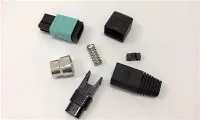
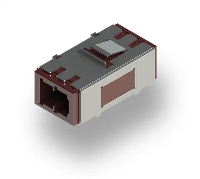
What is the Insertion Loss of a Fiber Optic SC Connector?
As a supplier of Fiber Optic SC Connectors, I often get asked about the insertion loss of these connectors. Insertion loss is a critical parameter in fiber optic communication systems, and understanding it is essential for ensuring optimal performance.
Understanding Insertion Loss
Insertion loss refers to the reduction in optical power that occurs when a fiber optic connector is inserted into a fiber optic link. It is typically measured in decibels (dB) and represents the amount of light that is lost as it passes through the connector. A lower insertion loss indicates a more efficient connector, as less light is being absorbed or scattered.
There are several factors that can contribute to insertion loss in a fiber optic SC connector. One of the primary factors is the quality of the connector's physical contact. When two fiber optic cables are connected using an SC connector, the ends of the fibers must be precisely aligned and in intimate contact to minimize loss. Any misalignment, contamination, or damage to the fiber ends can result in increased insertion loss.
Another factor that can affect insertion loss is the quality of the connector's polishing. Proper polishing of the fiber end faces is crucial for achieving a smooth and flat surface, which helps to reduce reflections and scattering. A poorly polished connector can have a rough or uneven surface, leading to higher insertion loss.
The type of fiber used in the connector can also impact insertion loss. Single-mode fibers, which are designed for long-distance communication, generally have lower insertion loss compared to multi-mode fibers. This is because single-mode fibers have a smaller core diameter, which allows for more precise alignment and less signal dispersion.
Measuring Insertion Loss
To measure the insertion loss of a fiber optic SC connector, a specialized instrument called an optical power meter is typically used. The power meter measures the optical power before and after the connector is inserted into the fiber optic link. The difference between the two measurements is the insertion loss.
When measuring insertion loss, it is important to use a reference cable that has a known and low insertion loss. This reference cable is used to calibrate the power meter and ensure accurate measurements. The measurement should also be taken under controlled conditions, such as a clean and dust-free environment, to minimize the effects of external factors.
Typical Insertion Loss Values
The typical insertion loss for a high-quality fiber optic SC connector is around 0.3 dB or less. However, this value can vary depending on several factors, such as the connector's quality, the type of fiber used, and the measurement conditions. In general, single-mode connectors tend to have lower insertion loss compared to multi-mode connectors.
For example, a well-manufactured single-mode SC connector with proper polishing and alignment can have an insertion loss of as low as 0.1 dB. On the other hand, a multi-mode SC connector may have an insertion loss of up to 0.5 dB or more, depending on the quality of the connector and the fiber.
Minimizing Insertion Loss
As a supplier of Fiber Optic SC Connectors, we take several steps to minimize insertion loss and ensure the highest quality products. First, we use only the highest quality materials and components in the manufacturing process. Our connectors are made from precision-engineered ferrules and bodies, which are designed to provide a secure and stable connection.
We also employ strict quality control measures at every stage of the manufacturing process. Our connectors are thoroughly tested and inspected to ensure that they meet or exceed industry standards for insertion loss. We use advanced testing equipment and techniques to measure insertion loss and other performance parameters, and we reject any connectors that do not meet our strict quality criteria.


In addition to manufacturing high-quality connectors, we also provide our customers with detailed installation and maintenance instructions. Proper installation and maintenance of fiber optic connectors are essential for minimizing insertion loss and ensuring long-term performance. We offer training and support to our customers to help them install and maintain our connectors correctly.
Related Products
If you are in the market for fiber optic connectors, we offer a wide range of products to meet your needs. Our Upc Fast Optical Sm Fiber Connector Sx Core Sc/upc is a high-quality connector designed for single-mode fiber applications. It features a fast and easy installation process, making it ideal for both professional installers and DIY enthusiasts.
We also offer the Fiber Optic Pigtail Fc Apc 12 Colors, which is a versatile and reliable connector for a variety of fiber optic applications. The pigtail comes in 12 different colors, allowing for easy identification and organization of fiber optic cables.
For those who need a fast and convenient solution for field assembly, our Ferrule Field Assembly Connector Fast/quick Connector is an excellent choice. This connector can be quickly and easily assembled in the field, without the need for specialized tools or equipment.
Conclusion
In conclusion, insertion loss is a critical parameter in fiber optic communication systems, and understanding it is essential for ensuring optimal performance. As a supplier of Fiber Optic SC Connectors, we are committed to providing our customers with high-quality products that minimize insertion loss and meet their specific needs.
If you have any questions about the insertion loss of our fiber optic SC connectors or would like to discuss your specific requirements, please do not hesitate to contact us. Our team of experts is available to provide you with detailed information and assistance, and we look forward to working with you to find the best solution for your fiber optic needs.
References
- ITU-T G.652, "Characteristics of a single-mode optical fibre cable"
- TIA/EIA-568-C.3, "Commercial Building Telecommunications Cabling Standard - Optical Fiber Cabling Components"
- IEC 61754-4, "Fibre optic connector interfaces - Part 4: Type SC connector family"