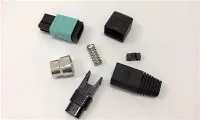
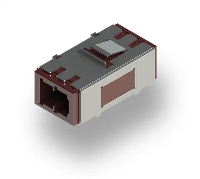
When it comes to the world of fiber optic communication, the Fiber Optic MU Adapter plays a crucial role. As a dedicated supplier of Fiber Optic MU Adapters, I am often asked about the power handling capacity of these essential components. In this blog post, I will delve into the details of what power handling capacity means for a Fiber Optic MU Adapter, the factors that influence it, and why it matters in various applications.
Understanding Power Handling Capacity
Power handling capacity refers to the maximum amount of optical power that a fiber optic component, such as the MU Adapter, can safely handle without experiencing significant degradation in performance or damage. In the context of fiber optic communication, optical power is measured in watts (W) or more commonly in decibels relative to one milliwatt (dBm).
The power handling capacity of a Fiber Optic MU Adapter is determined by several factors, including the materials used in its construction, the design of the adapter, and the quality of the manufacturing process. A well - designed and high - quality MU Adapter can handle a relatively high level of optical power, ensuring reliable and efficient signal transmission.
Factors Influencing Power Handling Capacity
Material Selection
The materials used in the construction of a Fiber Optic MU Adapter have a significant impact on its power handling capacity. The ferrule, which holds the fiber in place, is typically made of materials such as zirconia or ceramic. Zirconia ferrules are known for their high precision and low insertion loss, which are important for maintaining signal integrity at high power levels.
The housing of the adapter is also crucial. It should be made of a material that can withstand the heat generated by the optical power. Plastics or metals with good thermal conductivity are often used. For example, some high - power adapters use metal housings to dissipate heat more effectively, preventing overheating and potential damage to the adapter.
Adapter Design
The design of the Fiber Optic MU Adapter can also affect its power handling capacity. A well - designed adapter will have a precise alignment mechanism to ensure that the fibers are properly aligned within the adapter. Misalignment can cause increased insertion loss and reflection, which can lead to power loss and potential damage to the adapter at high power levels.


Some adapters are designed with features such as anti - reflection coatings on the ferrule end - faces. These coatings reduce the amount of light that is reflected back into the system, minimizing the risk of interference and damage to the adapter.
Manufacturing Quality
The quality of the manufacturing process is another important factor. High - quality manufacturing ensures that the adapter meets strict standards for dimensional accuracy, surface finish, and alignment. Adapters that are manufactured with precision are more likely to have a higher power handling capacity and better overall performance.
Importance of Power Handling Capacity in Different Applications
Telecommunications
In telecommunications networks, high - power optical signals are often used to transmit data over long distances. Fiber Optic MU Adapters with a high power handling capacity are essential in these applications to ensure reliable signal transmission. For example, in long - haul fiber optic networks, the optical power can be relatively high to overcome the attenuation of the fiber over long distances. A low - power handling adapter may not be able to handle these high - power signals, leading to signal degradation and network outages.
Data Centers
Data centers require high - speed and high - capacity data transmission. Fiber optic connections are widely used in data centers to meet these requirements. In a data center environment, the power handling capacity of the Fiber Optic MU Adapter is important to ensure that the network can handle the increasing demand for data traffic. High - power adapters can support the high - speed data transmission rates required for applications such as cloud computing and big data analytics.
Industrial and Military Applications
In industrial and military applications, fiber optic communication systems often operate in harsh environments. These systems may require high - power optical signals to ensure reliable communication over long distances or in areas with high levels of interference. Fiber Optic MU Adapters with a high power handling capacity are necessary to withstand the harsh conditions and maintain signal integrity.
Testing and Certification
To ensure that a Fiber Optic MU Adapter meets the required power handling capacity, it undergoes rigorous testing. These tests typically include measuring the insertion loss, return loss, and power handling capacity under different operating conditions.
Certification bodies also play an important role in ensuring the quality of fiber optic components. Adapters that are certified by recognized organizations, such as the International Electrotechnical Commission (IEC) or the Telecommunications Industry Association (TIA), have met specific standards for performance and reliability.
Comparison with Other Fiber Optic Adapters
When considering the power handling capacity of a Fiber Optic MU Adapter, it is also useful to compare it with other types of fiber optic adapters, such as the Fiber Optic Mpo Adapter and Fiber Optic Lc Adapters.
The MPO adapter is designed for multi - fiber connections and is often used in high - density applications. It can handle relatively high optical power, but its power handling capacity may vary depending on the number of fibers and the specific design.
The LC adapter is a popular choice for single - mode and multi - mode fiber applications. It has a smaller form factor compared to the MU adapter, but its power handling capacity is also an important consideration, especially in high - power applications. The Factory Price Ftth Networking Lc - lc Duplex Fiber Adapter is an example of an LC - based adapter that may be used in various networking scenarios.
Real - World Examples
In a telecommunications network upgrade project, a company was looking to increase the data transmission capacity by using higher - power optical signals. They initially used standard Fiber Optic MU Adapters, but they experienced issues with signal degradation and adapter failures at the higher power levels.
After consulting with our team, they switched to our high - power Fiber Optic MU Adapters. These adapters were designed with high - quality materials and precision manufacturing processes to handle the increased optical power. As a result, the network performance improved significantly, and they were able to achieve the desired data transmission capacity without any further issues.
Conclusion
The power handling capacity of a Fiber Optic MU Adapter is a critical factor in ensuring reliable and efficient signal transmission in fiber optic communication systems. By understanding the factors that influence power handling capacity, such as material selection, adapter design, and manufacturing quality, users can make informed decisions when choosing the right adapter for their applications.
As a leading supplier of Fiber Optic MU Adapters, we are committed to providing high - quality products with excellent power handling capacity. Our adapters are designed and manufactured to meet the highest standards, ensuring reliable performance in a wide range of applications.
If you are interested in learning more about our Fiber Optic MU Adapters or have specific requirements for your project, we encourage you to contact us for a detailed discussion. We look forward to the opportunity to work with you and provide you with the best fiber optic solutions.
References
- "Fiber Optic Communication Systems" by Govind P. Agrawal
- Telecommunications Industry Association (TIA) standards for fiber optic components
- International Electrotechnical Commission (IEC) standards for fiber optic connectors and adapters