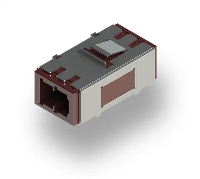
As a reputable supplier of Fiber Optic LC Adapters, I've encountered numerous inquiries regarding the differences between single - mode and multi - mode fiber optic LC adapters. In this blog, I'll delve into the technical aspects, applications, and performance characteristics of these two types of adapters to help you make an informed decision when choosing the right one for your fiber optic network.
Technical Differences
Core Diameter
The most fundamental difference between single - mode and multi - mode fiber optic LC adapters lies in the core diameter of the fiber they are designed to accommodate. Single - mode fiber has a very small core diameter, typically around 9 microns. This narrow core allows only one mode (or path) of light to propagate through the fiber. In contrast, multi - mode fiber has a much larger core diameter, usually 50 or 62.5 microns. The larger core enables multiple modes of light to travel simultaneously through the fiber.
Light Source
Single - mode fiber optic LC adapters are commonly used with laser light sources. Lasers emit a highly focused and coherent beam of light, which is necessary to couple light efficiently into the small core of single - mode fiber. On the other hand, multi - mode fiber optic LC adapters can work with either light - emitting diodes (LEDs) or vertical - cavity surface - emitting lasers (VCSELs). LEDs are less expensive and easier to manufacture, making them a popular choice for short - distance multi - mode applications. VCSELs, while more expensive, offer higher data rates and are suitable for longer multi - mode links.
Attenuation and Bandwidth
Single - mode fiber has significantly lower attenuation compared to multi - mode fiber. Attenuation refers to the loss of signal strength as light travels through the fiber. Due to its small core and the use of laser light sources, single - mode fiber can transmit signals over much longer distances, up to tens or even hundreds of kilometers, with minimal signal loss. In terms of bandwidth, single - mode fiber also offers much higher bandwidth capabilities, making it ideal for high - speed, long - distance communication networks such as telecommunications backbones and data center interconnects.
Multi - mode fiber, on the other hand, has higher attenuation and lower bandwidth compared to single - mode fiber. The multiple modes of light traveling through the larger core of multi - mode fiber can cause modal dispersion, which spreads out the light pulses and limits the data transmission rate and distance. As a result, multi - mode fiber is typically used for shorter - distance applications, such as local area networks (LANs) within a building or campus.
Applications
Single - Mode Fiber Optic LC Adapters
Single - mode fiber optic LC adapters are widely used in applications that require long - distance, high - speed data transmission. Some common applications include:
- Telecommunications Networks: Single - mode fiber is the backbone of modern telecommunications networks, connecting telephone exchanges, data centers, and mobile base stations over long distances. The high bandwidth and low attenuation of single - mode fiber enable the transmission of large amounts of voice, data, and video traffic.
- Data Center Interconnects: In large data centers, single - mode fiber optic LC adapters are used to connect servers, storage systems, and network switches over distances of several kilometers. The high - speed and reliable data transmission provided by single - mode fiber is essential for ensuring the efficient operation of data centers.
- Cable Television (CATV) Networks: Single - mode fiber is used in CATV networks to transmit high - definition video signals over long distances. The low attenuation and high bandwidth of single - mode fiber ensure that the video signals remain clear and free of interference.
Multi - Mode Fiber Optic LC Adapters
Multi - mode fiber optic LC adapters are commonly used in applications that require short - distance, high - speed data transmission within a building or campus. Some common applications include:
- Local Area Networks (LANs): Multi - mode fiber is widely used in LANs to connect computers, servers, and network switches within a building or campus. The relatively low cost and high data transmission rates of multi - mode fiber make it a popular choice for LAN applications.
- Data Center Intra - Rack Connectivity: In data centers, multi - mode fiber optic LC adapters are used for intra - rack connectivity, connecting servers and switches within a single rack or between adjacent racks. The short distances involved in intra - rack connectivity make multi - mode fiber a cost - effective solution.
- Enterprise Networks: Multi - mode fiber is also used in enterprise networks to connect different departments or floors within a building. The high - speed data transmission capabilities of multi - mode fiber ensure that employees can access shared resources and communicate effectively.
Performance Comparison
Signal Quality
Single - mode fiber optic LC adapters provide superior signal quality compared to multi - mode fiber optic LC adapters. The single mode of light propagation in single - mode fiber eliminates modal dispersion, resulting in a more stable and reliable signal. This is particularly important for high - speed data transmission applications, where even small amounts of signal degradation can lead to errors and data loss.
Multi - mode fiber, due to modal dispersion, can experience signal degradation over longer distances. However, for short - distance applications, the signal quality of multi - mode fiber is generally sufficient.
Cost
The cost of single - mode and multi - mode fiber optic LC adapters can vary depending on several factors, including the quality of the adapter, the brand, and the quantity purchased. In general, single - mode fiber optic LC adapters are more expensive than multi - mode fiber optic LC adapters. This is mainly due to the higher cost of single - mode fiber and the more precise manufacturing requirements for single - mode adapters.


However, when considering the overall cost of a fiber optic network, it's important to take into account the cost of the fiber, the light sources, and the installation. For short - distance applications, multi - mode fiber may be a more cost - effective solution, as it requires less expensive light sources and is easier to install. For long - distance applications, the lower attenuation and higher bandwidth of single - mode fiber may offset the higher initial cost.
Other Related Fiber Optic Adapters
In addition to single - mode and multi - mode fiber optic LC adapters, there are other types of fiber optic adapters available in the market. For example, the Fiber Optic Mpo Adapter is a high - density adapter that can accommodate multiple fibers in a single connector, making it ideal for data center applications where space is limited. The Fiber Optic Mtrj Adapter is a small - form - factor adapter that is commonly used in LANs and other short - distance applications. And the Fiber Optic St Coupler is a popular adapter for connecting two fiber optic cables together.
Conclusion
In summary, the choice between single - mode and multi - mode fiber optic LC adapters depends on several factors, including the distance of the transmission, the required data rate, the signal quality, and the cost. Single - mode fiber optic LC adapters are suitable for long - distance, high - speed applications, while multi - mode fiber optic LC adapters are more appropriate for short - distance, high - speed applications within a building or campus.
As a supplier of Fiber Optic LC Adapters, we offer a wide range of high - quality single - mode and multi - mode fiber optic LC adapters to meet the diverse needs of our customers. If you're looking for reliable fiber optic solutions for your network, we'd be happy to assist you. Contact us to discuss your specific requirements and start a procurement negotiation.
References
- "Fiber Optic Communication Systems" by Govind P. Agrawal
- "Optical Fiber Technology: Principles and Applications" by John M. Senior