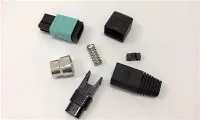
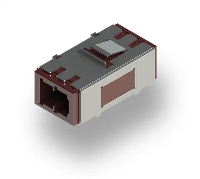
Fiber optic technology has revolutionized the way we transmit data, offering high - speed, reliable, and long - distance communication capabilities. Among the various fiber optic connectors, the FC (Ferrule Connector) is a well - known and widely used type. As a leading supplier of Fiber Optic FC Connectors, I am often asked about the data transmission rate of these connectors. In this blog, I will delve into the details of the data transmission rate of Fiber Optic FC Connectors, exploring the factors that influence it and its significance in modern communication systems.
Understanding Fiber Optic FC Connectors
Before discussing the data transmission rate, it is essential to understand what Fiber Optic FC Connectors are. The FC connector was one of the first connectors used in fiber optic networks. It features a threaded coupling mechanism, which provides a secure connection and excellent stability. The connector has a ceramic ferrule that precisely aligns the optical fibers, minimizing signal loss and ensuring efficient light transmission.
FC connectors are available in both single - mode and multi - mode versions. Single - mode FC connectors are designed for long - distance communication, typically used in telecommunications networks, data centers, and other applications where high - speed, long - haul data transmission is required. Multi - mode FC connectors, on the other hand, are suitable for shorter distances, such as in local area networks (LANs) and enterprise networks.
Factors Affecting the Data Transmission Rate of Fiber Optic FC Connectors
The data transmission rate of a Fiber Optic FC Connector is not solely determined by the connector itself. Instead, it is influenced by a combination of factors, including the type of fiber, the quality of the connector, and the transmission equipment used.
Type of Fiber
The type of fiber used with the FC connector plays a crucial role in determining the data transmission rate. Single - mode fibers have a smaller core diameter (typically 9 microns) compared to multi - mode fibers (usually 50 or 62.5 microns). This allows single - mode fibers to transmit light in a single mode, resulting in less dispersion and lower attenuation. As a result, single - mode FC connectors can support much higher data transmission rates over longer distances. For example, single - mode FC connectors can achieve data rates of up to 100 Gbps or even higher in some advanced systems, making them ideal for high - speed backbone networks.
Multi - mode fibers, on the other hand, support multiple modes of light propagation. While they are more cost - effective and easier to install for short - distance applications, their data transmission rates are generally lower than those of single - mode fibers. Multi - mode FC connectors can typically support data rates of up to 10 Gbps or 40 Gbps, depending on the specific type of multi - mode fiber and the transmission technology used.
Quality of the Connector
The quality of the FC connector itself also has a significant impact on the data transmission rate. A high - quality connector with precise ferrule alignment and low insertion loss can ensure efficient light coupling between the fibers, minimizing signal degradation. Poorly manufactured connectors may have issues such as misaligned ferrules, scratches on the ferrule end - face, or improper polishing, which can lead to increased insertion loss, return loss, and signal distortion. These problems can limit the data transmission rate and reduce the overall performance of the fiber optic link.
As a supplier, we take great care in manufacturing our Fiber Optic FC Connectors to ensure the highest quality. Our connectors are made with precision - engineered ceramic ferrules and undergo strict quality control processes, including end - face inspection and optical performance testing. This ensures that our connectors meet or exceed industry standards and can support high - speed data transmission.
Transmission Equipment
The transmission equipment used in conjunction with the FC connector also affects the data transmission rate. The transmitter and receiver modules, as well as the network switches and routers, need to be capable of handling the desired data rate. For example, if you want to achieve a data rate of 100 Gbps, you need to use compatible 100 Gbps transceiver modules and network equipment. Additionally, the encoding and modulation techniques used in the transmission system can also impact the data rate. Advanced modulation techniques, such as quadrature amplitude modulation (QAM), can increase the data transmission rate by encoding more data per symbol.
Typical Data Transmission Rates of Fiber Optic FC Connectors
Based on the above factors, here are some typical data transmission rates for Fiber Optic FC Connectors:
Single - mode FC Connectors
- 1 Gbps and 10 Gbps: These are common data rates for single - mode FC connectors in many existing telecommunications and data center networks. They are suitable for applications such as Ethernet LANs, storage area networks (SANs), and video surveillance systems.
- 40 Gbps and 100 Gbps: With the increasing demand for high - speed data transmission, single - mode FC connectors are now being used to support 40 Gbps and 100 Gbps data rates. These high - speed connections are typically used in data center interconnects, high - performance computing networks, and emerging 5G wireless backhaul networks.
Multi - mode FC Connectors
- 1 Gbps and 10 Gbps: Multi - mode FC connectors are commonly used for 1 Gbps and 10 Gbps Ethernet applications in local area networks and enterprise networks. They are cost - effective solutions for short - distance data transmission within buildings or campuses.
- 40 Gbps: Some advanced multi - mode fibers, such as OM4 and OM5, can support 40 Gbps data rates over short distances (up to a few hundred meters) when used with appropriate transmission equipment and FC connectors.
Significance of High - Speed Data Transmission in Modern Communication Systems
In today's digital age, high - speed data transmission is essential for a wide range of applications. From streaming high - definition video and online gaming to cloud computing and big data analytics, the demand for faster and more reliable data transfer is constantly increasing.
Fiber Optic FC Connectors, with their ability to support high data transmission rates, play a vital role in meeting these demands. In data centers, high - speed FC connectors enable the rapid transfer of large amounts of data between servers, storage systems, and network switches, improving the overall efficiency and performance of the data center. In telecommunications networks, they support high - speed broadband services, such as fiber - to - the - home (FTTH) and 5G wireless backhaul, providing users with fast and stable internet access.


Comparison with Other Fiber Optic Connectors
There are several other types of fiber optic connectors available in the market, such as Fiber Optic Lc Connectors, Fiber Optic Fast Connector Sc, and Fiber Optic E2000 Connector. Each type of connector has its own advantages and disadvantages in terms of data transmission rate, size, cost, and ease of installation.
- LC Connectors: LC connectors are smaller in size compared to FC connectors and are widely used in data centers and LANs. They can support high data transmission rates, similar to FC connectors, and are known for their high - density applications.
- SC Connectors: SC connectors are easy to install and are commonly used in both single - mode and multi - mode fiber optic networks. They are also capable of supporting high data rates and are often used in telecommunications and enterprise networks.
- E2000 Connectors: E2000 connectors feature a dust - proof shutter mechanism, which protects the ferrule end - face from dust and debris. They can support high - speed data transmission and are suitable for applications where environmental protection is required.
Conclusion
In conclusion, the data transmission rate of a Fiber Optic FC Connector is influenced by various factors, including the type of fiber, the quality of the connector, and the transmission equipment used. Single - mode FC connectors can support high data rates of up to 100 Gbps or more, making them suitable for long - distance, high - speed applications. Multi - mode FC connectors are more cost - effective for short - distance applications and can typically support data rates of up to 10 Gbps or 40 Gbps.
As a supplier of Fiber Optic FC Connectors, we are committed to providing high - quality connectors that can meet the diverse needs of our customers. Whether you need connectors for a small LAN or a large - scale data center, our products are designed to deliver reliable and high - speed data transmission.
If you are interested in purchasing Fiber Optic FC Connectors or have any questions about their data transmission rates and applications, please feel free to contact us for more information and to discuss your specific requirements. We look forward to working with you to provide the best fiber optic solutions for your network.
References
- "Fiber Optic Communication Technology" by Gerd Keiser
- "Optical Fiber Telecommunications VI" edited by Ivan P. Kaminow, Tingye Li, and Alan E. Willner