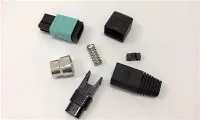
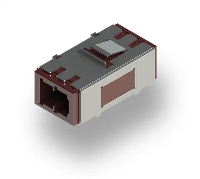
Hey there! As a supplier of Fiber Optic MPO Adapters, I often get asked about the difference between simplex and duplex Fiber Optic MPO Adapters. So, I thought I'd write this blog to clear up any confusion and give you a better understanding of these two types of adapters.


First off, let's talk about what MPO stands for. MPO stands for Multi - fiber Push On. These adapters are used to connect multiple optical fibers at once, which makes them super useful in high - density fiber optic networks. They can handle anywhere from 4 to 72 fibers, but the most common ones are 8, 12, and 24 - fiber configurations. You can check out our Mtp®/mpo - 8/12/24 Black Fiber Optic Adapter/coupler with Flange, Key Up To Down for some great options.
Simplex Fiber Optic MPO Adapters
Simplex MPO adapters are designed to work with a single fiber connection. They are mainly used in applications where you only need to transmit data in one direction. For example, in some simple surveillance systems, you might just need to send video data from a camera to a monitoring station. In this case, a simplex MPO adapter would do the job.
One of the big advantages of simplex adapters is their simplicity. They are easier to install and manage because you only have to deal with one fiber. Also, they are generally more cost - effective than duplex adapters if you don't need bi - directional communication. If you're on a tight budget and your application doesn't require sending and receiving data simultaneously, a simplex adapter is a great choice.
However, simplex adapters do have their limitations. Since they can only transmit data in one direction, they are not suitable for applications that need real - time two - way communication. For instance, in a local area network (LAN) where computers need to exchange data back and forth constantly, a simplex adapter would not be sufficient.
Duplex Fiber Optic MPO Adapters
Duplex MPO adapters, on the other hand, are built to support bi - directional communication. They have two fibers, one for transmitting data and the other for receiving it. This makes them ideal for applications where real - time, two - way data transfer is crucial.
In a data center, for example, servers need to send and receive data all the time. Duplex MPO adapters ensure that this communication can happen smoothly and efficiently. They are also commonly used in telecommunications networks, where they enable phone calls, video conferencing, and high - speed internet connections.
The main drawback of duplex adapters is that they are more complex and costly than simplex adapters. The installation process is a bit more involved because you have to manage two fibers instead of one. But the benefits in terms of functionality usually outweigh the extra cost and complexity for many applications.
Key Differences
Let's break down the key differences between simplex and duplex Fiber Optic MPO Adapters in more detail:
- Functionality: As mentioned earlier, simplex adapters are for one - way data transmission, while duplex adapters support two - way communication. This is the most fundamental difference between the two.
- Fiber Count: Simplex adapters have one fiber, while duplex adapters have two. This difference in fiber count directly affects their ability to handle data flow.
- Cost: Simplex adapters are generally cheaper because they are less complex and use fewer materials. If cost is a major concern and your application doesn't require bi - directional communication, simplex is the way to go.
- Installation and Management: Installing and managing a simplex adapter is easier since there's only one fiber to deal with. Duplex adapters require a bit more care and attention due to the two - fiber setup.
Choosing the Right Adapter
When it comes to choosing between simplex and duplex Fiber Optic MPO Adapters, you need to consider your specific application requirements. Here are some questions to ask yourself:
- What type of data transfer do I need? If it's one - way, like sending sensor data to a central server, a simplex adapter will work fine. But if you need two - way communication, such as in a video conferencing system, a duplex adapter is necessary.
- What's my budget? If you're working with a limited budget and your application can get by with one - way data transfer, go for the simplex adapter. However, if performance and functionality are more important than cost, invest in a duplex adapter.
- How complex is my network? In a simple network with few devices, a simplex adapter might be sufficient. But in a large, complex network where multiple devices need to communicate with each other, a duplex adapter is usually the better choice.
Other Fiber Optic Adapters
In addition to simplex and duplex MPO adapters, there are other types of fiber optic adapters available. For example, the Fiber Optic Fc Adaptor is a popular choice in some applications. It has a screw - on coupling mechanism, which provides a very secure connection. And the Fiber Optic Mtrj Adapter is a smaller, more compact adapter that's often used in high - density environments.
Conclusion
In conclusion, understanding the difference between simplex and duplex Fiber Optic MPO Adapters is crucial for anyone involved in fiber optic network design and installation. Simplex adapters are great for simple, one - way data transfer applications and are more cost - effective. Duplex adapters, on the other hand, are essential for applications that require real - time, two - way communication.
If you're still not sure which type of adapter is right for your project, don't hesitate to reach out. We're here to help you make the best choice based on your specific needs. Whether you need a simplex or duplex Fiber Optic MPO Adapter, or any other type of fiber optic adapter like the Fiber Optic Fc Adaptor or Fiber Optic Mtrj Adapter, we've got you covered. Contact us today to start a procurement discussion and find the perfect solution for your fiber optic needs.
References
- "Fiber Optic Communication Systems" by Govind P. Agrawal
- Industry whitepapers on fiber optic network design and components.