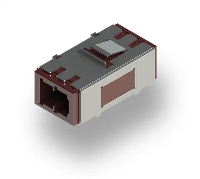
Hey there! As a supplier of Fiber Optic SC Pigtails, I'm super stoked to chat with you about their transmission speed capabilities. You see, Fiber Optic SC Pigtails are like the unsung heroes in the world of high - speed data transfer.
Let's start with the basics. A Fiber Optic SC Pigtail is a short, single - fiber cable with an SC connector on one end and a bare fiber on the other. It's mainly used to connect fiber optic cables to network devices like switches, routers, and servers. The SC connector, with its push - and - pull design, provides a quick and reliable connection, which is crucial for maintaining high - speed data flow.
So, what are the transmission speed capabilities of these little wonders? Well, it all boils down to a few key factors.
Fiber Type
First off, the type of fiber used in the pigtail plays a huge role. There are two main types: single - mode fiber (SMF) and multi - mode fiber (MMF).
Single - mode fiber is like the speed demon of the fiber optic world. It's designed to carry a single ray of light, which allows for extremely long - distance and high - speed data transmission. SMF Fiber Optic SC Pigtails can support speeds of up to 100 Gbps and even higher in some advanced setups. This makes them perfect for long - haul telecommunications, data centers with large - scale networks, and high - performance computing applications. For example, in a big data center where thousands of servers need to communicate with each other at lightning - fast speeds, SMF pigtails are the go - to choice.
On the other hand, multi - mode fiber is more like a workhorse for shorter distances. It can carry multiple rays of light simultaneously. MMF Fiber Optic SC Pigtails typically support speeds ranging from 1 Gbps to 10 Gbps, although some newer versions can reach up to 40 Gbps or 100 Gbps over shorter distances (usually up to a few hundred meters). They're commonly used in local area networks (LANs), such as in office buildings or campus networks, where the distances between devices are relatively short.
Wavelength
The wavelength of the light used in the fiber optic transmission also affects the speed. Different wavelengths have different propagation characteristics in the fiber.
For single - mode fiber, the most common wavelengths are 1310 nm and 1550 nm. The 1550 nm wavelength is often preferred for long - distance and high - speed applications because it has lower attenuation (signal loss) compared to 1310 nm. This means that data can be transmitted over longer distances without significant degradation, allowing for higher speeds.
In multi - mode fiber, the 850 nm and 1300 nm wavelengths are commonly used. The 850 nm wavelength is more suitable for lower - speed applications, while the 1300 nm wavelength can support higher speeds over longer distances within the multi - mode fiber's capabilities.
Network Equipment
The performance of the network equipment connected to the Fiber Optic SC Pigtail is another important factor. Even if you have a high - speed pigtail, if the connected devices can't handle the speed, you won't be able to achieve the maximum transmission rate.
For instance, if you're using an older switch that only supports 1 Gbps connections, even if your Fiber Optic SC Pigtail is capable of 10 Gbps or higher, you'll be limited to 1 Gbps. So, it's crucial to make sure that all the components in your network are compatible and can support the desired speed.
Comparison with Other Pigtails
Now, let's compare Fiber Optic SC Pigtails with some other types of pigtails, like Fiber Optic Lc Pigtails, Fiber Optic St Pigtails, and Fiber Optic E2000 Pigtail.
Fiber Optic LC Pigtails have a smaller form factor compared to SC pigtails. They're often used in high - density applications, such as in data centers where space is limited. In terms of transmission speed, they can support similar speeds as SC pigtails, depending on the fiber type and other factors.
Fiber Optic ST Pigtails use a bayonet - style connector, which is a bit older compared to the SC and LC connectors. They're still used in some legacy networks. Their transmission speed capabilities are also similar to SC pigtails, but they may be less suitable for high - speed, high - density applications due to their larger size and the way the connector is designed.
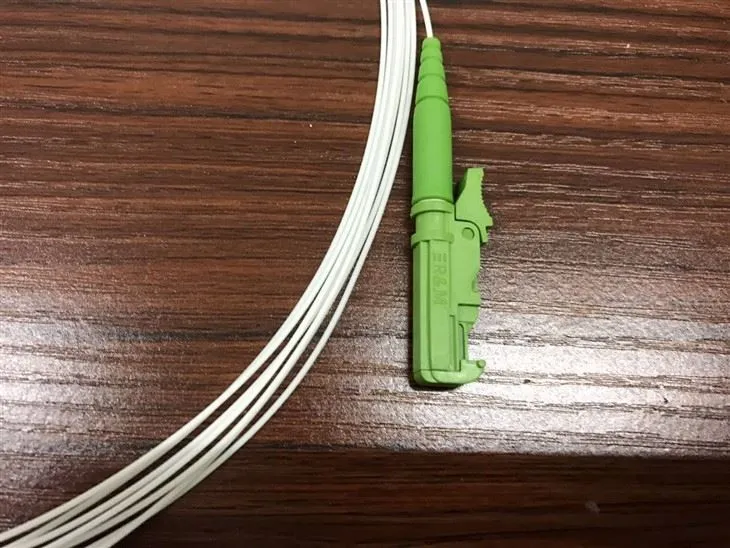
Fiber Optic E2000 Pigtails have a unique dust - proof design, which makes them ideal for harsh environments. They can also support high - speed data transmission, similar to SC pigtails.
Applications Based on Speed
Depending on the transmission speed capabilities, Fiber Optic SC Pigtails are used in a wide range of applications.

For low - speed applications (up to 1 Gbps), they can be used in small office or home networks, where the data transfer requirements are relatively low. For example, connecting a home router to a local server or a few desktop computers.
In medium - speed applications (1 - 10 Gbps), they're commonly used in enterprise LANs, video surveillance systems, and some educational institutions. These environments require a decent amount of data transfer, but not as high as in large - scale data centers.
For high - speed applications (10 Gbps and above), as mentioned earlier, data centers, telecommunications networks, and high - performance computing are the main users. These applications demand ultra - fast data transfer to ensure smooth operation and real - time communication.
Conclusion
In conclusion, the transmission speed capabilities of Fiber Optic SC Pigtails are quite impressive and can vary depending on the fiber type, wavelength, and the network equipment they're connected to. Whether you need low - speed, medium - speed, or high - speed data transfer, there's a Fiber Optic SC Pigtail that can meet your needs.
If you're in the market for Fiber Optic SC Pigtails or want to learn more about their speed capabilities and how they can fit into your network, I'd love to have a chat with you. We can discuss your specific requirements and find the best solution for you. So, don't hesitate to reach out for a procurement discussion.
References
- “Fiber Optic Network Design and Implementation.” Cisco Press.
- “Optical Fiber Communications: Principles and Practice.” John M. Senior.