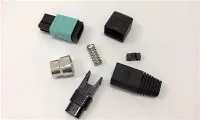
Hey there! As a supplier of Fiber Optic FC Connectors, I often get asked if these connectors are compatible with all fiber optic cables. It's a great question, and one that we'll dive into right here.
First off, let's understand what a Fiber Optic FC Connector is. The FC connector, which stands for Ferrule Connector or Field Assembly Connector, is one of the early types of fiber optic connectors. It has a threaded coupling mechanism, which provides a secure connection. It's widely used in single - mode fiber applications, especially in telecommunications and data centers.
Now, when it comes to compatibility with fiber optic cables, it's not a one - size - fits - all situation. There are several factors that determine whether an FC connector will work with a particular fiber optic cable.
Cable Type
Fiber optic cables come in two main types: single - mode and multi - mode. Single - mode cables have a small core diameter (usually around 9 microns) and are designed to carry a single ray of light, allowing for long - distance transmission. Multi - mode cables, on the other hand, have a larger core diameter (typically 50 or 62.5 microns) and can carry multiple rays of light simultaneously, making them suitable for shorter - distance applications like local area networks (LANs).
FC connectors are primarily designed for single - mode fiber optic cables. They work really well in these setups because the precision of the connector can match the requirements of single - mode transmission. However, they can also be used with multi - mode cables in some cases, but the performance might not be optimal. For example, the alignment of the connector might not be as precise as what multi - mode cables need for maximum efficiency.
Cable Jacket and Diameter
The jacket and diameter of the fiber optic cable also play a role in compatibility. Different cables have different jacket materials and thicknesses. Some FC connectors are designed to work with specific cable diameters. For instance, if you have a thick - jacketed cable, you need an FC connector that can accommodate that size. If the cable diameter is too large for the connector, it won't fit properly, and you won't be able to make a secure connection.
Connector End - Face Finish
The end - face finish of the FC connector is crucial for a good connection with the fiber optic cable. There are different types of end - face finishes, such as PC (Physical Contact), APC (Angled Physical Contact), and UPC (Ultra - Physical Contact).
PC finish is the most common and provides a flat, smooth end - face. It's suitable for most general - purpose applications. APC finish has an angled end - face (usually 8 degrees), which reduces back - reflection and is ideal for applications where low back - reflection is critical, like in some telecommunications systems. UPC finish is similar to PC but has a more polished surface, providing even better performance in terms of insertion loss and back - reflection.
When choosing an FC connector for a fiber optic cable, you need to make sure the end - face finish is compatible with the requirements of your system. If the end - face finish is not right, it can lead to increased signal loss and poor performance.
Compatibility with Other Connectors
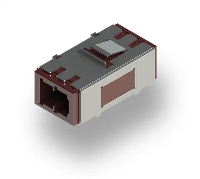
Sometimes, you might need to connect an FC - terminated cable to other types of fiber optic connectors. In these cases, you need to use adapter or coupler devices. For example, if you want to connect an FC connector to an Fiber Optic Mu Connector, you'll need an FC - to - Mu adapter. These adapters are designed to align the fibers properly and ensure a good connection between different connector types.
Industry Standards
The fiber optic industry has set certain standards for connectors and cables. For an FC connector to be compatible with a fiber optic cable, both the connector and the cable should meet relevant industry standards. Standards like those set by the Telecommunications Industry Association (TIA) and the International Electrotechnical Commission (IEC) ensure that the products are of high quality and can work together effectively.


If you're using an FC connector that doesn't meet the standards, it might not work well with a cable that does. This can lead to issues like poor signal transmission, high insertion loss, and increased risk of damage to the cable or connector.
Practical Examples
Let's say you're setting up a long - distance telecommunications link. You'll likely be using single - mode fiber optic cables. In this case, an FC connector with an APC end - face finish would be a great choice. The single - mode cable is well - matched with the FC connector's design, and the APC finish will help reduce back - reflection, ensuring a clear and strong signal over the long distance.
On the other hand, if you're working on a small LAN within an office building, multi - mode cables are more common. You could use an FC connector with a PC end - face finish, but you might find that other connectors like the Conector Ftth Fiber Optic Sc Fast Connector or Fiber Optic Fast Connector Ftth Pre - embedded Sc are more suitable because they are often better optimized for multi - mode applications.
Conclusion
So, to answer the question, no, a Fiber Optic FC Connector is not compatible with all fiber optic cables. Compatibility depends on several factors, including cable type, jacket and diameter, end - face finish, and industry standards.
If you're in the market for Fiber Optic FC Connectors or need advice on choosing the right connector for your fiber optic cables, don't hesitate to reach out. We're here to help you make the best decision for your specific needs. Whether you're setting up a small LAN or a large - scale telecommunications network, we've got the expertise and the products to ensure a successful installation.
References
- Telecommunications Industry Association (TIA) standards
- International Electrotechnical Commission (IEC) standards
- Various fiber optic industry whitepapers and technical documents