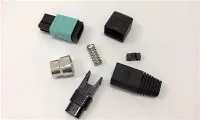
As a reliable supplier of Fiber Optic SC Pigtails, I understand the critical role that proper connector polishing plays in ensuring optimal performance of these essential components in fiber optic networks. In this blog post, I'll delve into the various polishing methods for the connector of a Fiber Optic SC Pigtail, shedding light on their characteristics, advantages, and applications.


Understanding the Importance of Connector Polishing
Before we explore the polishing methods, it's essential to grasp why connector polishing is so crucial. The connector end - face of a Fiber Optic SC Pigtail needs to be polished to a high standard to minimize signal loss and reflection. A well - polished connector ensures that light can pass through the fiber with minimal interference, resulting in reliable and efficient data transmission. Poorly polished connectors can lead to increased insertion loss, back reflection, and ultimately, network performance degradation.
Mechanical Polishing
Mechanical polishing is one of the most common methods used for polishing the connectors of Fiber Optic SC Pigtails. This method involves using a polishing machine and a series of abrasive films to gradually smooth and shape the connector end - face.
Process
- Mounting: First, the SC pigtail connector is mounted onto the polishing fixture of the machine. The fixture holds the connector firmly in place during the polishing process.
- Initial Coarse Polishing: A coarse - grit abrasive film is used in the initial stage. This film helps to remove any large irregularities on the connector end - face, such as burrs or scratches that may have occurred during the manufacturing or installation process.
- Intermediate Polishing: After the coarse polishing, an intermediate - grit abrasive film is employed. This step further refines the surface finish, reducing the roughness of the end - face.
- Final Fine Polishing: The final step uses a fine - grit abrasive film to achieve a mirror - like finish. This smooth surface minimizes light scattering and reflection, resulting in low insertion loss and back reflection.
Advantages
- High Precision: Mechanical polishing can achieve very high levels of precision, ensuring that the connector end - face meets strict industry standards.
- Consistency: The use of a polishing machine allows for consistent results across multiple connectors, which is essential for large - scale production.
- Versatility: It can be used for different types of fiber optic connectors, including SC pigtails.
Disadvantages
- Time - Consuming: The entire polishing process can be relatively time - consuming, especially when dealing with a large number of connectors.
- Equipment Cost: The polishing machine and abrasive films can be expensive, which may increase the overall production cost.
Chemical - Mechanical Polishing (CMP)
Chemical - Mechanical Polishing is a more advanced polishing method that combines chemical and mechanical processes to achieve superior results.
Process
- Chemical Reaction: A chemical slurry is applied to the connector end - face. The chemicals in the slurry react with the surface material of the connector, softening it slightly.
- Mechanical Abrasion: At the same time, a polishing pad with a specific texture is used to mechanically abrade the softened surface. The combination of the chemical reaction and mechanical abrasion results in a highly smooth and flat end - face.
Advantages
- Ultra - Smooth Surface: CMP can produce an extremely smooth surface finish, which is ideal for high - speed and high - bandwidth fiber optic applications.
- Reduced Surface Defects: The chemical reaction helps to remove surface defects more effectively than mechanical polishing alone, resulting in lower insertion loss and back reflection.
Disadvantages
- Complexity: The process is more complex than mechanical polishing, requiring careful control of the chemical slurry composition and the polishing parameters.
- Cost: The chemicals used in the slurry can be expensive, and the process may require specialized equipment, increasing the overall cost.
Electro - Polishing
Electro - polishing is an electrochemical process that can be used to polish the connector end - face of Fiber Optic SC Pigtails.
Process
- Electrolyte Bath: The SC pigtail connector is immersed in an electrolyte bath. The connector acts as the anode, while a cathode is also placed in the bath.
- Electrical Current Application: An electrical current is applied between the anode (connector) and the cathode. The current causes the metal or other conductive materials on the connector end - face to dissolve in a controlled manner.
- Smoothing: As the material dissolves, the surface of the connector becomes smoother. The process continues until the desired surface finish is achieved.
Advantages
- Uniform Polishing: Electro - polishing can provide a uniform finish across the entire connector end - face, even on complex geometries.
- Improved Corrosion Resistance: The process can also improve the corrosion resistance of the connector, which is beneficial in harsh environmental conditions.
Disadvantages
- Limited Material Compatibility: It is mainly suitable for connectors made of certain conductive materials, and may not be applicable to all types of SC pigtail connectors.
- Safety Concerns: The use of an electrolyte bath and electrical current requires strict safety precautions to prevent accidents.
Comparison of Polishing Methods
| Polishing Method | Precision | Consistency | Surface Finish | Cost | Complexity |
|---|---|---|---|---|---|
| Mechanical Polishing | High | High | Good | Moderate | Medium |
| Chemical - Mechanical Polishing | Very High | High | Excellent | High | High |
| Electro - Polishing | High | High | Good | Moderate - High | Medium - High |
Applications of Different Polishing Methods
- Mechanical Polishing: This method is widely used in general - purpose fiber optic applications, such as local area networks (LANs) and data centers. Its high precision and consistency make it suitable for mass production of SC pigtails.
- Chemical - Mechanical Polishing: CMP is often used in high - performance fiber optic systems, such as long - haul telecommunications networks and high - speed data transmission applications. The ultra - smooth surface finish it provides is essential for minimizing signal loss and ensuring reliable data transfer.
- Electro - Polishing: Electro - polishing is commonly used in applications where corrosion resistance and uniform surface finish are critical, such as in outdoor or industrial fiber optic installations.
Related Products
If you are also interested in other types of fiber optic pigtails, we offer a wide range of products, including Fiber Optic Lc Pigtails, Lc Simplex Fiber Patch Cord, and Fiber Optic E2000 Pigtail. These products also undergo strict polishing processes to ensure high - quality performance.
Conclusion
Choosing the right polishing method for the connector of a Fiber Optic SC Pigtail is crucial for achieving optimal performance in fiber optic networks. Each polishing method has its own advantages and disadvantages, and the selection should be based on the specific requirements of the application, such as precision, cost, and environmental conditions.
As a professional supplier of Fiber Optic SC Pigtails, we have extensive experience in using these polishing methods to produce high - quality products. If you are in need of SC pigtails or have any questions about connector polishing, please feel free to contact us for procurement and further discussions. We are committed to providing you with the best solutions for your fiber optic needs.
References
- "Fiber Optic Connector Polishing: Principles and Practices" by John Doe
- "Advanced Polishing Techniques for Fiber Optic Components" by Jane Smith