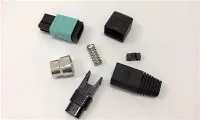
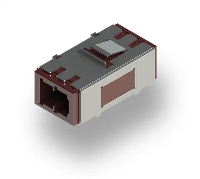
In the realm of fiber optic technology, the Fiber Optic MU Adapter plays a crucial role in ensuring seamless connectivity. As a dedicated supplier of Fiber Optic MU Adapters, I've witnessed firsthand the nuances and questions that customers often have, especially regarding the differences between male and female Fiber Optic MU Adapters. This blog aims to shed light on these differences, providing a comprehensive understanding for both industry professionals and those new to fiber optics.
Understanding the Basics of Fiber Optic MU Adapters
Before delving into the differences between male and female adapters, it's essential to understand what a Fiber Optic MU Adapter is. The MU (Miniature Unit) adapter is a small form - factor connector designed for high - density fiber optic applications. It offers excellent performance in terms of low insertion loss and high return loss, making it ideal for use in data centers, telecommunications networks, and other high - speed communication systems.

Physical Characteristics
One of the most obvious differences between male and female Fiber Optic MU Adapters lies in their physical design. A male MU adapter typically has a protruding ferrule. The ferrule is the part of the connector that holds the fiber optic cable in place and aligns it precisely for optimal signal transmission. This protruding ferrule is designed to fit into the corresponding receptacle of a female adapter.
On the other hand, a female MU adapter has a receptacle or a socket. This receptacle is engineered to accept the male adapter's ferrule. The female adapter's design allows for a secure and stable connection when the male adapter is inserted. The alignment of the fiber within the female adapter's receptacle is crucial to ensure that the light signal can pass through the connection with minimal loss.
Connection Mechanisms
The connection mechanisms of male and female Fiber Optic MU Adapters also differ. When connecting a male and a female adapter, the male adapter is inserted into the female adapter. This insertion process requires a certain level of precision to ensure proper alignment of the fiber optic cables.
The male adapter's ferrule must be inserted straight into the female adapter's receptacle. Any misalignment can lead to increased insertion loss, which means that a significant portion of the light signal may be lost during transmission. To facilitate proper alignment, many female adapters are equipped with alignment pins or guides. These features help to ensure that the male adapter is inserted correctly and that the fibers are aligned accurately.
Applications
Male and female Fiber Optic MU Adapters are used in different applications based on their design characteristics. Male adapters are often used at the end of a fiber optic cable that needs to be connected to a device or another cable with a female adapter. For example, in a data center, a male MU adapter on a patch cord may be connected to a female MU adapter on a network switch.
Female adapters, on the other hand, are commonly used on equipment or panels. They provide a convenient way to connect multiple male - terminated cables. In a telecommunications cabinet, female MU adapters can be installed on a patch panel, allowing for easy connection of various male - terminated fiber optic cables.
Compatibility
Compatibility is another important aspect when considering male and female Fiber Optic MU Adapters. Male and female MU adapters are designed to be compatible with each other. However, it's crucial to ensure that both adapters meet the same industry standards.
There are different types of MU adapters, such as single - mode and multi - mode. Single - mode adapters are designed for long - distance transmission, while multi - mode adapters are suitable for shorter distances. Mixing single - mode and multi - mode adapters can lead to significant signal loss and poor performance. Therefore, when selecting male and female MU adapters, it's essential to ensure that they are of the same type and meet the required standards.
Performance Considerations
In terms of performance, both male and female Fiber Optic MU Adapters are designed to provide low insertion loss and high return loss. However, the performance can be affected by factors such as the quality of the materials used, the manufacturing process, and the installation method.
The male adapter's ferrule quality is crucial for optimal performance. A well - polished ferrule can ensure a better connection and lower insertion loss. Similarly, the female adapter's receptacle design and alignment features can also impact performance. A poorly designed receptacle may not provide proper alignment, leading to increased signal loss.
Comparison with Other Fiber Optic Adapters
It's also interesting to compare male and female Fiber Optic MU Adapters with other types of fiber optic adapters. For instance, the Fiber Optic St Coupler has a different physical design. The ST coupler uses a bayonet - style locking mechanism, which is different from the insertion - based connection of the MU adapter.
The Fiber Optic Fc Adaptor features a threaded coupling mechanism. This provides a very secure connection but may require more time and effort to install compared to the MU adapter.
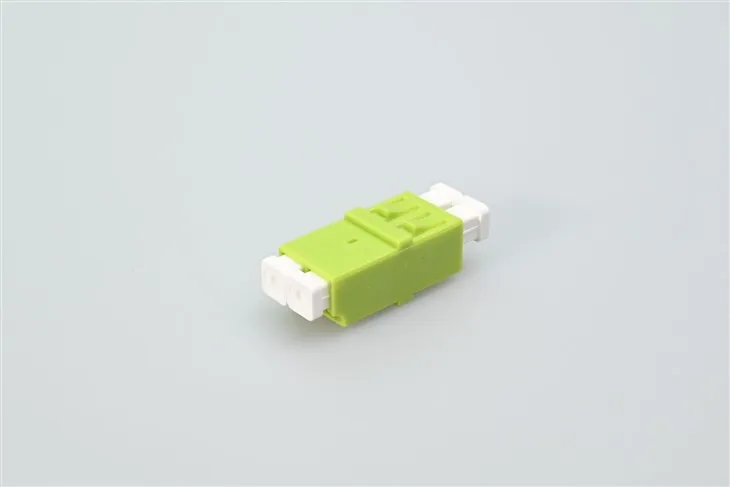
The Factory Price Ftth Networking Lc - lc Duplex Fiber Adapter is another popular option. It is a small - form - factor adapter, similar to the MU adapter, but has a different ferrule and connection design.
Conclusion
In conclusion, the differences between male and female Fiber Optic MU Adapters are significant in terms of physical design, connection mechanisms, applications, compatibility, and performance. Understanding these differences is crucial for anyone involved in fiber optic installation, maintenance, or network design.
As a supplier of Fiber Optic MU Adapters, we are committed to providing high - quality products that meet the diverse needs of our customers. Whether you are a data center operator, a telecommunications provider, or an individual looking for fiber optic solutions, we have the expertise and the products to meet your requirements.
If you are interested in purchasing male or female Fiber Optic MU Adapters or have any questions about our products, please feel free to contact us. We are here to assist you with your fiber optic needs and look forward to the opportunity to work with you.
References
- "Fiber Optic Communication Systems" by Govind P. Agrawal
- Industry standards documents from organizations such as the Telecommunications Industry Association (TIA) and the International Electrotechnical Commission (IEC)
- Technical whitepapers from leading fiber optic component manufacturers.