Hey there! As a supplier of Fiber Optic SC Pigtails, I'm super excited to take you through the manufacturing processes of these nifty little components. Fiber optic SC pigtails are widely used in various networking and telecommunications applications, and understanding how they're made can give you a better grasp of their quality and performance.
Starting with the Basics: The Fiber Optic Cable
The first step in making a Fiber Optic SC Pigtail is selecting the right fiber optic cable. There are different types of fiber cables out there, like single - mode and multi - mode. Single - mode fibers are great for long - distance transmissions, while multi - mode fibers are more suitable for shorter distances.
We source high - quality fiber optic cables from trusted manufacturers. These cables consist of a core, which is the central part where light travels, and a cladding that surrounds the core. The core and cladding have different refractive indices, which helps in keeping the light signals inside the core as they travel along the cable.


Preparing the Cable
Once we have the fiber optic cable, we need to prepare it for further processing. First, we strip off the outer jacket of the cable. This outer jacket is usually made of a tough plastic material that protects the inner fiber from physical damage, moisture, and other environmental factors. We use special stripping tools to carefully remove the jacket without damaging the fiber inside.
After stripping the jacket, we're left with the buffer tubes. These buffer tubes further protect the individual fibers. We carefully remove the buffer tubes as well, exposing the bare fiber. At this stage, we also clean the bare fiber using a special cleaning solution and lint - free wipes. This is crucial because any dirt or debris on the fiber can affect the transmission of light signals.
Termination with the SC Connector
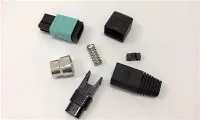
Now comes the most important part: terminating the fiber with the SC connector. The SC connector is a popular choice in the fiber optic industry because it's easy to use and provides a reliable connection.
We start by inserting the prepared fiber into the SC connector body. The connector body has a precise alignment mechanism that ensures the fiber is centered correctly. There are different methods for terminating the fiber in the connector, and one of the most common ones is the fusion splicing method.
In fusion splicing, we use a fusion splicer machine. This machine uses an electric arc to melt the end of the fiber and the connector ferrule together. The heat from the arc causes the two materials to fuse, creating a permanent and low - loss connection. The fusion splicer also has a built - in monitoring system that checks the quality of the splice in real - time. It measures the loss of light at the splice point and makes sure it's within an acceptable range.
Another method is mechanical splicing. In mechanical splicing, we use a mechanical splice sleeve to hold the fiber and the connector ferrule together. The splice sleeve has a precise alignment groove that aligns the fiber and the ferrule. We then use an adhesive to secure the connection. Mechanical splicing is a quicker method compared to fusion splicing, but it usually has a slightly higher loss.
Polishing the Connector
After the fiber is terminated in the connector, the next step is to polish the connector end - face. Polishing is essential to ensure a smooth and flat surface for the light to pass through. A rough or uneven end - face can cause reflections and scattering of light, which can lead to signal loss.
We use a polishing machine that has different polishing stages. First, we start with a coarse polishing film to remove any large irregularities on the end - face. Then, we move on to finer polishing films to achieve a smooth and mirror - like finish. During the polishing process, we also use a polishing compound to help in the removal of material and to achieve a better finish.
Testing the Pigtail
Once the polishing is done, we test the Fiber Optic SC Pigtail to make sure it meets the required specifications. We use a variety of testing equipment, such as an optical time - domain reflectometer (OTDR) and a light source and power meter.
The OTDR sends a pulse of light into the fiber and measures the reflections and losses along the length of the fiber. It can detect any faults, such as breaks or high - loss splices, in the pigtail. The light source and power meter are used to measure the insertion loss and return loss of the pigtail. Insertion loss is the amount of light that is lost as it passes through the pigtail, while return loss is the amount of light that is reflected back from the end - face of the connector.
We also perform visual inspections of the connector end - face using a microscope. This helps us to detect any scratches, chips, or other defects that may not be visible to the naked eye. Only after the pigtail passes all the tests do we consider it ready for sale.
Packaging and Quality Assurance
After testing, we carefully package the Fiber Optic SC Pigtails to protect them during shipping and storage. We usually use protective caps on the connectors to prevent dust and damage. The pigtails are then placed in a box or a reel, depending on the length of the cable.
We also have a strict quality assurance process in place. We regularly sample the pigtails from each production batch and perform additional tests to ensure consistent quality. This helps us to maintain a high standard of product quality and to meet the expectations of our customers.
Other Related Products
If you're interested in other types of fiber optic pigtails, we also offer Fiber Optic St Pigtails and Fiber Optic E2000 Pigtail. These pigtails have different connector types and are suitable for different applications.
Let's Connect!
If you're in the market for high - quality Fiber Optic Sc Pigtail or any of our other fiber optic products, we'd love to hear from you. Whether you're a small business setting up a local network or a large telecommunications company, we can provide you with the right solutions for your needs. Don't hesitate to reach out and start a conversation about your fiber optic requirements.
References
- "Fiber Optic Communication Systems" by Govind P. Agrawal
- "Fiber Optic Splicing and Termination Handbook" by David G. Gloge