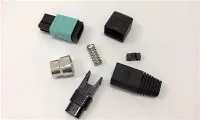
Hey there! As a supplier of fiber optic connectors, I've been getting a lot of questions lately about the special requirements for these connectors in medical applications. So, I thought I'd put together this blog post to share some insights.
First off, let's talk about why fiber optic connectors are even used in medical applications. Well, fiber optics offer a bunch of advantages that make them ideal for the medical field. They provide high - speed data transmission, are immune to electromagnetic interference, and can be very flexible, which is great for use in various medical devices.
Sterilization Compatibility
One of the most crucial requirements for fiber optic connectors in medical applications is sterilization compatibility. Medical equipment needs to be sterilized regularly to prevent the spread of infections. There are different sterilization methods such as autoclaving, chemical sterilization, and radiation sterilization.
Autoclaving is a common method where equipment is exposed to high - pressure steam at around 121 - 134°C for a certain period. Fiber optic connectors used in medical devices need to be able to withstand these high temperatures and pressures without degrading. The materials used in the connectors, like the housing and the fiber coating, must be carefully chosen. For example, some plastics may melt or deform under autoclaving conditions, so we need to use heat - resistant polymers.
Chemical sterilization involves using chemicals like ethylene oxide or hydrogen peroxide. These chemicals can be corrosive, so the connectors must be made of materials that are resistant to chemical attack. The connector's end - faces also need to be protected to ensure that the chemical agents don't damage the optical performance.
Radiation sterilization, such as gamma radiation, can break down some materials at the molecular level. The connectors should be designed with radiation - resistant materials to maintain their integrity. This is where our Fiber Optic Fast Connector Sc Apc shines. It's been engineered with materials that can handle these sterilization processes, ensuring that it can be used safely in medical devices that require regular sterilization.
Biocompatibility
Another key requirement is biocompatibility. When a fiber optic connector is used in a medical device that comes into contact with the human body, it must not cause any adverse reactions. This means that the materials used in the connector should not release any toxic substances or cause an immune response.
For example, if a fiber optic connector is used in an endoscope, which is inserted into the body, it needs to be made of biocompatible materials. The outer coating of the connector should be smooth and non - porous to prevent the growth of bacteria and other microorganisms. Our Fiber Optic Pigtail Fc Apc 12 Colors is designed with biocompatible materials, so you don't have to worry about any negative effects when it's used in medical applications where it may come into contact with the body.
High - Precision and Low - Loss
In medical applications, accurate data transmission is vital. Fiber optic connectors need to have high precision in terms of alignment and low insertion loss.
The alignment of the fibers within the connector is crucial. Even a small misalignment can lead to significant signal loss. In medical imaging, for example, where high - resolution images are required, any loss of signal can result in a blurry or inaccurate image. Our connectors are manufactured with high - precision alignment techniques to ensure that the fibers are perfectly aligned, minimizing insertion loss.
Low insertion loss is also essential for maintaining the integrity of the optical signal. In medical devices that rely on fiber optics for data transmission, such as some types of sensors, a high - loss connector can lead to false readings or unreliable data. Our Fiber Optic Fast Connector Ftth Pre - embedded Sc is designed to have extremely low insertion loss, ensuring accurate and reliable data transmission in medical applications.
Reliability and Durability
Medical devices are often used in critical situations, so the fiber optic connectors need to be highly reliable and durable. They should be able to withstand repeated use and mechanical stress.


In a busy hospital environment, medical devices are moved around, plugged in and out frequently. The connectors need to have a robust design to prevent damage from these mechanical stresses. They should also be able to operate in a wide range of environmental conditions, including temperature and humidity variations.
Our connectors are tested rigorously to ensure their reliability. We subject them to multiple cycles of plugging and unplugging, as well as temperature and humidity tests. This way, we can guarantee that they will perform well in real - world medical applications.
Miniaturization
With the trend towards smaller and more portable medical devices, there is a growing demand for miniaturized fiber optic connectors. These connectors need to be small enough to fit into compact medical equipment without sacrificing performance.
Miniaturization presents some challenges, such as maintaining the same level of precision and alignment in a smaller package. However, our engineering team has been working hard to develop connectors that are both small and high - performing. We use advanced manufacturing techniques to produce miniaturized connectors that meet the strict requirements of the medical industry.
Resistance to Contamination
Medical environments are prone to contamination from dust, blood, and other bodily fluids. Fiber optic connectors need to be resistant to these contaminants to maintain their optical performance.
The connector's end - faces are particularly vulnerable to contamination. Even a small particle of dust can cause significant signal loss. To address this issue, our connectors are designed with protective caps and coatings. The end - faces are also polished to a high standard to make them less likely to attract contaminants.
In conclusion, the special requirements for fiber optic connectors in medical applications are quite demanding. From sterilization compatibility and biocompatibility to high - precision, low - loss, reliability, miniaturization, and resistance to contamination, every aspect needs to be carefully considered.
As a supplier, we're committed to providing high - quality fiber optic connectors that meet these requirements. If you're in the medical industry and looking for reliable fiber optic connectors, I'd love to talk to you. Whether you need connectors for medical imaging, endoscopy, or other medical applications, we have the solutions you need. Let's have a chat about your specific requirements and see how we can work together to ensure the success of your medical devices.
References
- "Medical Fiber Optics: Principles and Applications" by Joseph W. Fleming
- "Fiber Optic Communication Systems" by Govind P. Agrawal
- Industry standards and guidelines related to medical device manufacturing and fiber optic technology.