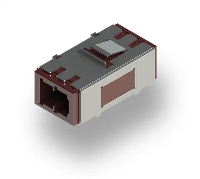
Fiber optic FC pigtails are essential components in modern communication networks, offering high - speed data transmission and reliable connectivity. As a supplier of fiber optic FC pigtails, I understand the importance of accurately identifying their types, and one of the most effective ways to do this is through color codes. In this blog, I will share in - depth knowledge on how to identify the type of a fiber optic FC pigtail by its color code.
Understanding the Basics of Fiber Optic FC Pigtails
Before delving into color codes, it's crucial to have a basic understanding of fiber optic FC pigtails. An FC pigtail consists of a single - fiber cable with an FC connector at one end and a bare fiber at the other. The FC connector, which stands for Ferrule Connector, is a threaded connector known for its precise alignment and low insertion loss. These pigtails are widely used in telecommunications, data centers, and CATV systems.
The Significance of Color Codes in Fiber Optics
Color codes in fiber optics serve as a standardized way to quickly identify different types of fibers, connectors, and their functions. They simplify the installation, maintenance, and troubleshooting processes, reducing the chances of human error. By simply looking at the color of a pigtail, technicians can determine its characteristics without having to perform complex tests.

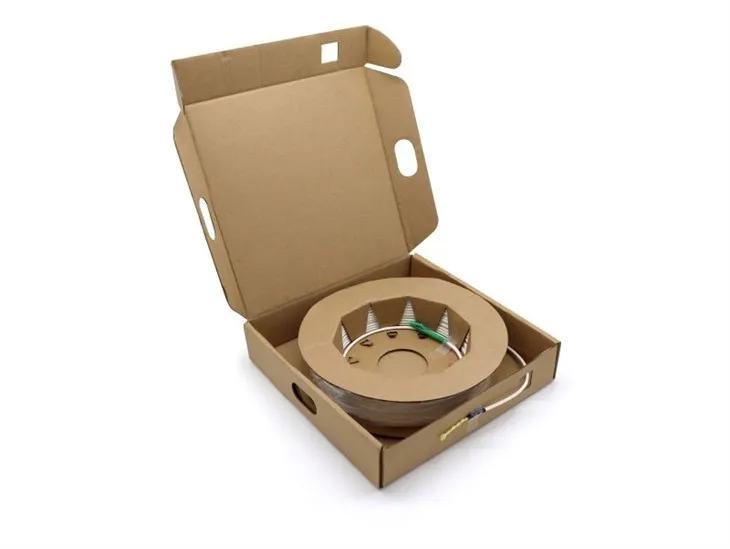
Color Codes for Fiber Types
Single - Mode Fiber (SMF)
Single - mode fiber is designed to carry a single ray of light, making it ideal for long - distance communication. The most common color code for single - mode fiber is yellow. When you see a fiber optic FC pigtail with a yellow jacket, it is highly likely a single - mode pigtail. Single - mode fibers have a small core diameter (usually around 9 microns), which allows for low dispersion and high - bandwidth transmission over long distances. For applications such as long - haul telecommunications and data center interconnects, single - mode FC pigtails are the go - to choice.
Multi - Mode Fiber (MMF)
Multi - mode fiber can carry multiple rays of light simultaneously. It is typically used for short - distance communication within buildings or campuses. The standard color code for multi - mode fiber is orange. An orange - jacketed fiber optic FC pigtail indicates a multi - mode pigtail. Multi - mode fibers have a larger core diameter (commonly 50 or 62.5 microns), which allows for easier coupling of light sources but has higher dispersion compared to single - mode fibers. They are suitable for applications like local area networks (LANs) and short - range data transmission.
Color Codes for Connector Types
In addition to fiber types, color codes can also be used to identify different connector types. Although the FC connector itself has a distinct threaded design, the color of the connector boot or the strain relief can provide additional information.
Standard FC Connector
The most common color for an FC connector boot is black. A black - booted FC pigtail is a standard configuration that can be used in a wide range of applications. It is a general - purpose option that is compatible with most fiber optic systems.
Special - Purpose FC Connectors
There are also special - purpose FC connectors with different color - coded boots. For example, a blue - booted FC connector may indicate a connector with a specific coating or performance characteristic, such as enhanced return loss performance. These special - purpose connectors are often used in high - precision applications where tight control of optical parameters is required.
Color Codes for Wavelengths
Some fiber optic systems use color codes to indicate the operating wavelengths of the fibers. While this is less common for FC pigtails, it can still be a useful identifier in certain situations.
850 nm Wavelength
In multi - mode fiber systems, an 850 nm wavelength is commonly used. Although there is no strict color code for this wavelength on FC pigtails, in some cases, a light - colored or white - marked section on the pigtail may indicate that it is optimized for 850 nm operation.
1310 nm and 1550 nm Wavelengths
For single - mode fiber systems, 1310 nm and 1550 nm are the two most common wavelengths. A purple or violet - colored mark on the pigtail may indicate that it is designed for 1310 nm operation, while a red - colored mark may suggest 1550 nm compatibility. However, these markings are not as standardized as fiber and connector color codes, and it's always best to refer to the manufacturer's specifications.
Other Considerations
While color codes are a valuable tool for identifying fiber optic FC pigtail types, it's important to note that they are not the only factor to consider. Some manufacturers may use non - standard color codes or additional markings for their products. Therefore, it's always recommended to check the product documentation or consult with the supplier for accurate information.
In addition to the fiber and connector color codes, the labeling on the pigtail itself can provide detailed information about its specifications, such as the fiber type, length, and attenuation. This information is crucial for ensuring that the pigtail meets the requirements of the specific application.
Related Fiber Optic Products
If you are interested in other types of fiber optic products, we also offer a wide range of options. For example, our Fiber Optic E2000 Pigtail is a high - performance pigtail with a unique E2000 connector, which is known for its dust - proof and high - reliability features. Our Fiber Optic Sc Pigtail is another popular choice, with a push - pull SC connector that is easy to install and use. And for those in need of patch cords, our Lc Simplex Fiber Patch Cord provides a reliable solution for connecting different fiber optic devices.
Conclusion
Identifying the type of a fiber optic FC pigtail by its color code is a simple yet effective way to streamline the installation and maintenance processes. By understanding the color codes for fiber types, connector types, and wavelengths, technicians can quickly determine the characteristics of a pigtail and ensure its proper use in different applications. As a supplier of fiber optic FC pigtails, we are committed to providing high - quality products with clear and accurate color coding.
If you are in the market for fiber optic FC pigtails or other related products, we invite you to contact us for more information and to discuss your specific requirements. Our team of experts is ready to assist you in finding the best solutions for your communication needs.
References
- "Fiber Optic Communications: Principles and Practice" by John M. Senior
- Telecommunications Industry Association (TIA) standards on fiber optic color coding