Hey there! As a supplier of fiber optic pigtails, I often get asked a super common question: "Can fiber optic pigtails be bent?" Well, let's dig into this topic and find out the ins and outs.
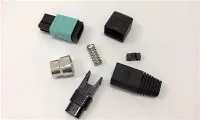
First off, let's understand what fiber optic pigtails are. They're basically short lengths of fiber optic cable with a connector pre - installed at one end. These little guys are crucial in the world of fiber optics, used in all sorts of applications like telecommunications, data centers, and even in some home setups.
Now, back to the main question. Yes, fiber optic pigtails can be bent, but there are some important things to keep in mind. You see, fiber optic cables work by transmitting light signals through a very thin glass or plastic core. When you bend the cable, it can affect how these light signals travel.
The most significant issue that comes with bending fiber optic pigtails is something called bend loss. Bend loss occurs when the light inside the fiber starts to leak out because of the bend. This leakage can lead to a decrease in the signal strength, which is a big no - no in any fiber optic system.
There are two types of bends we need to talk about: microbends and macrobends. Microbends are tiny, almost imperceptible bends that can happen due to things like improper installation or the cable being squeezed between objects. These microbends can cause a gradual loss of signal over time. Macrobends, on the other hand, are larger, visible bends. If you bend a fiber optic pigtail too sharply, you're creating a macrobend, and this can cause a significant and immediate drop in signal strength.
So, how much can you bend a fiber optic pigtail? Well, it depends on the type of fiber. Single - mode fibers, which are used for long - distance transmissions, are generally more sensitive to bending than multi - mode fibers. For single - mode fibers, the minimum bend radius is usually around 10 - 20 times the outer diameter of the cable. For multi - mode fibers, the minimum bend radius is typically a bit larger, around 15 - 30 times the outer diameter.
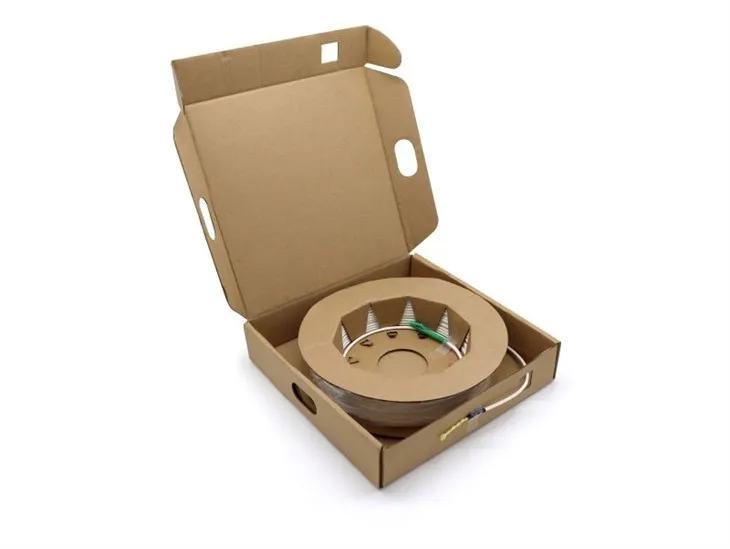
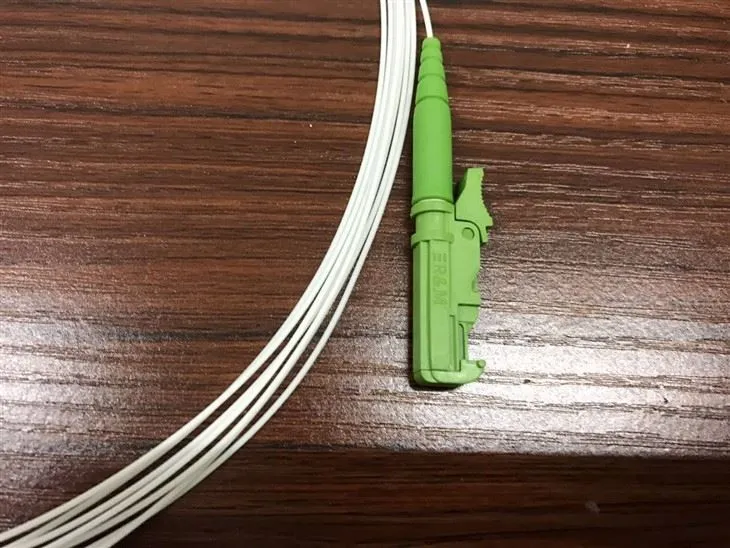
Let's say you're installing a Fiber Optic E2000 Pigtail. You need to be extra careful about bending it. These pigtails are often used in high - performance applications, and any excessive bending can lead to serious signal degradation.
Another thing to consider is the jacket of the fiber optic pigtail. The jacket provides some protection to the fiber inside. A well - designed jacket can help reduce the impact of bending on the fiber. Some jackets are made of materials that are more flexible and can withstand bending better than others.
When you're working with Lc Simplex Fiber Patch Cord, you'll notice that they are relatively easy to handle. But even so, you still need to follow the bend radius guidelines. These cords are commonly used in data centers, where signal reliability is of utmost importance.
Now, let's talk about how to prevent excessive bending. During installation, make sure you have enough slack in the cable. Don't pull it too tight, as this can cause unwanted bends. Use cable management tools like cable ties and raceways to keep the cable in place and prevent it from getting bent accidentally.
If you're using Fiber Optic Lc Pigtails, you can also invest in bend - insensitive fibers. These are specially designed fibers that can tolerate more bending without significant signal loss. They're a great option if you know your installation will involve some tight spaces or if you're worried about accidental bends.
In some cases, you might think that a small bend won't cause any problems. But over time, even a minor bend can lead to signal degradation. That's why it's always better to be safe than sorry and follow the recommended bend radius guidelines.
As a supplier, I've seen firsthand the issues that can arise from improper bending of fiber optic pigtails. Customers often come to me with problems like intermittent signal loss or slow data transfer speeds, and more often than not, it's because of a bend in the cable.
So, to sum it up, fiber optic pigtails can be bent, but you need to do it within the recommended bend radius. By following these guidelines, you can ensure that your fiber optic system works efficiently and reliably.
If you're in the market for high - quality fiber optic pigtails, we've got you covered. We offer a wide range of pigtails, including the ones I've mentioned above, all designed to meet the highest standards. Whether you're a small business setting up a new network or a large data center looking for reliable fiber solutions, we can provide the products you need.
If you have any questions or want to discuss your specific requirements, don't hesitate to reach out. We're here to help you make the right choices for your fiber optic needs. Let's work together to build a robust and efficient fiber optic system.
References
- "Fiber Optics: Principles and Practices" by John Senior
- Industry standards and guidelines from the Telecommunications Industry Association (TIA)