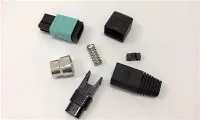
As a supplier of Fiber Optic FC Pigtails, I often encounter questions from customers regarding international standards for these essential components in the fiber optic industry. In this blog post, I will delve into the existence of international standards for Fiber Optic FC Pigtails, their significance, and how they impact our products and the broader market.
Understanding Fiber Optic FC Pigtails
Before we discuss international standards, let's briefly understand what Fiber Optic FC Pigtails are. A fiber optic pigtail is a short length of fiber optic cable with a connector pre - installed on one end. The FC (Ferrule Connector) pigtail, in particular, features a screw - type connector that provides a secure connection. These pigtails are widely used in various applications, including telecommunications, data centers, and industrial networking, to terminate fiber optic cables and connect them to other optical devices.
The Need for International Standards
In the global fiber optic market, international standards play a crucial role. They ensure the compatibility, reliability, and performance of fiber optic products across different manufacturers and regions. Without standards, it would be challenging for customers to integrate products from different suppliers, leading to inefficiencies, increased costs, and potential performance issues.
For Fiber Optic FC Pigtails, standards help define parameters such as the physical dimensions of the connector, the optical performance characteristics, and the testing methods. This consistency allows for seamless interconnection between different fiber optic systems and components.


Existing International Standards for Fiber Optic FC Pigtails
There are indeed several international standards that govern Fiber Optic FC Pigtails. One of the most well - known standards organizations in the fiber optic industry is the International Electrotechnical Commission (IEC).
IEC Standards
The IEC has developed a series of standards related to fiber optic connectors and pigtails. For example, IEC 61754 - 4 specifically addresses the FC connector. This standard defines the mechanical and optical interfaces of the FC connector, including the dimensions of the ferrule, the connector body, and the coupling mechanism. It also sets requirements for the insertion loss and return loss of the connector, which are critical parameters for evaluating the optical performance of Fiber Optic FC Pigtails.
Insertion loss refers to the amount of optical power that is lost when light passes through the connector. A low insertion loss is desirable as it ensures that more of the optical signal is transmitted through the connection. Return loss, on the other hand, measures the amount of light that is reflected back from the connector interface. High return loss indicates less reflection and better signal integrity.
Another important aspect covered by IEC standards is the environmental performance of the connectors. These standards specify the requirements for temperature, humidity, and vibration resistance, ensuring that the Fiber Optic FC Pigtails can operate reliably in different environmental conditions.
Telecommunications Industry Association (TIA) and Electronic Industries Alliance (EIA) Standards
In the United States, the Telecommunications Industry Association (TIA) and the Electronic Industries Alliance (EIA) have also developed standards for fiber optic components. The TIA/EIA - 568 series of standards, for instance, provides guidelines for the installation and testing of fiber optic cabling systems, including the use of FC pigtails. These standards are widely adopted in North America and have a significant influence on the global market.
How Standards Impact Our Products as a Supplier
As a supplier of Fiber Optic FC Pigtails, we adhere strictly to these international standards. Our manufacturing processes are designed to meet or exceed the requirements set by IEC, TIA, and EIA standards.
Quality Assurance
By following international standards, we can ensure the high quality of our products. Our production facilities are equipped with advanced testing equipment to measure insertion loss, return loss, and other optical parameters. Each Fiber Optic FC Pigtail undergoes rigorous testing before it leaves our factory, guaranteeing that it meets the specified standards.
Compatibility
Standards also ensure the compatibility of our products with other fiber optic components in the market. Customers can trust that our FC pigtails will work seamlessly with other devices, whether they are from our company or other suppliers. This compatibility is essential for building large - scale fiber optic networks.
Innovation and Development
While standards provide a baseline for product performance, they also drive innovation. We are constantly researching and developing new technologies to improve the performance of our Fiber Optic FC Pigtails further. For example, we are exploring ways to reduce insertion loss and increase return loss even more, while still maintaining compliance with international standards.
Other Related Fiber Optic Pigtails
In addition to Fiber Optic FC Pigtails, we also offer a wide range of other fiber optic pigtails, such as Fiber Optic E2000 Pigtail and Fiber Optic LC Pigtails. These pigtails also follow international standards, ensuring their quality and compatibility.
The E2000 pigtail features a push - pull locking mechanism, which provides a quick and easy connection. It is widely used in high - density applications, such as data centers. The LC pigtail, on the other hand, has a small form - factor connector, making it suitable for applications where space is limited.
Conclusion and Call to Action
In conclusion, there are well - established international standards for Fiber Optic FC Pigtails, which are essential for ensuring product quality, compatibility, and performance. As a supplier, we are committed to upholding these standards and providing our customers with the highest - quality fiber optic products.
If you are in the market for Fiber Optic FC Pigtails or other fiber optic components, we invite you to [contact us]([Please insert a real contact link here if you have one]). Our team of experts is ready to assist you with your specific requirements and provide you with the best solutions for your fiber optic needs. We look forward to working with you to build reliable and efficient fiber optic networks.
References
- International Electrotechnical Commission (IEC). IEC 61754 - 4: Fibre optic connector interfaces - Part 4: Type FC connector family.
- Telecommunications Industry Association (TIA) and Electronic Industries Alliance (EIA). TIA/EIA - 568 series standards.