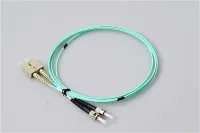
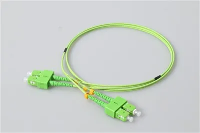
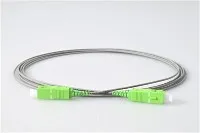
Pigtails are a term with a surprisingly broad reach. As a hairstyle, pigtails have been around for centuries, worn by people of all ages and genders for both fashion and function. But in the fiber optic industry, a fiber optic pigtail is something far more precise-a short cable with a factory-polished connector on one end and bare fiber on the other, designed for permanent fusion splicing to backbone cables. In this article, we will explore the benefits of pigtails from both angles, and discover why the qualities that make this hairstyle so enduring are the same qualities that make fiber optic pigtails indispensable in modern network infrastructure.
Historical Significance and Cultural Symbolism
Pigtails have a rich historical significance and cultural symbolism. In many ancient civilizations, such as ancient China and Greece, pigtails were worn to signify social status or marital status. For example, in ancient China, only married women were permitted to wear pigtails, and the length and style of the pigtails represented their social position.
Even in modern times, pigtails continue to hold significance in certain cultures. In some Native American tribes, young girls wear pigtails as a symbol of their innocence and youth. Similarly, in many African countries, pigtails represent family heritage and are often adorned with colorful beads and charms.
The word "pigtail" itself has traveled a fascinating path. In the 17th century, it originally referred to a twist of chewing tobacco that resembled a pig's curly tail. By the 18th century, sailors adopted the term for their single braids tied to stay out of the way during rough seas. This core idea-a flexible, single-ended extension that keeps things organized and connected-is precisely why the term was later adopted in engineering. In the fiber optic industry today, a pigtail carries the same symbolic DNA: it is a short, purpose-built cable that extends from a main fiber trunk to provide a clean, organized termination point. Just as cultural pigtails connected individuals to their community identity, fiber optic pigtails connect raw cable infrastructure to the active equipment that powers modern communication.
Versatility and Ease of Styling
One of the main benefits of wearing pigtails is their versatility and ease of styling. Pigtails can be customized to suit different hair lengths, textures, and personal preferences. They can be made with straight, wavy, or curly hair and can be worn high on the head, low at the nape of the neck, or to the side. Pigtails can also be combined with other hairstyles, such as braids or buns, to create more intricate looks.
Moreover, pigtails can be styled quickly and effortlessly. They require minimal tools and can be achieved with just a comb, hair elastic, and a few hairpins if desired. This makes pigtails a convenient option for those with busy lifestyles or limited time for styling their hair. Whether you're rushing to work, going to the gym, or simply running errands, pigtails offer a quick and fashionable solution.
This same principle of versatility is what makes fiber optic pigtails so valuable in network engineering. Just as hair pigtails adapt to any hair type and occasion, fiber pigtails are available in a wide range of configurations to match virtually any network requirement. Connector types include SC, LC, FC, ST, E2000, and MPO/MTP, each designed for specific equipment interfaces-LC for high-density SFP transceivers in data centers, SC for PON and CATV systems, FC for test instruments and industrial applications. Fiber modes cover single-mode (OS2, 9/125μm) for long-distance and WDM applications, as well as multimode (OM3, OM4, OM5) for high-speed short-reach links within buildings and campuses. Polish types range from UPC for standard applications to APC for systems sensitive to back-reflections. And configurations include both simplex and duplex to match unidirectional or bidirectional communication needs. This extensive variety means that, much like choosing the right pigtail style for an occasion, network designers can select the exact pigtail specification for each connection point.
Protection and Practical Management
Pigtails can provide several benefits in terms of hair protection and management. By dividing the hair into two sections and securing them with elastic bands, pigtails help to minimize hair tangles and knots. This is particularly useful for those with long or thick hair that is prone to tangling. By wearing pigtails, you can reduce the risk of hair breakage and damage that may occur when combing or brushing tangled hair.

Additionally, pigtails can help to keep the hair away from the face and neck, especially during physical activities or hot weather. They prevent the hair from sticking to the skin due to sweat or moisture, thus keeping you cool and comfortable. This is particularly advantageous for athletes, as it allows them to focus on their performance without the distraction of hair falling into their eyes or sticking to their neck.
The concept of protection through proper organization applies equally to fiber optic pigtails. In a fiber network, the most vulnerable point is where bare fiber transitions to a connectorized cable. A well-made fiber pigtail addresses this with several layers of built-in protection. The ceramic ferrule is precision-polished under factory conditions to sub-micron tolerances, delivering insertion loss typically below 0.3 dB-a level of quality that is extremely difficult to achieve with field-polishing kits. Robust strain-relief boots prevent damage from bending stress at the connector-cable junction. Durable LSZH or PVC outer jackets shield the delicate fiber from physical abrasion and environmental exposure. And specialized pigtails using G.657.A2 bend-insensitive fiber can withstand tight bends down to 7.5mm radius without significant signal loss-essential for cramped installations in terminal boxes and wall-mounted enclosures. Just as a properly tied pigtail keeps hair neatly organized and protected from breakage, a properly specified fiber pigtail keeps optical signals clean and protected from loss.
Promoting Long-Term Health
Another lesser-known benefit of wearing pigtails is the promotion of hair growth. Pigtails, especially when worn loosely, do not put excessive strain on the hair follicles and scalp. This allows for better blood circulation and oxygen flow to the hair roots, thereby stimulating hair growth. Additionally, wearing pigtails can prevent hair from getting caught in harsh environmental elements, such as wind or dust, which can contribute to hair breakage and damage.
It is important to note, however, that excessive tension or tightness when wearing pigtails can have the opposite effect and lead to hair loss or traction alopecia. Therefore, it is crucial to wear pigtails loosely and avoid pulling or tugging on the hair while styling or removing the hairstyle.
A remarkably similar principle governs fiber optic pigtails. When pigtails are installed with the proper bend radius and without excessive tension, the optical signal passes through with minimal attenuation-the fiber network equivalent of healthy growth. But if a pigtail is bent too tightly or pulled under stress during installation, signal loss increases dramatically, and in severe cases the fiber can crack or break permanently. This is why proper cable management in splice trays and ODF cassettes matters so much: giving each pigtail sufficient slack and gentle curves ensures long-term, low-loss performance.
Fashion Statement and Self-Expression
Apart from their practical benefits, pigtails also serve as a fashion statement and a means of self-expression. Many individuals wear pigtails to showcase their personal style, creativity, or simply to have fun with their appearance. Pigtails can be accessorized with ribbons, bows, flowers, or other decorative elements to add a playful or elegant touch to the overall look.
In recent years, pigtails have gained popularity among celebrities, influencers, and fashion enthusiasts. They have been featured prominently on fashion runways and red carpet events, further cementing their status as a trendy and fashionable hairstyle. By wearing pigtails, individuals can embrace their individuality, express their personality, and showcase their fashion-forward sense.
In the fiber optic world, pigtails also carry their own visual identity. Color coding serves as the industry's system of distinction-yellow jackets for single-mode, aqua for OM3/OM4, violet for OM5, and the distinctive green ferrule tip that instantly identifies an APC-polished connector. For experienced engineers, a glance at the pigtail colors inside an ODF cabinet tells them everything about the network architecture, much like a fashion expert reading a style choice across a room.
Why Professionals Choose Fiber Optic Pigtails
Beyond the parallels with hairstyling, fiber optic pigtails offer specific technical and economic benefits that explain their universal adoption in professional network installations.
The bare fiber end of a pigtail is designed for fusion splicing, which creates a permanent joint with splice loss typically below 0.05 dB. This is far superior to mechanical splices or field-terminated connectors, giving every cable run a factory-grade termination point. In terms of cost, a single pigtail costs a fraction of a pre-terminated fiber optic patch cord, and because the fusion splice is permanent and maintenance-free, the total cost of ownership over the network's lifetime is significantly lower. For large FTTH deployments with thousands of termination points, the savings become substantial.

With typical diameters of 0.9mm or 2.0mm and lengths of 1 to 3 meters, pigtails have a minimal footprint inside splice trays and terminal boxes-critical in high-density data center environments where rack space is at a premium. Their universal application spans FTTH subscriber terminal boxes, data center ODF panels, long-haul splice closures, CATV headends, enterprise campus networks, and even military and medical fiber systems.
A common question is why not simply use a patch cord instead. The answer is that patch cords have connectors on both ends for temporary, pluggable connections, while pigtails have a connector on one end and bare fiber on the other for permanent splicing. The pigtail delivers the best of both worlds: the permanence and low loss of a fusion splice on one side, and the flexibility of a standard connector interface on the other.
Conclusion
In conclusion, pigtails offer numerous benefits beyond just being a stylish hairstyle. They hold historical significance and cultural symbolism, provide versatility and ease of styling, protect and manage the hair, promote hair growth, and serve as a fashion statement and means of self-expression.
At the same time, these very same qualities-versatility, protection, organization, and reliable performance-are exactly what make fiber optic pigtails indispensable in telecommunications. Whether you choose to wear pigtails for practical reasons or fashion purposes, or you are selecting them for a fiber network installation, the advantages they offer are clear. The pigtail may be small, but in both a hair salon and an ODF cabinet, it is the link that holds everything together. So, the next time you want to switch up your hairstyle-or your network termination method-consider giving pigtails a try and experience the many benefits they bring.