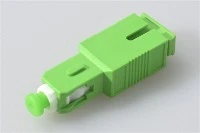
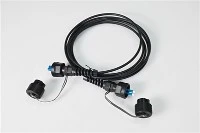
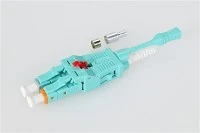
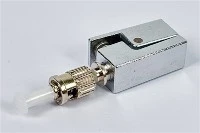
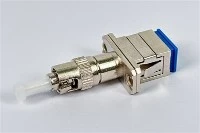
In FTTH deployments, the choice between a fiber optic fast connector and fusion splicing comes down to where in the network you are terminating, how many drops your crew needs to activate per day, and whether that joint will sit indoors or bake in an aerial closure for the next fifteen years. Fast connectors get a technician in and out of a subscriber premises in under a minute per termination. Fusion splicing produces a permanent glass-to-glass bond that nothing short of a backhoe will disturb. Most operators end up using both - but knowing exactly where to draw that line is what separates a clean, profitable rollout from one that generates truck rolls for years.

What Is a Fast Connector in FTTH?
A fast connector - also called a field-installable connector or mechanical splice connector - is a pre-polished termination device with a short fiber stub and ceramic ferrule already seated inside the housing. The technician strips and cleaves the incoming drop cable, slides the bare fiber into a V-groove alignment mechanism, and locks it against the factory stub. Index-matching gel bridges the microscopic air gap between the two fiber ends, keeping Fresnel reflection and insertion loss within spec.
The whole process takes roughly 30 to 60 seconds once the technician has the rhythm down. No electricity, no splicer, no heat shrink oven. A fiber optic fast connector SC with UPC polish typically measures around 0.2 dB insertion loss and return loss above 50 dB. The APC variant pushes return loss past 60 dB - and that distinction matters more than most spec sheets let on, because PON architectures are sensitive to back-reflection at the OLT receiver. In our experience supplying connectors into GPON and XGS-PON projects, SC/APC is what installers reach for by default at the subscriber end. UPC shows up mostly in point-to-point Ethernet drops or legacy installations where the existing infrastructure was built around UPC adapters.
For crews handling high-volume last-mile activation - apartment blocks, campus builds, rural FTTH where the truck roll itself costs more than the connector - fast connectors move the bottleneck from equipment to pure labor throughput.

How Fusion Splicing Works and Why It Still Owns the Backbone
Fusion splicing permanently joins two bare fiber ends by melting them together in an electric arc. A precision cleaver produces a flat end face, and the splicer's alignment motors bring the two cores into sub-micron registration before the arc fires. The result is a continuous glass path with insertion loss routinely below 0.05 dB and return loss exceeding 60 dB.
That performance level is not close to what any mechanical method can consistently deliver. In trunk lines, feeder cables, and backhaul segments where every tenth of a decibel compounds across dozens of splice points, fusion splicing is the only serious option. The joint itself is physically tough - once protected with a heat-shrink sleeve inside a sealed closure, a fusion splice handles moisture, thermal cycling, and vibration without degradation.
The overhead is real, though. A core-alignment fusion splicer, a high-precision cleaver, and the prep kit together run from a few thousand to well over ten thousand dollars. Each splice takes two to four minutes including preparation and protection, and the splicer needs a charged battery or AC power. You also need a clean, stable surface to work on - not always available on a pole or in a cramped hand hole.

Optical Performance: Where the Gap Matters and Where It Doesn't
Most comparison articles line up insertion loss numbers side by side and stop there. The reality is more layered.
Fusion splicing consistently hits below 0.05 dB per joint; well-maintained equipment often lands at 0.02 dB on singlemode. Fast connectors sit between 0.2 and 0.3 dB under normal field conditions. On a single subscriber drop with one or two termination points, that difference - about 0.15 to 0.25 dB - almost never threatens link budget compliance. GPON Class B+ allows up to 28 dB of total path loss between OLT and ONT. A residential drop cable usually accounts for a small fraction of that budget, so the connector's contribution is well within margin.
Return loss is where the connector type selection matters more than the termination method. SC APC fast connectors achieve return loss above 60 dB, which is sufficient for GPON and XGS-PON. UPC variants sit around 50 dB - fine for data-only Ethernet, but a potential problem if there is an analog CATV overlay (RF over Glass) on the same fiber. This is one of the most common sourcing mistakes we see: an installer grabs UPC connectors because they are cheaper per box, then hits return-loss failures during acceptance testing on a network that carries video. If your network runs any form of PON, default to APC and avoid the callback.
The bigger performance separation shows up over time, not on day one. A fusion splice is glass fused to glass - no gel, no clamp, no moving parts. A fast connector depends on index-matching gel that can slowly degrade through years of thermal cycling, and a V-groove mechanism that may shift under repeated vibration. Inside a subscriber's home or a sealed fiber termination box, that degradation is minimal. In an exposed aerial closure or an unheated street cabinet, fusion splicing holds a measurable reliability edge over a five-to-ten-year service window.
Cost: Four Layers, Not One Number
Comparing the unit price of a fast connector against the consumable cost of a fusion splice misses most of the picture. The real comparison runs through four layers: capital equipment, consumable materials, labor time, and long-term maintenance.
Fast connectors need almost zero capital. A cleaver, a stripper, alcohol wipes, and a box of connectors - the whole kit fits in a belt pouch. Each connector costs more per unit than a heat-shrink splice sleeve, but labor time per termination is dramatically lower. In high-volume residential FTTH builds where a technician activates 15 to 25 drops per day, the labor savings swamp the higher consumable cost. We have seen project managers cut activation timelines by 30 to 40 percent simply by switching the subscriber drop termination from pigtail fusion splice to fast connector - not because the connector is better in absolute terms, but because it removes the splicer setup, tray management, and power dependency from the last mile.
Fusion splicing inverts the economics. The upfront equipment cost is significant, but per-splice consumable cost is negligible. For operators splicing hundreds of fibers in a central office, distribution hub, or splice closure, cost per joint drops well below fast-connector territory. Each joint also requires zero follow-up - no re-termination, no gel replacement, no cleaning.
Over a ten-year network lifecycle, fusion splicing usually wins in backbone and distribution segments on total cost of ownership. Fast connectors usually win in access and drop segments. The operators who run the tightest projects use both - and they are deliberate about which method goes where.
Matching the Method to the Network Segment
This is where generic advice falls apart. "Use fast connectors for drops and fusion for backbone" is true as a first approximation, but the real decisions happen at the boundaries.
Fast connectors are the clear choice for indoor subscriber terminations. The technician strips the drop cable, terminates, plugs into the ONT or wall outlet, confirms light with a VFL, and moves to the next unit. No splicer to unpack, no splice tray to route, no power needed. In MDU builds where dozens of units go live in a single visit, that per-unit speed compounds into serious project timeline compression. We typically recommend fast connectors for any termination point that is indoors, protected from weather, and where the installer skill level may vary - which, frankly, describes most subscriber-side work.
Fusion splicing belongs at aggregation points. Splice closures where feeder cables break out to distribution, cabinets where fiber optic pigtails connect splitter outputs to patch panels, any outdoor joint expected to survive without maintenance for years. The higher per-splice labor cost is justified by permanent, weatherproof performance.
The gray zone is the distribution-to-drop transition - the point where a cable leaves a street cabinet or building entrance terminal and runs to the subscriber. If that termination point is sealed inside a proper enclosure and the cable is pre-cut to length, a fast connector works. If it is an aerial tap, an exposed pedestal, or a location with known temperature extremes, fusion splicing is the safer bet. We have had customers in the Middle East and Sub-Saharan Africa report faster-than-expected gel degradation in fast connectors exposed to sustained high ambient temperatures - not catastrophic failure, but enough loss creep to trigger maintenance visits. In those environments, reducing total splice count through pre-connectorized assemblies is often smarter than debating connector versus splice at every individual termination point.
Emergency restoration is another scenario where fast connectors earn their keep. When a cable gets cut and service needs to come back within hours, a technician can restore connectivity with fast connectors immediately, then schedule a permanent fusion splice for the next maintenance window. This staged approach - fast connector now, fusion splice later - is standard practice among service providers who track mean time to repair.
The Skill Factor That Spec Sheets Don't Show
Fast connector installation requires basic fiber handling - strip, clean, cleave to length, lock into the connector body. Most technicians produce acceptable results after a few hours of hands-on training. The most common failure mode is a bad cleave or contamination on the fiber end face, both of which show up immediately on a VFL check. When a fast connector termination fails, the fix is straightforward: pull the fiber out, re-cleave, re-insert.
Fusion splicing asks for more. The technician needs to prep fiber at tighter tolerances, operate and maintain the splicer (including electrode replacement and calibration), manage splice trays inside enclosures without violating bend radius, and read the splicer's loss estimate to catch bad joints before closing up. Training takes days; real proficiency builds over weeks of fieldwork. In markets where trained splicers are scarce - and that includes parts of Latin America, Sub-Saharan Africa, and Southeast Asia - the skilled-labor bottleneck can constrain deployment speed more than equipment availability does.
This is a real factor in project planning, not a footnote. If your deployment timeline depends on activating 500 subscribers per month and you only have two trained splicers on staff, pushing every termination through fusion is a scheduling problem. Fast connectors at the subscriber end let you deploy a larger, less specialized crew for the last mile while your splicers focus on the work that actually requires their skill - closures, cabinets, and backbone joints.
Durability: Indoor Comfort vs. Outdoor Punishment
A fusion splice protected inside a sealed closure is essentially immune to environmental degradation. The glass bond does not corrode, absorb moisture, or drift optically. Field data from major telcos consistently reports fusion splice failure rates below 0.1% over ten-year windows.
Fast connectors hold up well indoors and in protected outdoor enclosures. Inside a subscriber premises, a sealed wall outlet, or a properly gasketed terminal box, the connector faces minimal stress and can last the network's full service life. The risk shows up in exposed outdoor positions - aerial closures, unheated pedestals, strand-mounted tap enclosures - where index-matching gel faces freeze-thaw cycling and the V-groove clamp may see wind-driven vibration. Improved gel formulations and hermetically sealed housings have narrowed this gap over the past few years, but the general rule still holds: if the termination point is outdoors and not reliably sealed, fusion splice it.
Fast Connector vs. Fusion Splicing: Specification Comparison
| Parameter | Fast Connector (SC) | Fusion Splice |
|---|---|---|
| Typical Insertion Loss | 0.2 dB (UPC) / 0.3 dB (APC) | < 0.05 dB |
| Return Loss | > 50 dB (UPC) / > 60 dB (APC) | > 60 dB |
| Installation Time | 30–60 seconds | 2–4 minutes |
| Equipment Required | Stripper, cleaver, wipes | Fusion splicer, cleaver, power source |
| Capital Cost | Minimal (under $200 for full kit) | $3,000–$15,000+ |
| Re-terminable | Yes | No (permanent) |
| Best Fit | Indoor drops, MDU activation, emergency restoration | Backbone, closures, outdoor permanent joints |
| Long-term Maintenance | May need inspection in harsh environments | Maintenance-free |
For operators building or expanding FTTH infrastructure, the decision is not which method to choose - it is where in the network each method belongs. Getting that boundary right keeps optical performance solid, installation costs under control, and maintenance headaches to a minimum. Whether you are sourcing fiber optic connectors for a large-scale rollout or selecting pigtails for splice tray terminations in a distribution cabinet, the right component at each layer is what separates a network that passes acceptance testing from one that stays reliable at year ten.
Frequently Asked Questions
Q: Can A Fast Connector Pass Acceptance Testing On An Indoor FTTH Drop?
A: Yes, routinely. A properly installed SC/APC fast connector measuring 0.3 dB or less and return loss above 60 dB will pass standard GPON acceptance criteria. The key is cleave quality and fiber cleanliness - most field failures trace back to a contaminated end face or an angled cleave, not the connector itself. If your technicians are checking each termination with a VFL before closing the job, pass rates above 95% on first attempt are realistic.
Q: When Does The Retermination Risk Outweigh The Labor Savings Of Fast Connectors?
A: When the termination point is outdoors, unsealed, and expected to last more than five years without a maintenance visit. In that scenario, the labor you save on initial installation gets eaten by the truck roll to re-terminate a connector that drifted out of spec due to gel degradation or mechanical shift. For outdoor permanent joints, the math favors fusion splicing even if it takes longer on day one.
Q: Why Do Most PON Installers Default To SC/APC Instead Of UPC At The Subscriber End?
A: Back-reflection. GPON and XGS-PON use shared downstream wavelengths on a passive splitter tree, and reflected light can interfere with the OLT receiver. SC/APC's angled ferrule delivers return loss above 60 dB, which keeps reflections well below the threshold that causes bit errors. UPC at around 50 dB is fine for point-to-point links but can cause problems in PON topologies - especially if there is an RF video overlay on the same fiber. The cost difference between APC and UPC fast connectors is small enough that defaulting to APC removes a common field failure mode for negligible extra spend.
Q: Is It Worth Buying A Fusion Splicer For A Small ISP With Under 1,000 Subscribers?
A: Depends on where your splicing demand sits. If most of your work is subscriber activation (drop terminations), fast connectors handle that more economically. But if you are also building your own trunk runs, maintaining splice closures, or terminating pigtails in distribution cabinets, a mid-range splicer pays for itself within a year or two through lower per-splice cost and permanent joint quality. A common approach for small operators is to outsource backbone splicing to a contractor and keep fast connectors in-house for subscriber work - that way you are not paying splicer capital cost until your volume justifies it.
Q: What Is The Most Common Installation Mistake With Fast Connectors?
A: Inconsistent cleave length. Every fast connector model has a specified bare fiber length - usually somewhere between 10 and 15 mm depending on the manufacturer. If the cleave is too short, the fiber does not reach the factory stub and you get an air gap that spikes insertion loss. If it is too long, the fiber presses too hard against the stub, potentially chipping the end face and increasing return loss. The fix is simple: use the length gauge that ships with the connector, do not eyeball it, and always verify with a VFL before closing up the job.