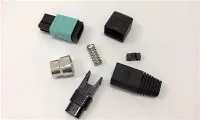
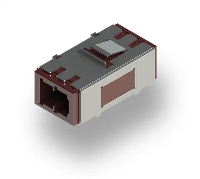
As a leading supplier of fiber optic connectors, I often encounter inquiries about the materials used to make ferrules in these connectors. Ferrules play a crucial role in fiber optic connectors, as they hold and align the optical fibers with high precision, ensuring low - loss and reliable optical connections. In this blog, I'll explore the various materials used for ferrules and their characteristics.
Ceramic Ferrules
Ceramic ferrules are the most commonly used type in high - performance fiber optic connectors. The primary material for ceramic ferrules is zirconia (ZrO₂). Zirconia has several properties that make it ideal for ferrule applications.
First, zirconia has excellent dimensional stability. It can maintain its shape and size under different environmental conditions, including temperature and humidity variations. This stability is essential for precise fiber alignment, as even the slightest deviation can lead to increased insertion loss in the fiber optic connection. For example, in a data center where temperature fluctuations can occur due to the operation of servers and cooling systems, ceramic ferrules made of zirconia can ensure consistent performance.
Second, zirconia has a very smooth surface finish. When the fiber is inserted into the ferrule, a smooth surface reduces the friction between the fiber and the ferrule, preventing damage to the fiber. Moreover, a smooth ferrule end - face is crucial for achieving a good optical contact between the fibers of two connected connectors. This is especially important in applications such as long - haul telecommunications, where minimizing signal loss is of utmost importance.
Another advantage of zirconia ceramic ferrules is their high hardness. They are resistant to wear and tear, which means they can withstand multiple mating and unmating cycles without significant degradation. This makes them suitable for applications where connectors are frequently connected and disconnected, such as in test and measurement equipment.
Our company offers a wide range of fiber optic connectors with ceramic ferrules. For instance, our Ferrule Field Assembly Connector Fast/Quick Connector uses high - quality zirconia ceramic ferrules, providing fast and reliable field assembly with low insertion loss.
Plastic Ferrules
Plastic ferrules are another option for fiber optic connectors, especially in applications where cost is a major consideration. Common materials for plastic ferrules include polycarbonate and liquid crystal polymer (LCP).
Polycarbonate is a widely used plastic material due to its good mechanical properties and transparency. It is relatively easy to mold into complex shapes, which allows for the production of ferrules with different designs and sizes. Polycarbonate ferrules are also lightweight, which can be an advantage in some applications, such as in consumer electronics where weight reduction is desired. However, polycarbonate has some limitations. It has a lower dimensional stability compared to ceramic materials, which means it may be more affected by temperature and humidity changes. This can lead to changes in the fiber alignment and increased insertion loss over time.
Liquid crystal polymer (LCP) is a more advanced plastic material for ferrules. LCP has better dimensional stability than polycarbonate, as well as excellent chemical resistance. It can maintain its properties over a wide range of temperatures and is less likely to absorb moisture. LCP ferrules are often used in applications where a balance between cost and performance is required, such as in local area networks (LANs) or in some industrial control systems.
Our Fiber Optic MTRJ Connector is available with plastic ferrules for cost - effective solutions. These connectors are suitable for short - distance data transmission in LAN environments.


Metal Ferrules
Metal ferrules are used in some specialized fiber optic connector applications. Stainless steel is a common material for metal ferrules.
Stainless steel ferrules offer high strength and durability. They can withstand harsh environmental conditions, including high - pressure and high - temperature environments. In addition, metal ferrules provide good electromagnetic shielding, which can be beneficial in applications where electromagnetic interference (EMI) is a concern, such as in military and aerospace applications.
However, metal ferrules also have some drawbacks. They are generally heavier than ceramic and plastic ferrules, which may not be suitable for applications where weight is a critical factor. Also, achieving a very smooth end - face finish on metal ferrules can be more challenging compared to ceramic ferrules, which may result in slightly higher insertion losses.
Our company also provides fiber optic connectors with metal ferrules for specific industrial and military applications, where the unique properties of metal ferrules are required.
Glass Ferrules
Glass ferrules are less common but are used in some high - end or specialized applications. Fused silica is a typical material for glass ferrules.
Glass ferrules have excellent optical properties, similar to the optical fibers themselves. They can provide a very good match in terms of refractive index, which can further reduce the optical loss at the fiber - ferrule interface. Glass ferrules also have high chemical purity and are resistant to chemical corrosion, making them suitable for use in harsh chemical environments.
However, glass ferrules are relatively brittle and require careful handling during manufacturing and installation. Their production process is also more complex and costly compared to other types of ferrules.
Our Fiber Optic LC Connectors can be customized with glass ferrules for customers who demand the highest level of optical performance.
Choosing the Right Ferrule Material
When choosing the material for ferrules in fiber optic connectors, several factors need to be considered.
- Performance Requirements: For applications that require low insertion loss, high precision, and long - term stability, such as long - haul telecommunications and high - speed data centers, ceramic ferrules are the best choice. On the other hand, if cost is the primary concern and the performance requirements are relatively low, plastic ferrules may be sufficient.
- Environmental Conditions: In harsh environments with high temperatures, high pressures, or exposure to chemicals, metal or glass ferrules may be more suitable. For normal indoor environments, ceramic or plastic ferrules can usually meet the requirements.
- Cost Constraints: Plastic ferrules are generally the most cost - effective option, followed by ceramic ferrules. Metal and glass ferrules are more expensive due to their specialized properties and more complex manufacturing processes.
As a professional fiber optic connector supplier, we have the expertise and experience to help you select the most appropriate ferrule material for your specific application. Whether you need high - performance connectors for critical telecommunications networks or cost - effective solutions for local area networks, we can provide you with the right products.
If you are interested in our fiber optic connectors or have any questions about ferrule materials, please feel free to contact us for procurement and negotiation. We look forward to serving you and meeting your fiber optic connection needs.
References
- "Fiber Optic Connector Handbook", Second Edition, by Richard A. Liebe.
- Industry whitepapers on fiber optic connector technology from leading manufacturers.