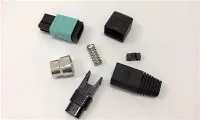
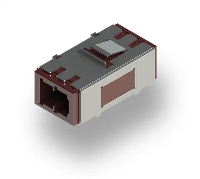
Hey there! As a supplier of Fiber Optic MPO Adapters, I often get asked about the shock resistance of these nifty little devices. So, I thought I'd take a deep dive into this topic and share everything I know with you.
First off, let's understand what a Fiber Optic MPO Adapter is. MPO stands for Multi - Fiber Push - On. These adapters are used to connect multiple optical fibers at once. They're super handy in high - density fiber optic networks, like data centers and telecommunications systems. They allow for quick and easy installation and connection of multiple fibers, which can save a ton of time and effort.
Now, onto the shock resistance part. Shock resistance is a crucial factor when it comes to fiber optic adapters. In real - world scenarios, these adapters can be subjected to all sorts of vibrations, bumps, and jolts. For example, in a data center, there might be equipment moving around, or in a telecommunications cabinet, workers could accidentally knock into the adapters while doing maintenance.


The shock resistance of a Fiber Optic MPO Adapter refers to its ability to withstand sudden mechanical shocks without significant degradation in performance. When a shock occurs, it can potentially cause misalignment of the fiber cores within the adapter. If the fiber cores aren't properly aligned, it can lead to signal loss, increased attenuation, and ultimately, poor network performance.
So, how do we measure the shock resistance of a Fiber Optic MPO Adapter? Well, there are industry - standard tests for this. One common test is the shock test, where the adapter is subjected to a series of sudden impacts. The test usually involves dropping the adapter from a certain height onto a hard surface or applying a sharp, short - duration force.
The results of these tests are measured in terms of how much the optical performance of the adapter changes after the shock. Key parameters include insertion loss and return loss. Insertion loss is the amount of light that is lost as it passes through the adapter, and return loss is the amount of light that is reflected back from the adapter. A good quality Fiber Optic MPO Adapter should have minimal changes in these parameters even after being subjected to shocks.
At our company, we take shock resistance seriously. We use high - quality materials in the manufacturing of our Fiber Optic MPO Adapters. The housing of the adapter is made from durable plastics or metals that can absorb and distribute the shock energy. Inside, we use precision - engineered components to ensure that the fiber cores stay in place even when there's a shock.
We also conduct rigorous in - house testing to make sure that our adapters meet and exceed industry standards. Before any batch of adapters leaves our factory, we subject them to a battery of shock tests. This way, we can guarantee that our customers are getting products that are reliable and can withstand the rigors of real - world use.
Now, let's talk about how shock resistance compares to other types of fiber optic adapters. For instance, take a look at the Factory Price Ftth Networking Lc - lc Duplex Fiber Adapter. LC adapters are single - fiber adapters, and while they also need to have good shock resistance, the dynamics are a bit different. Since MPO adapters have multiple fibers, there's a higher chance of misalignment when a shock occurs. However, with proper design and manufacturing, our MPO adapters can offer comparable or even better shock resistance than some single - fiber adapters.
Another type of adapter is the Fiber Optic FC Adaptor. FC adapters have a threaded coupling mechanism, which can provide some additional stability. But again, our Fiber Optic MPO Adapters are designed in such a way that they can hold up well against shocks, even without the threaded design.
And then there are the Fiber Optic LC Adapters. LC adapters are widely used in many applications, but when it comes to high - density connections, MPO adapters are the way to go. And we've made sure that our MPO adapters have excellent shock resistance to handle the challenges of high - density environments.
In conclusion, the shock resistance of a Fiber Optic MPO Adapter is a critical feature that can make or break the performance of a fiber optic network. Whether you're running a large - scale data center or a small - scale telecommunications setup, you need adapters that can stand up to the bumps and jolts of everyday use.
If you're in the market for high - quality Fiber Optic MPO Adapters with excellent shock resistance, we'd love to hear from you. We can provide you with samples for testing and offer competitive prices. Don't hesitate to reach out to us for a quote or to discuss your specific requirements. Let's work together to build a reliable fiber optic network!
References:
- Industry standards for fiber optic adapter testing
- In - house research and development data on Fiber Optic MPO Adapter performance