Return loss, also known as reflection loss, is a critical parameter in the field of fiber optics, especially when dealing with Fiber Optic FC Pigtails. As a trusted supplier of Fiber Optic FC Pigtails, I am often asked about what return loss means for these essential components. In this blog post, I will delve into the concept of return loss, its significance for Fiber Optic FC Pigtails, and how it impacts the overall performance of fiber optic systems.
Understanding Return Loss
Return loss is a measure of how much light is reflected back towards the source in a fiber optic system. When light travels through an optical fiber, it encounters various interfaces, such as connectors, splices, and terminations. At these interfaces, a small portion of the light may be reflected back due to differences in the refractive index. This reflected light can cause interference and signal degradation, leading to a decrease in the overall performance of the system.
Return loss is expressed in decibels (dB) and is defined as the ratio of the power of the incident light to the power of the reflected light. A higher return loss value indicates less reflected light and better performance. For example, a return loss of -50 dB means that only 0.0001% of the incident light is reflected back, while a return loss of -20 dB means that 1% of the incident light is reflected.
Importance of Return Loss in Fiber Optic FC Pigtails
Fiber Optic FC Pigtails are widely used in fiber optic networks for various applications, such as telecommunications, data centers, and industrial automation. These pigtails consist of a single fiber optic cable with a pre - terminated FC connector at one end. The quality of the FC connector and the termination process directly affect the return loss of the pigtail.
In high - speed and long - distance fiber optic systems, low return loss is crucial. Reflected light can cause problems such as signal distortion, increased bit error rate (BER), and reduced transmission distance. For instance, in a 10 Gigabit Ethernet network, a high level of reflected light can lead to data errors and network instability. By ensuring low return loss in Fiber Optic FC Pigtails, we can minimize these issues and improve the reliability and performance of the entire fiber optic system.
Factors Affecting Return Loss in Fiber Optic FC Pigtails
Several factors can affect the return loss of Fiber Optic FC Pigtails. One of the most important factors is the quality of the FC connector. A well - manufactured connector with a smooth and flat end - face will have less reflection compared to a poorly made connector. The end - face finish of the connector, such as the polish type (e.g., PC, UPC, APC), plays a significant role in determining the return loss.
Physical contact (PC) connectors have a spherical end - face that provides a basic level of return loss performance. Ultra - physical contact (UPC) connectors have a more precise polish, resulting in lower return loss values. Angled physical contact (APC) connectors, which have an angled end - face, are designed to minimize reflection and are commonly used in applications where low return loss is critical, such as in fiber - to - the - home (FTTH) networks.
Another factor is the cleanliness of the connector. Dust, dirt, and other contaminants on the connector end - face can cause additional reflection. Therefore, proper handling and cleaning of Fiber Optic FC Pigtails are essential to maintain low return loss.
The splicing process also affects return loss. If the splice is not done correctly, it can create a large reflection point. High - quality fusion splicing techniques with precise alignment can help reduce return loss at splice points.
Measuring Return Loss of Fiber Optic FC Pigtails
To measure the return loss of Fiber Optic FC Pigtails, specialized test equipment is used. One of the most common tools is an Optical Time - Domain Reflectometer (OTDR). An OTDR sends a short pulse of light into the fiber and measures the time and intensity of the reflected light. By analyzing the OTDR trace, we can determine the return loss at different points along the fiber, including the FC connector.
Another method is to use a Return Loss Test Set (RLTS). An RLTS directly measures the return loss of a connector or a pigtail by comparing the incident and reflected light power. This method is more accurate for measuring the return loss of individual components.
Our Commitment as a Fiber Optic FC Pigtail Supplier
As a supplier of Fiber Optic FC Pigtails, we are committed to providing high - quality products with low return loss. We use advanced manufacturing techniques and strict quality control processes to ensure that our pigtails meet the highest industry standards.
Our FC connectors are manufactured with precision, and we offer a variety of end - face finishes, including UPC and APC, to meet different application requirements. Before shipping, each pigtail undergoes rigorous testing to ensure that the return loss is within the specified range.
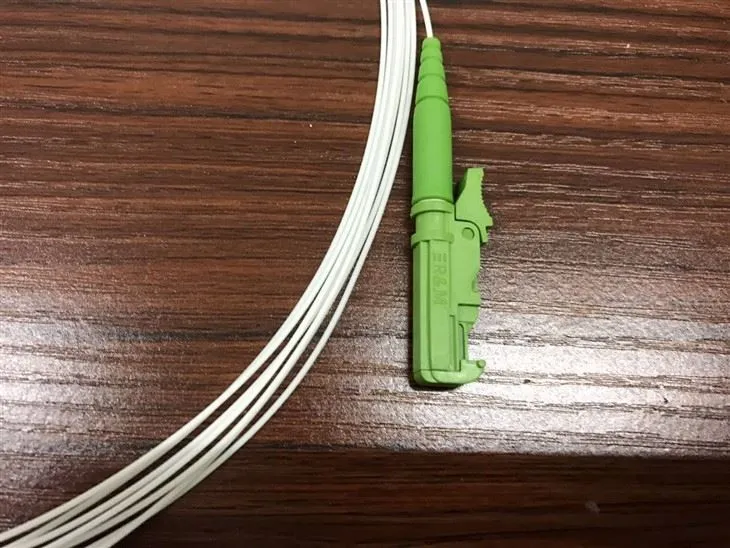
In addition to Fiber Optic FC Pigtails, we also offer a wide range of other fiber optic products, such as Fiber Optic Lc Pigtails, Lc Simplex Fiber Patch Cord, and Fiber Optic E2000 Pigtail. These products are also designed to have low return loss and high performance, providing our customers with comprehensive fiber optic solutions.

Conclusion
Return loss is a vital parameter for Fiber Optic FC Pigtails and fiber optic systems as a whole. By understanding the concept of return loss, its importance, and the factors that affect it, we can make informed decisions when selecting and using fiber optic components.
As a reliable supplier, we are dedicated to providing high - quality Fiber Optic FC Pigtails with low return loss. If you are in need of fiber optic products for your network, we encourage you to contact us for a detailed discussion about your requirements. We are ready to offer you the best solutions and support to ensure the success of your fiber optic projects.
References
- Ghatak, Ajoy. "Optical Electronics." Cambridge University Press, 2016.
- Senior, John M. "Optical Fiber Communications: Principles and Practice." Pearson Education, 2019.