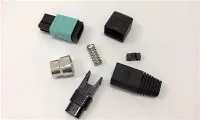
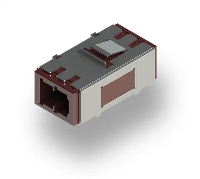
As a supplier of Fiber Optic MU Adapters, I am often asked about various technical aspects of our products. One question that frequently comes up is, "What is the optical isolation of a Fiber Optic MU Adapter?" In this blog post, I'll delve into this topic in detail, explaining what optical isolation means, why it's important in the context of Fiber Optic MU Adapters, and how it impacts the performance of fiber - optic networks.
Understanding Optical Isolation
Optical isolation refers to the ability of a device to prevent unwanted optical signals from being reflected back into the source. In a fiber - optic system, when light travels through an optical fiber, it can encounter interfaces such as connectors and adapters. At these interfaces, a small portion of the light can be reflected back towards the light source. This reflected light, known as back - reflection, can cause several problems in the system.
Back - reflection can lead to signal degradation, increased noise, and even instability in the light source. For example, in a laser - based fiber - optic transmitter, back - reflected light can cause fluctuations in the laser output power, which can ultimately affect the quality of the transmitted data. Optical isolation is measured in decibels (dB), and a higher value of optical isolation indicates better performance in preventing back - reflection.
Optical Isolation in Fiber Optic MU Adapters
Fiber Optic MU Adapters are small - form - factor connectors used to join two MU - terminated fibers together. These adapters are commonly used in high - density fiber - optic applications, such as data centers, telecommunications networks, and local area networks.
The optical isolation of a Fiber Optic MU Adapter is crucial for maintaining the integrity of the optical signal. When two fibers are connected using a MU Adapter, there is an interface between the fiber ends. At this interface, back - reflection can occur due to differences in the refractive indices of the fiber cores and the air gap between the fiber ends.
To achieve good optical isolation, Fiber Optic MU Adapters are designed with precision. The adapter's housing and internal components are engineered to minimize the air gap between the fiber ends and to ensure proper alignment of the fibers. Additionally, some MU Adapters are coated with anti - reflective materials to reduce the amount of light reflected at the fiber - to - adapter interface.

Factors Affecting Optical Isolation in Fiber Optic MU Adapters
Several factors can affect the optical isolation of a Fiber Optic MU Adapter.
Fiber End Finish: The quality of the fiber end finish plays a significant role in optical isolation. A smooth and flat fiber end surface reduces the amount of back - reflection. Polishing techniques are used to achieve a high - quality fiber end finish. For example, a PC (Physical Contact) polish provides better optical isolation compared to an APC (Angled Physical Contact) polish in some applications, while APC polish is more effective in reducing back - reflection in other scenarios where high - precision isolation is required.
Adapter Alignment: Proper alignment of the fibers within the adapter is essential for good optical isolation. Misaligned fibers can increase the air gap between the fiber ends, leading to higher back - reflection. High - quality MU Adapters are designed with precise alignment mechanisms, such as ceramic sleeves, to ensure accurate fiber alignment.
Environmental Conditions: Environmental factors such as temperature and humidity can also affect the optical isolation of Fiber Optic MU Adapters. Extreme temperatures can cause the materials in the adapter to expand or contract, which may lead to changes in the fiber alignment and increased back - reflection. Humidity can cause corrosion or contamination of the fiber ends, which can also degrade the optical isolation performance.
Importance of Optical Isolation in Fiber - Optic Networks
In modern fiber - optic networks, where high - speed data transmission and reliable performance are essential, optical isolation is of utmost importance.
Data Transmission Quality: Good optical isolation helps to maintain the quality of the transmitted data. By reducing back - reflection, the signal - to - noise ratio is improved, which means that the data can be transmitted more accurately and with fewer errors. This is particularly important in high - speed data applications, such as 100Gbps and 400Gbps Ethernet networks.
Network Reliability: Optical isolation also contributes to the overall reliability of the fiber - optic network. By preventing back - reflected light from affecting the light source, the stability of the network is enhanced. This reduces the likelihood of network outages and downtime, which can be costly for businesses.
Comparing with Other Fiber Optic Adapters
When considering fiber - optic adapters, it's interesting to compare the optical isolation performance of Fiber Optic MU Adapters with other types of adapters. For example, the Fiber Optic Mtrj Adapter is another small - form - factor adapter. While both MU and MTRJ adapters are used in high - density applications, the optical isolation characteristics may differ.
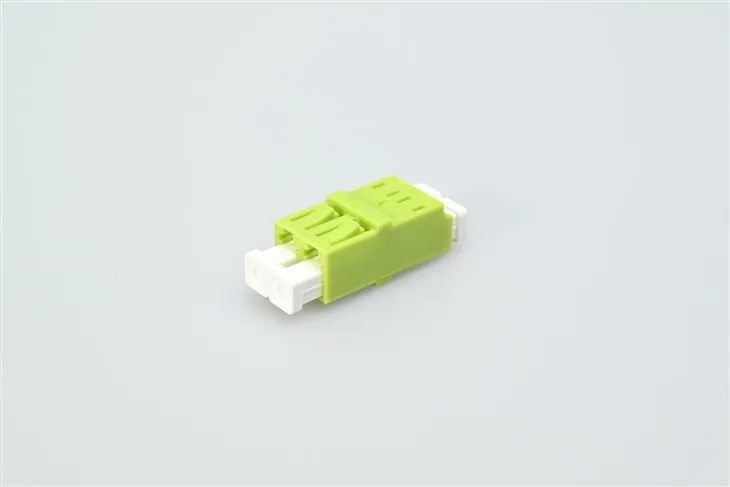
The Factory Price Ftth Networking Lc - lc Duplex Fiber Adapter is commonly used in fiber - to - the - home (FTTH) networks. LC adapters are known for their high - performance and low - insertion loss, and their optical isolation performance is also an important factor in ensuring reliable network operation.
The Mtp®/mpo - 8/12/24 Black Fiber Optic Adapter/coupler with Flange, Key Up To Down is used in multi - fiber applications. These adapters need to provide good optical isolation for each individual fiber within the multi - fiber connector to ensure proper signal transmission.
How Our Fiber Optic MU Adapters Ensure Good Optical Isolation
As a supplier of Fiber Optic MU Adapters, we take several steps to ensure that our products offer excellent optical isolation.
Precision Manufacturing: We use advanced manufacturing techniques to produce MU Adapters with high - precision components. Our ceramic sleeves are carefully crafted to ensure accurate fiber alignment, which helps to minimize back - reflection.
Quality Fiber End Finish: We pay close attention to the fiber end finish. Our polishing processes are optimized to achieve a smooth and flat fiber end surface, which reduces back - reflection and improves optical isolation.
Testing and Quality Control: Each of our Fiber Optic MU Adapters undergoes rigorous testing to ensure that it meets the required optical isolation standards. We use state - of - the - art testing equipment to measure the back - reflection and optical isolation of each adapter before it is shipped to our customers.
Conclusion
In conclusion, the optical isolation of a Fiber Optic MU Adapter is a critical parameter that affects the performance and reliability of fiber - optic networks. By understanding the concept of optical isolation, the factors that affect it in MU Adapters, and the importance of optical isolation in fiber - optic systems, customers can make informed decisions when choosing fiber - optic components.
Our company is committed to providing high - quality Fiber Optic MU Adapters with excellent optical isolation performance. If you are in the market for Fiber Optic MU Adapters or have any questions about optical isolation or our products, we encourage you to contact us for further discussion and potential procurement. We look forward to working with you to meet your fiber - optic connectivity needs.
References
- "Fiber Optic Communication Systems" by Govind P. Agrawal
- "Optical Fiber Technology: Principles and Applications" by Mohinder S. Sodha and V. K. Agarwal
- Industry standards and specifications related to fiber - optic connectors and adapters