As a leading supplier of fiber optic pigtails, I often encounter inquiries from customers about the maximum data transmission rate of these essential components in the world of high - speed communication. In this blog, I will delve into the factors that determine the maximum data transmission rate of fiber optic pigtails, their real - world applications, and how our products stand out in the market.
Understanding Fiber Optic Pigtails
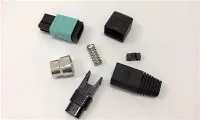
Before we discuss the maximum data transmission rate, let's briefly understand what fiber optic pigtails are. A fiber optic pigtail is a single, short, usually pre - terminated optical fiber with a connector at one end and an un - terminated fiber at the other. It is used to connect other fiber optic cables or equipment, such as switches, routers, and servers. They come in various types, including Lc Simplex Fiber Patch Cord, Fiber Optic Fc Pigtail, and Fiber Optic E2000 Pigtail, each designed for specific applications and environments.
Factors Affecting the Maximum Data Transmission Rate
Fiber Type
The type of fiber used in a pigtail is one of the most critical factors influencing its data transmission rate. There are two main types of optical fibers: single - mode fiber (SMF) and multi - mode fiber (MMF).
- Single - mode Fiber (SMF): SMF has a very small core diameter (usually around 9 microns), which allows only one mode of light to propagate through it. This results in extremely low signal dispersion and attenuation over long distances. As a result, single - mode fiber pigtails can support very high data transmission rates, often reaching up to 100 Gbps or even higher in some advanced systems. For long - haul telecommunications, data centers with large - scale storage area networks (SANs), and high - speed backbone networks, SMF pigtails are the preferred choice.
- Multi - mode Fiber (MMF): MMF has a larger core diameter (typically 50 or 62.5 microns), which allows multiple modes of light to propagate. However, this also leads to higher signal dispersion, limiting its transmission distance and data rate compared to SMF. Standard multi - mode fiber pigtails can support data rates of up to 10 Gbps over relatively short distances (up to a few hundred meters). Newer types of multi - mode fibers, such as OM3 and OM4, can support higher data rates of 40 Gbps and 100 Gbps over shorter distances, making them suitable for local area networks (LANs) and data center interconnects within a building.
Wavelength
The wavelength of the light used for data transmission also plays a significant role. Different wavelengths have different attenuation and dispersion characteristics in optical fibers.
- 850 nm: This wavelength is commonly used in multi - mode fiber systems. It is suitable for short - distance applications due to its relatively higher attenuation in the fiber. However, it is cost - effective and widely used in LANs and data centers for lower - speed connections.
- 1310 nm and 1550 nm: These wavelengths are typically used in single - mode fiber systems. The 1310 nm wavelength has low dispersion, while the 1550 nm wavelength has the lowest attenuation. Systems operating at these wavelengths can achieve high data rates over long distances, making them ideal for long - haul telecommunications and large - scale data center interconnects.
Connector Quality
The quality of the connector on the fiber optic pigtail is crucial for maintaining high data transmission rates. A poor - quality connector can introduce signal loss, reflection, and dispersion, which can degrade the overall performance of the system. High - quality connectors, such as those with precise alignment and low insertion loss, are essential for achieving the maximum data transmission rate. Our company uses advanced manufacturing techniques and high - quality materials to ensure that our connectors meet the strictest industry standards, minimizing signal loss and maximizing data transmission efficiency.
Real - World Applications and Data Rates
Data Centers
In modern data centers, the demand for high - speed data transmission is constantly increasing. Fiber optic pigtails are used to connect servers, storage devices, and network switches. For short - distance connections within a rack or between adjacent racks, multi - mode fiber pigtails with data rates of 10 Gbps, 40 Gbps, or 100 Gbps are commonly used. For connections between different data center buildings or for long - distance links within a large - scale data center, single - mode fiber pigtails can support data rates of 100 Gbps or higher, enabling seamless data transfer between servers and storage systems.
Telecommunications Networks
Telecommunications networks rely on fiber optic pigtails for long - haul transmission of voice, data, and video signals. Single - mode fiber pigtails are the backbone of these networks, supporting data rates of 100 Gbps, 200 Gbps, or even 400 Gbps in some of the latest systems. These high - speed connections are essential for providing reliable and high - quality services to customers, such as high - definition video streaming, cloud computing, and 5G mobile networks.
Local Area Networks (LANs)
In corporate offices and educational institutions, LANs use fiber optic pigtails to connect computers, printers, and other network devices. Multi - mode fiber pigtails with data rates of 1 Gbps or 10 Gbps are commonly used for these applications, providing fast and reliable network connectivity within a building or campus.
Our Company's Advantage in Fiber Optic Pigtails
As a professional fiber optic pigtail supplier, we are committed to providing our customers with high - quality products that meet their specific needs. Our fiber optic pigtails are manufactured using the latest technology and high - quality materials, ensuring excellent performance and reliability.
- Wide Range of Products: We offer a comprehensive range of fiber optic pigtails, including different fiber types, connector types, and wavelengths, to meet the diverse needs of our customers. Whether you need a single - mode fiber pigtail for long - distance transmission or a multi - mode fiber pigtail for a local network, we have the right product for you.
- Quality Assurance: Our products undergo strict quality control procedures to ensure that they meet or exceed industry standards. We use advanced testing equipment to test each pigtail for insertion loss, return loss, and other key performance indicators, ensuring that our customers receive only the best - quality products.
- Customization Services: We understand that every customer's requirements are unique. That's why we offer customization services to meet specific needs. Whether you need a special length, connector type, or color, we can customize our fiber optic pigtails to your exact specifications.
Conclusion
The maximum data transmission rate of fiber optic pigtails is determined by several factors, including fiber type, wavelength, and connector quality. By choosing the right type of fiber optic pigtail for your application and ensuring high - quality components, you can achieve high - speed and reliable data transmission. As a leading supplier of fiber optic pigtails, we are dedicated to providing our customers with the best - quality products and services. If you are interested in our fiber optic pigtails or have any questions about data transmission rates, please feel free to contact us for procurement and further discussions. We look forward to working with you to meet your fiber optic connectivity needs.


References
- "Fiber Optic Communication Systems" by Govind P. Agrawal
- "Optical Fiber Telecommunications VI" edited by Ian P. Kaminow, Tingye Li, and Alan E. Willner
- Industry standards and whitepapers from organizations such as the Telecommunications Industry Association (TIA) and the International Electrotechnical Commission (IEC)