As a supplier of Fiber Optic SC Connectors, I often get asked about the mating cycle of these essential components in the fiber - optic industry. Understanding the mating cycle is crucial for both our customers and us as a supplier, as it directly impacts the performance and longevity of the connectors.
What is the Mating Cycle?
The mating cycle of a Fiber Optic SC Connector refers to the number of times the connector can be mated (connected) and unmated (disconnected) from another compatible connector while still maintaining its specified performance levels. This metric is vital because each time a connector is mated and unmated, there is a small amount of wear and tear on the physical components, such as the ferrule and the coupling mechanism.
Key Components Affected by the Mating Cycle
Ferrule
The ferrule is one of the most critical parts of the SC connector. It holds the fiber in place and ensures precise alignment when the connector is mated. During the mating process, the ferrules of two connectors come into contact with each other. Even with the smooth surface finish of the ferrule, repeated mating can cause micro - scratches and wear. These imperfections can lead to increased insertion loss and return loss, which in turn degrade the signal quality transmitted through the fiber.
Coupling Mechanism
The coupling mechanism is responsible for securely holding the two connectors together. In an SC connector, this is typically a push - pull mechanism. With each mating and unmating, the mechanical parts of the coupling mechanism experience stress. Over time, this can cause the mechanism to loosen or become less effective, leading to a less stable connection.
Industry Standards for Mating Cycles
The industry generally sets standards for the minimum number of mating cycles a Fiber Optic SC Connector should be able to withstand. Most high - quality SC connectors are designed to have a mating cycle of at least 500 times. However, some premium connectors can achieve up to 1000 or more mating cycles. These connectors are often used in applications where connectors need to be frequently reconfigured, such as in data centers or test environments.
Factors Affecting the Mating Cycle
Environmental Conditions
The environment in which the connectors are used plays a significant role in determining the actual mating cycle. In dirty or dusty environments, particles can get trapped between the ferrules during mating. These particles act as abrasives, accelerating the wear of the ferrule surface. High - humidity environments can also cause corrosion of the metal parts of the connector, which affects the performance of the coupling mechanism.
Mating and Unmating Techniques
Proper mating and unmating techniques are essential for maximizing the mating cycle. If connectors are forced during mating or pulled too hard during unmating, it can cause damage to the ferrule and the coupling mechanism. Training users on the correct procedures can significantly extend the life of the connectors.
Importance of Mating Cycle for Our Customers
For our customers, understanding the mating cycle of Fiber Optic SC Connectors is crucial for cost - effectiveness and system reliability. In applications where connectors need to be frequently changed, such as in network expansion or maintenance, choosing connectors with a high mating cycle can reduce the need for frequent replacements. This not only saves money but also minimizes system downtime.
Our Product Offerings
As a supplier, we offer a wide range of Fiber Optic SC Connectors with different mating cycle ratings to meet the diverse needs of our customers. Our standard connectors are designed to meet the industry - standard 500 - mating - cycle requirement. For customers with more demanding applications, we also provide premium connectors with a mating cycle of up to 1000 times.
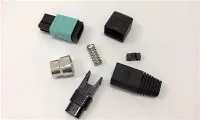
In addition to our SC connectors, we also offer other types of fiber - optic connectors, such as the Fiber Optic Mpo Connector. MPO connectors are commonly used in high - density applications, where multiple fibers need to be connected simultaneously. We also have the Conector Ftth Fiber Optic Sc Fast Connector, which is designed for quick and easy installation in fiber - to - the - home (FTTH) networks. And for those who need field - assembly connectors, our Ferrule Field Assembly Connector Fast/quick Connector provides a convenient solution.
Testing and Quality Assurance
To ensure the reliability of our connectors, we conduct rigorous testing on all our products. We use advanced testing equipment to measure the insertion loss and return loss of the connectors after a specified number of mating cycles. Our quality control team also inspects the physical condition of the connectors, including the ferrule surface and the coupling mechanism, to ensure they meet our strict quality standards.
Conclusion
The mating cycle of a Fiber Optic SC Connector is a critical factor that affects its performance and longevity. By understanding the factors that influence the mating cycle and choosing the right connectors for their applications, our customers can ensure the reliability and cost - effectiveness of their fiber - optic networks.


If you are interested in learning more about our Fiber Optic SC Connectors or other fiber - optic products, we encourage you to contact us for a detailed discussion. Our team of experts is ready to assist you in selecting the most suitable products for your specific needs. Whether you are a small - scale user or a large - scale enterprise, we are committed to providing you with high - quality products and excellent customer service. Let's work together to build a better fiber - optic network.
References
- ITU - T Recommendations on Fiber Optic Connectors
- Telcordia GR - 326 - CORE for Generic Requirements for Single - Mode Optical Connectors and Jumper Assemblies
- Industry whitepapers on fiber - optic connector performance and reliability