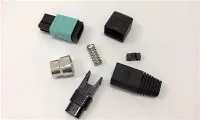
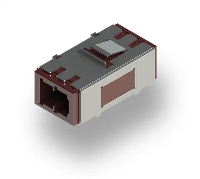
Yo, what's up! I'm a supplier of Fiber Optic SC Adapters, and today I wanna chat about what the electromagnetic shielding of a Fiber Optic SC Adapter is all about.
First off, let's get a basic understanding of Fiber Optic SC Adapters. These things are super important in the world of fiber - optic communication. They're used to connect two fiber - optic cables together, making sure the light signal can travel smoothly from one cable to the other. Now, when we talk about electromagnetic shielding, it's like having a protective shield around the adapter to keep it safe from all the electromagnetic interference (EMI) out there.
EMI can come from all sorts of places. There are electronic devices like cell phones, Wi - Fi routers, and even power lines. All these things emit electromagnetic waves, and if they interfere with the fiber - optic signal in the SC Adapter, it can cause problems. The signal might get weak, or there could be data loss, which is a big no - no in the communication world.
So, how does the electromagnetic shielding work in a Fiber Optic SC Adapter? Well, it's all about the materials and the design. Most of the time, the outer part of the adapter is made of a conductive material. This conductive material acts like a cage. When electromagnetic waves try to get in, they hit this cage and get redirected or absorbed. It's like a bouncer at a club, not letting the unwanted guests (electromagnetic waves) in.
For example, some adapters use metal shielding. Metals are great conductors of electricity, and they can effectively block electromagnetic waves. The metal forms a continuous path around the adapter, creating a Faraday cage effect. A Faraday cage is a concept where a conductive enclosure can block external electromagnetic fields. When the electromagnetic waves hit the metal shield of the SC Adapter, they induce an electric current on the surface of the metal. This current then creates its own electromagnetic field that cancels out the incoming field, protecting the fiber - optic signal inside.
Another way to achieve electromagnetic shielding is through the use of special coatings. These coatings can be applied to the surface of the adapter. They're made of materials that have good electromagnetic properties. They can either absorb the electromagnetic waves or reflect them away. Some coatings are designed to work in specific frequency ranges. For instance, if there's a lot of interference in the radio frequency range, the coating can be tuned to block those frequencies.
Now, why is electromagnetic shielding so crucial for Fiber Optic SC Adapters? Well, in modern communication systems, we rely on high - speed and high - quality data transmission. Whether it's for internet connections, video conferencing, or data centers, any kind of signal degradation can be a disaster. If the SC Adapter isn't properly shielded, the electromagnetic interference can cause bit errors in the data. This means that the information being transmitted might not be accurate, leading to all sorts of problems.

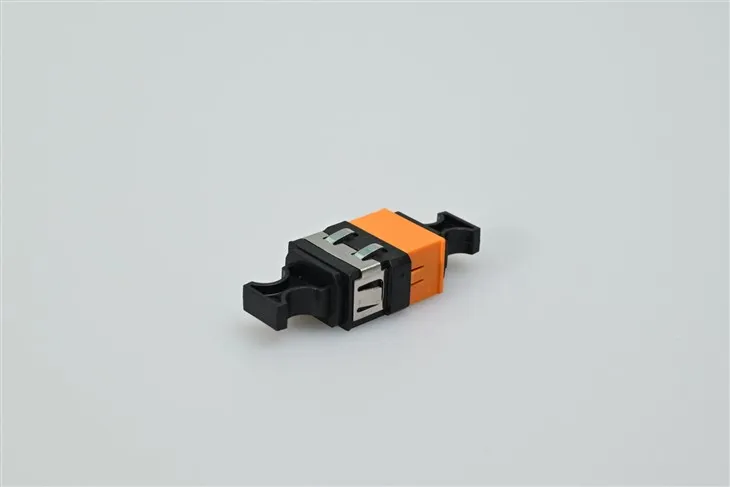
In industrial environments, the need for electromagnetic shielding is even more important. There are lots of heavy - duty machines, motors, and electrical equipment in factories. These things generate a huge amount of electromagnetic noise. If the Fiber Optic SC Adapters used in these environments aren't shielded, the communication between different parts of the system can break down. It could lead to production delays, equipment malfunctions, and a whole bunch of other headaches.
As a supplier of Fiber Optic SC Adapters, I understand the importance of providing products with excellent electromagnetic shielding. That's why we put a lot of effort into researching and developing the best shielding technologies. We test our adapters in different electromagnetic environments to make sure they can withstand the interference.
If you're in the market for other types of fiber - optic adapters, we've got you covered too. Check out our [Optical Fiber Adaptor MTP / MPO Adapter](/fiber - optic - adapter/optical - fiber - adaptor - mtp - mpo - adapter.html) which is great for high - density applications. Also, our [Fiber Optic E2000 Adapter](/fiber - optic - adapter/fiber - optic - e2000 - adapter.html) is known for its high - performance and reliability. And if you're looking for a duplex option, our [China LC LC Duplex Fiber Optic Adapter](/fiber - optic - adapter/china - lc - lc - duplex - fiber - optic - adapter.html) is a top - notch choice.
If you're interested in our Fiber Optic SC Adapters or any of our other products, don't hesitate to reach out. We're always happy to have a chat about your specific needs and how our products can fit into your projects. Whether you're a small business or a large corporation, we've got the right solutions for you. Let's start a conversation and see how we can work together to make your fiber - optic communication systems even better.
References
- Understanding Electromagnetic Interference in Fiber - Optic Systems, IEEE Journal of Lightwave Technology
- Principles of Electromagnetic Shielding in Communication Adapters, Optical Engineering Journal