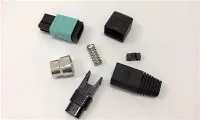
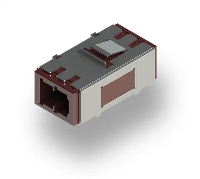
Hey there! As a supplier of Fiber Optic MPO Adapters, I've seen firsthand how different environmental factors can mess with these little guys. One factor that doesn't get as much attention as it should is humidity. So, let's dive into what humidity can do to a Fiber Optic MPO Adapter.
First off, what's humidity anyway? Humidity is just the amount of water vapor in the air. It can vary a lot depending on where you are and the time of year. High humidity means there's a lot of water in the air, and low humidity means there's not much.
Now, let's talk about how humidity affects Fiber Optic MPO Adapters. These adapters are super important in fiber - optic networks because they allow multiple fiber - optic cables to be connected at once. They're used in data centers, telecommunications, and a whole bunch of other places.
Physical Damage
One of the most obvious effects of high humidity on a Fiber Optic MPO Adapter is physical damage. When there's a lot of water vapor in the air, it can condense on the surface of the adapter. This condensation can lead to corrosion, especially if the adapter isn't made of materials that are resistant to moisture.
Corrosion can eat away at the metal parts of the adapter, like the connectors. If the connectors get corroded, they won't make a good connection with the fiber - optic cables. This can lead to signal loss, which is a big no - no in a fiber - optic network. You don't want your data to be dropping out because of a corroded adapter!
Another form of physical damage is mold growth. High humidity creates the perfect environment for mold to grow. Mold can grow on the surface of the adapter and even inside it. Once mold starts growing, it can block the light path in the fiber - optic cables. Since fiber - optic cables rely on light to transmit data, any blockage can cause serious problems. You can end up with a slow or completely non - functional network.
Signal Attenuation
Signal attenuation is a big deal in fiber - optic networks. It refers to the loss of signal strength as the light travels through the fiber - optic cable. Humidity can cause signal attenuation in a few different ways.
When water condenses on the surface of the adapter, it can create a thin film of water. This film can absorb some of the light that's supposed to be traveling through the fiber - optic cable. As a result, the signal strength decreases. Even a small amount of water can have a significant impact on the signal, especially over long distances.
In addition, humidity can also affect the refractive index of the materials in the adapter. The refractive index is a measure of how much light bends when it passes through a material. If the refractive index changes due to humidity, the light can scatter more as it travels through the adapter. This scattering also leads to signal attenuation.
Performance Degradation
Over time, the effects of humidity on a Fiber Optic MPO Adapter can lead to performance degradation. The adapter may start to have intermittent connection problems. You might notice that your network is working fine one minute and then slows down or drops out the next. This can be really frustrating, especially if you're running a business that relies on a stable network.
Performance degradation can also lead to increased maintenance costs. You'll have to replace the adapters more often if they're being damaged by humidity. And let's not forget about the downtime that comes with replacing the adapters. Every minute your network is down is a minute of lost productivity.
How to Mitigate the Effects of Humidity
So, what can you do to protect your Fiber Optic MPO Adapters from humidity? The first thing is to control the environment where the adapters are installed. If possible, keep the humidity levels in the room where the adapters are located between 40% and 60%. You can use a dehumidifier to lower the humidity if it's too high, or a humidifier to raise it if it's too low.
Another option is to use humidity - resistant adapters. Some adapters are designed with materials that are less likely to corrode or be affected by mold. These adapters can be a bit more expensive, but they can save you a lot of money in the long run by reducing the need for frequent replacements.
Regular maintenance is also important. Inspect your adapters regularly for signs of corrosion, mold, or other damage. Clean the adapters as needed to remove any dirt or moisture that might have accumulated.
Other Fiber Optic Adapters and Humidity
It's not just Fiber Optic MPO Adapters that are affected by humidity. Other types of fiber - optic adapters, like the Fiber Optic E2000 Adapter and the Fiber Optic St Coupler, can also be impacted.
The E2000 adapter is known for its high - performance and low - insertion loss. But like the MPO adapter, it can be damaged by humidity. Condensation and corrosion can still occur, leading to signal problems.
The ST coupler, on the other hand, is a more traditional type of adapter. It's widely used in older fiber - optic networks. However, it's also vulnerable to humidity. Mold growth and corrosion can affect its performance, just like with the other adapters.
Conclusion
In conclusion, humidity can have a significant impact on Fiber Optic MPO Adapters. It can cause physical damage, signal attenuation, and performance degradation. But don't worry! There are ways to mitigate these effects, like controlling the environment, using humidity - resistant adapters, and performing regular maintenance.
If you're in the market for Fiber Optic MPO Adapters or other fiber - optic products, I'd love to talk to you. We offer high - quality adapters that are designed to withstand a variety of environmental conditions. Whether you need a single adapter or a large quantity for a big project, we've got you covered. You can visit our Fiber Optic Mpo Adapter page to learn more about our products.


If you have any questions or want to discuss your specific needs, don't hesitate to reach out. We're here to help you find the best fiber - optic solutions for your network.
References
- "Fiber Optic Communication Systems" by Govind P. Agrawal
- "Handbook of Fiber Optic Data Communications" by Jim Hayes