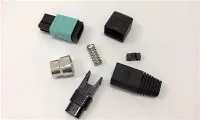
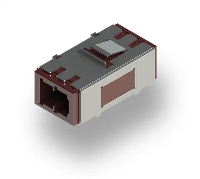
Hey there! As a supplier of Fiber Optic Patch Cords, I get asked a lot about the differences between LC and SC fiber optic patch cord connectors. So, I thought I'd break it down for you in this blog post.
Size and Physical Design
First off, let's talk about size. LC connectors are much smaller compared to SC connectors. The LC connector has a 1.25mm ferrule, while the SC connector has a 2.5mm ferrule. This size difference can be a big deal depending on your application.
If you're working in a space where you need to fit a lot of connections in a small area, like in a data center rack, LC connectors are the way to go. Their small size allows for high - density installations. You can pack a whole bunch of LC connectors into a patch panel, which is super handy when you're dealing with a large number of fiber optic cables.
On the other hand, SC connectors are bulkier but they're also easier to handle. If you're working in an environment where you need to frequently plug and unplug connectors, the larger size of the SC connector makes it more user - friendly. It's easier to grip and insert, especially if you're wearing gloves or have less dexterity.
Installation and Ease of Use
When it comes to installation, both LC and SC connectors are relatively straightforward. However, there are some differences.
LC connectors typically use a latch mechanism for connection. You just push the connector into the receptacle and the latch clicks into place. To remove it, you press the latch and pull it out. This mechanism is quick and efficient, but it can be a bit tricky if you're not used to it. The small size of the latch means you need to be more precise when operating it.
SC connectors, on the other hand, use a push - pull mechanism. You simply push the connector into the receptacle until it locks, and to remove it, you pull it out. This is a more intuitive way of connecting and disconnecting, which makes it popular in many general - purpose applications.
If you're a DIYer or someone who's new to fiber optic installations, you might find SC connectors a bit easier to work with at first. But as you gain more experience, the LC connectors' quick - connect feature can become a real advantage.
Performance and Loss
In terms of performance, both LC and SC connectors can provide excellent results. But there are some differences in insertion loss and return loss.
Insertion loss refers to the amount of light that is lost when the signal passes through the connector. LC connectors generally have lower insertion loss compared to SC connectors. This is because of their more precise ferrule alignment. The smaller ferrule size allows for a more accurate connection, which means less light is lost as the signal travels through the connector.
Return loss is about the amount of light that is reflected back from the connector. LC connectors also tend to have better return loss performance. This is important because reflected light can cause interference and affect the overall signal quality.
However, it's important to note that with proper installation and high - quality components, both LC and SC connectors can meet the requirements of most applications. Whether you're using them for short - distance LAN connections or long - haul telecommunications, you can get reliable performance from either type.


Applications
The choice between LC and SC connectors often depends on the application.
LC connectors are widely used in data centers and high - speed networks. Their high - density design and low loss characteristics make them ideal for applications where you need to transmit large amounts of data quickly. For example, in a server farm where multiple servers are connected via fiber optic cables, LC connectors can help manage the large number of connections efficiently. Check out our Mpo - lc 12 Muti - color Tight Buffer Fiber Patch Cords 0.3m for an example of an LC - based product that's great for data center applications.
SC connectors, on the other hand, are commonly used in telecommunications networks, cable TV networks, and some LAN applications. Their ease of use and reliability make them a popular choice for these types of applications. For instance, in a local area network in an office building, SC connectors can be used to connect different network devices. We offer Ftth Drop Cable Patch Cord Sc Sc Upc Lszh and Sc/upc - sc/upc Ftth Drop Patch Cable, which are great examples of SC - based products suitable for telecommunications applications.
Cost
Cost is also an important factor to consider. Generally, LC connectors are a bit more expensive than SC connectors. This is mainly due to their more precise manufacturing process and the smaller components involved.
However, when you're looking at the overall cost, you need to take into account the application and the long - term benefits. If you're doing a high - density installation, the cost of LC connectors might be justified by the space - saving and performance advantages. On the other hand, if you're on a tight budget and don't need the high - density features, SC connectors can be a more cost - effective option.
Conclusion
So, to sum it up, the main differences between LC and SC fiber optic patch cord connectors lie in their size, installation, performance, applications, and cost. LC connectors are great for high - density, high - speed applications where space is limited and performance is crucial. SC connectors, on the other hand, are more user - friendly, reliable, and cost - effective for general - purpose applications.
If you're in the market for fiber optic patch cords and are still not sure which type of connector is right for you, don't hesitate to reach out. We're here to help you make the best choice for your specific needs. Whether you need LC or SC connectors, or any other type of fiber optic products, we've got you covered. Contact us for more information and let's start a great business relationship!
References
- "Fiber Optic Connector Handbook"
- Industry whitepapers on fiber optic technology