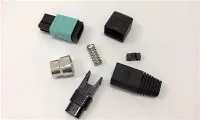
In the realm of fiber optic communication, fiber optic pigtail connectors play a crucial role in ensuring seamless data transmission. Among the various types of connectors available, ST and FC fiber optic pigtail connectors are two of the most commonly used ones. As a fiber optic pigtail supplier, I often encounter customers who are curious about the differences between these two connectors. In this blog post, I will delve into the details of ST and FC fiber optic pigtail connectors, highlighting their unique features, applications, and the key differences between them.
What is a Fiber Optic Pigtail Connector?
Before we dive into the differences between ST and FC connectors, let's first understand what a fiber optic pigtail connector is. A fiber optic pigtail is a short length of fiber optic cable with a connector pre - installed at one end. The other end of the pigtail is left bare for fusion splicing or mechanical splicing with another fiber optic cable. These pigtails are used to terminate fiber optic cables in various applications, such as data centers, telecommunications networks, and local area networks (LANs).
ST Fiber Optic Pigtail Connectors
The ST (Straight - Tip) fiber optic pigtail connector was one of the first widely adopted connectors in the fiber optic industry. It was developed by AT&T in the 1980s and quickly became popular due to its simplicity and reliability.
Design and Structure
The ST connector features a bayonet - style coupling mechanism. It has a round ferrule, typically made of ceramic or plastic, which holds the fiber in place. The bayonet coupling provides a quick and secure connection, making it easy to install and remove. The connector body is usually made of plastic or metal, and it has a keying feature to ensure proper alignment of the fibers.
Performance
ST connectors offer good optical performance, with low insertion loss and relatively high return loss. Insertion loss refers to the amount of light that is lost as it passes through the connector, while return loss measures the amount of light that is reflected back from the connector interface. For multimode ST connectors, the typical insertion loss is around 0.3 - 0.5 dB, and the return loss is about 20 - 25 dB.
Applications
ST connectors are commonly used in multimode fiber optic networks, such as LANs and campus networks. They are also suitable for applications where quick and easy installation is required, such as in building wiring and network cabling.
FC Fiber Optic Pigtail Connectors
The FC (Ferrule - Connector) fiber optic pigtail connector was developed in the 1980s as well, but it was initially designed for single - mode fiber applications.
Design and Structure
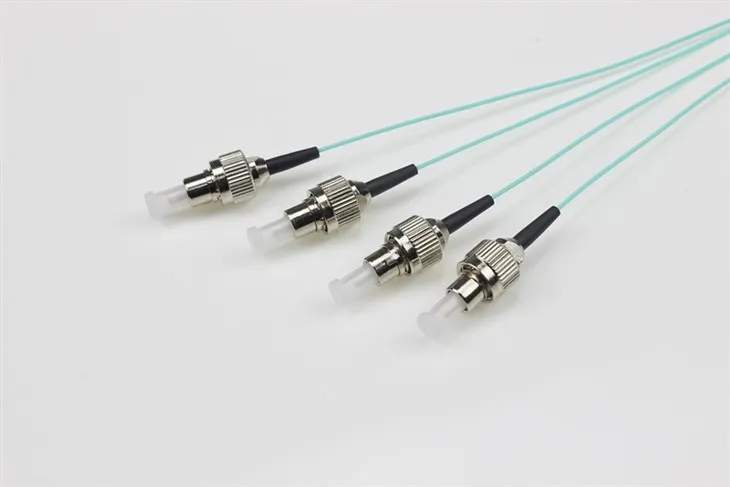
The FC connector uses a screw - on coupling mechanism. It has a precision - made ceramic ferrule, which provides excellent alignment of the fibers. The screw - on coupling ensures a very stable and reliable connection, reducing the risk of accidental disconnection. The connector body is usually made of metal, which gives it a more robust and durable construction.
Performance
FC connectors are known for their high - performance characteristics. They offer extremely low insertion loss and high return loss. For single - mode FC connectors, the insertion loss can be as low as 0.1 - 0.2 dB, and the return loss can reach 50 dB or more. This makes them ideal for long - distance and high - speed fiber optic transmission.
Applications
FC connectors are widely used in single - mode fiber optic networks, such as long - haul telecommunications networks, metropolitan area networks (MANs), and fiber - to - the - home (FTTH) applications. They are also used in applications where high - precision and reliable connections are required, such as in optical test and measurement equipment.
Key Differences between ST and FC Fiber Optic Pigtail Connectors
Coupling Mechanism
The most obvious difference between ST and FC connectors is their coupling mechanism. ST connectors use a bayonet - style coupling, which allows for quick and easy installation. On the other hand, FC connectors use a screw - on coupling, which provides a more secure and stable connection but requires more time to install and remove.
Ferrule Material
ST connectors can have either ceramic or plastic ferrules, depending on the application. Plastic ferrules are more cost - effective but may not offer the same level of precision as ceramic ferrules. FC connectors, however, almost always use ceramic ferrules, which provide superior alignment and performance, especially for single - mode fibers.
Performance
In terms of performance, FC connectors generally outperform ST connectors. FC connectors have lower insertion loss and higher return loss, making them more suitable for high - speed and long - distance fiber optic transmission. ST connectors, while offering good performance, are more commonly used in lower - speed and shorter - distance applications.
Application Scenarios
As mentioned earlier, ST connectors are mainly used in multimode fiber optic networks, where quick installation and relatively lower performance requirements are sufficient. FC connectors, on the other hand, are predominantly used in single - mode fiber optic networks, where high - precision and reliable connections are crucial.

Other Related Fiber Optic Pigtail Connectors
In addition to ST and FC connectors, there are other types of fiber optic pigtail connectors available in the market. For example, the Fiber Optic E2000 Pigtail is a high - performance connector with a shutter mechanism to protect the ferrule from dust and scratches. It is commonly used in data centers and other high - density applications.
Another popular connector is the Lc Simplex Fiber Patch Cord. LC connectors are small - form - factor connectors that offer high - density cabling solutions. They are widely used in both single - mode and multimode fiber optic networks, especially in data centers and telecommunications equipment.
If you are interested in Fiber Optic Fc Pigtail, we also have a wide range of products to meet your needs.
Conclusion
In conclusion, ST and FC fiber optic pigtail connectors have their own unique features and applications. ST connectors are simple, easy to install, and suitable for multimode fiber networks and short - distance applications. FC connectors, on the other hand, offer high - performance characteristics, excellent stability, and are ideal for single - mode fiber networks and long - distance transmission.
As a fiber optic pigtail supplier, we understand the importance of choosing the right connector for your specific application. We offer a wide range of fiber optic pigtail connectors, including ST, FC, E2000, and LC connectors, to meet the diverse needs of our customers. Whether you are building a new fiber optic network or upgrading an existing one, we can provide you with high - quality products and professional technical support.
If you have any questions or need more information about our fiber optic pigtail connectors, please feel free to contact us. We are looking forward to discussing your requirements and helping you find the best solutions for your fiber optic communication needs.
References
- "Fiber Optic Communication Technology" by Govind P. Agrawal
- "Optical Fiber Telecommunications VI" edited by Ivan Kaminow and Tingye Li
- Industry standards and specifications from organizations such as the Telecommunications Industry Association (TIA) and the International Electrotechnical Commission (IEC)