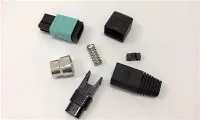
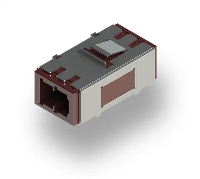
As a seasoned supplier of Fiber Optic MPO Patchcords, I've witnessed firsthand the growing demand for high - speed, reliable data transmission solutions. One of the most common questions I encounter from customers is about the difference between single - mode and multi - mode Fiber Optic MPO Patchcords. In this blog, I'll delve into the details of these two types of patchcords, highlighting their characteristics, applications, and performance differences.
Understanding the Basics of Fiber Optic MPO Patchcords
Before we explore the differences between single - mode and multi - mode patchcords, let's briefly understand what Fiber Optic MPO Patchcords are. MPO (Multi - Fiber Push - On) is a type of connector that can accommodate multiple optical fibers in a single connector. These patchcords are widely used in data centers, telecommunications networks, and other high - density fiber optic applications. They offer a convenient and efficient way to connect multiple fibers at once, reducing installation time and complexity.
Single - Mode Fiber Optic MPO Patchcords
Single - mode fiber optic patchcords are designed to carry a single ray of light, or mode, through the fiber core. The core diameter of single - mode fiber is typically around 9 microns, which is much smaller compared to multi - mode fiber. This small core size allows the light to travel in a straight line with minimal dispersion, resulting in long - distance and high - bandwidth transmission capabilities.
Characteristics
- Long - Distance Transmission: Single - mode patchcords can transmit data over much longer distances compared to multi - mode patchcords. They are commonly used for applications that require data to be transmitted over several kilometers, such as telecommunications backbone networks and long - haul fiber optic links.
- High Bandwidth: Due to the low dispersion and high - quality transmission, single - mode patchcords can support extremely high bandwidths. They are suitable for applications that demand large amounts of data transfer, such as high - speed internet connections and data center inter - connectivity.
- Low Attenuation: Single - mode fiber has low attenuation, which means that the signal strength decreases very slowly as it travels through the fiber. This allows for reliable data transmission over long distances without the need for frequent signal amplification.
Applications
- Telecommunications: Single - mode MPO patchcords are widely used in telecommunications networks for long - distance voice and data transmission. They are essential for connecting central offices, cell towers, and other telecommunications infrastructure.
- Data Centers: In large - scale data centers, single - mode patchcords are used for interconnecting different racks, buildings, or even data centers located in different geographical areas. They enable high - speed data transfer between servers, storage systems, and networking equipment.
Multi - Mode Fiber Optic MPO Patchcords
Multi - mode fiber optic patchcords, on the other hand, are designed to carry multiple rays of light, or modes, through the fiber core. The core diameter of multi - mode fiber is typically larger, usually 50 or 62.5 microns. This larger core size allows multiple modes of light to propagate simultaneously, but it also leads to more dispersion compared to single - mode fiber.


Characteristics
- Short - Distance Transmission: Multi - mode patchcords are best suited for short - distance applications, typically up to a few hundred meters. The dispersion of light in multi - mode fiber limits its transmission distance, but it is sufficient for most local area network (LAN) and data center applications.
- Lower Cost: Multi - mode fiber and its associated components are generally less expensive than single - mode fiber. This makes multi - mode patchcords a more cost - effective solution for short - distance applications where long - distance transmission is not required.
- Easier Installation: The larger core size of multi - mode fiber makes it easier to connect and align during installation. This reduces the installation time and cost, especially in high - density fiber optic environments.
Applications
- Local Area Networks (LANs): Multi - mode MPO patchcords are commonly used in LANs within offices, schools, and other buildings. They provide a cost - effective way to connect computers, servers, and other networking devices.
- Data Center Cabling: In data centers, multi - mode patchcords are used for short - distance connections within racks and between adjacent equipment. They are suitable for applications such as server - to - switch and switch - to - switch connections.
Performance Comparison
When comparing single - mode and multi - mode Fiber Optic MPO Patchcords, several performance factors come into play.
Bandwidth and Distance
As mentioned earlier, single - mode patchcords offer higher bandwidth and longer transmission distances. For example, single - mode fiber can support 100Gbps transmission over distances of up to 40 kilometers, while multi - mode fiber is typically limited to a few hundred meters for the same bandwidth. However, for short - distance applications where high bandwidth is not required, multi - mode patchcords can still provide sufficient performance at a lower cost.
Cost
The cost of single - mode and multi - mode patchcords can vary significantly. Single - mode fiber and its associated components are generally more expensive due to the higher manufacturing precision required. On the other hand, multi - mode patchcords are more cost - effective for short - distance applications, making them a popular choice for budget - conscious projects.
Installation and Maintenance
Multi - mode patchcords are easier to install and maintain compared to single - mode patchcords. The larger core size of multi - mode fiber makes it more forgiving during connection and alignment, reducing the risk of signal loss due to misalignment. Single - mode fiber, on the other hand, requires more precise installation techniques to ensure optimal performance.
Choosing the Right Patchcord for Your Application
When choosing between single - mode and multi - mode Fiber Optic MPO Patchcords, it's important to consider your specific application requirements. If you need to transmit data over long distances or require high bandwidth, single - mode patchcords are the better choice. However, if your application is limited to short distances and cost is a major concern, multi - mode patchcords may be more suitable.
As a supplier, I can offer a wide range of Fiber Optic MPO Patchcords to meet your specific needs. For example, you can check out our Fiber Optic Patch Cord Mtp To Lc Upc 8core Om4 3.0mm, which is a popular multi - mode patchcord option. We also have Fiber Optic Patchcord E2000 Apc for different connector requirements. And if you need high - performance multi - mode cables, our Om4 Multi - fiber 100gb Multimode 50/125 Fiber Optic Cable Mtp/mpo To Lc Breakout 12 Fiber is a great choice.
Conclusion
In conclusion, single - mode and multi - mode Fiber Optic MPO Patchcords have distinct characteristics and applications. Understanding the differences between them is crucial for choosing the right patchcord for your specific needs. Whether you need long - distance, high - bandwidth transmission or a cost - effective solution for short - distance applications, there is a Fiber Optic MPO Patchcord that can meet your requirements.
If you're interested in purchasing Fiber Optic MPO Patchcords or have any questions about our products, please don't hesitate to contact us for a detailed consultation and procurement negotiation. We are committed to providing high - quality products and excellent customer service to help you build reliable and efficient fiber optic networks.
References
- "Fiber Optic Communication Systems" by Govind P. Agrawal
- "Optical Fiber Technology: Principles and Applications" by R. Ramaswami, K. N. Sivarajan, and G. Sasaki